Upcoming Event
 Free Newsletter

Deposit Photos
Deposit Photos
Colorado farmers face tariffs, labor shortages and drought
Nora Caley //December 10, 2025//



This article appears in the Winter 2025 issue of ColoradoBiz under the headline, Growing Uncertainty.
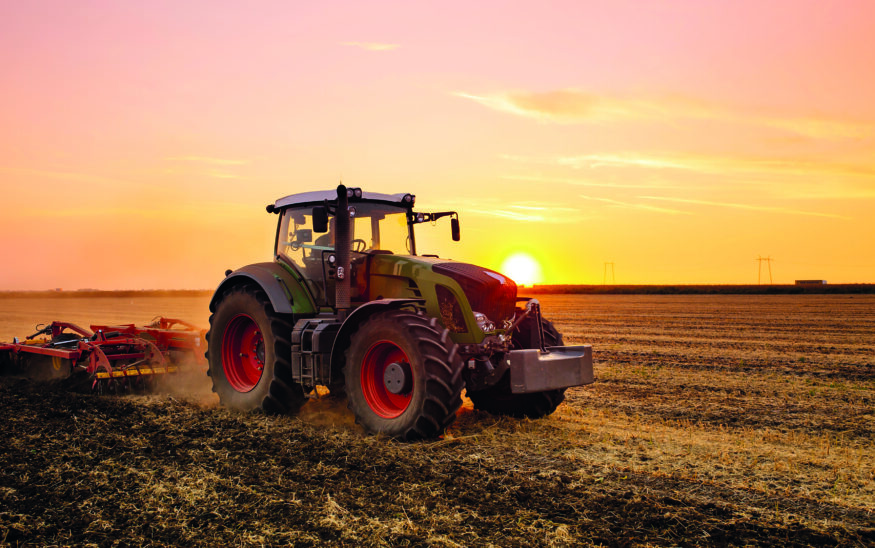
Colorado farmers and ranchers face current challenges and look ahead to 2026.
In Brief:
- Colorado farmers face tariffs, labor shortages and ongoing drought concerns
- Agriculture Census shows most Colorado farms are family owned
- Rising input costs and market uncertainty pressure farm profitability
- Producers turn to innovation, planning tools and risk programs for 2026
Faced with tariffs, labor shortages and drought, Colorado farmers are turning to their own ingenuity and some local expertise as they look to 2026. For the agriculture industry, some of the issues are new, while others represent years-long challenges.
According to the 2022 Agriculture Census, conducted every five years by the U.S. Department of Agriculture, there were 36,056 farms and ranches in Colorado, and 93% are family farms, totaling 30.2 million acres of farmland.
The census reported that the market value of agricultural products sold totaled $9.22 billion, an increase of $1.7 billion since 2017. Farm production expenses totaled $8.16 billion, resulting in net cash income of $1.83 billion for Colorado farms. Only 34.8% of Colorado farms had positive net cash farm income in 2022, and average farm income was $50,692.
Today, the industry has certain challenges. “Farmers and ranchers are facing rising input costs, large market fluctuations, labor shortages and costs, and uncertainty with water use, due to weather and legislation,” says Carlyle Currier, president of the Colorado Farm Bureau.
The American Farm Bureau reported that production expenses are expected to reach record highs in 2025. Meanwhile, a market imbalance shows decreasing prices for crops and all-time high prices for cattle. “In Colorado, compliance, water shortages and regulations put pressure on an already uncertain situation,” Currier says. “This brings a lot of uncertainty when planning for the future.”
Weathering the uncertainty
According to the National Integrated Drought Information System, Colorado had 11.12 inches of total precipitation from January through August 2025, which was 2.08 inches below normal. The federal agency, part of NOAA, also reported that 30.4% of the state was in drought.
Not all Colorado farmers had dry weather in 2025. “This year the eastern plains were anomalously wet,” says Retta Bruegger, regional specialist in range management at Colorado State University Extension, for the Western Region. “The west was dry.”
Overly wet weather can lead to an increase in weeds and toxic plants, Bruegger says, and low snowpack levels are critical for irrigation. While modern forecasting can show what to expect for the next ten days, it’s too early to predict whether late winter and early spring will bring enough snow and rain for Colorado farmers in 2026.
Colorado State University (CSU) works with farmers to make information-based decisions, such as choosing a trigger date to change course. For example, if snowpack is below 70% of average by April 15, farmers could hope for a low-probability event, such as a large snowstorm or rainfall, or cut back on certain crops.
Innovation can help. Mark Waltermire, a farmer and president of the Valley Organic Growers Association, says VOGA plans to build a community solar project on 5 acres. It will generate enough electricity to power 70 farms in the North Fork Valley. “We are hoping to break ground this spring,” Waltermire says. “Growing sweet peppers, tomatoes, potatoes, leafy greens and eggplant would all benefit from partial shade.”
Too much rain can be a problem, too. The Pagosa Springs area received heavy rain in October, with mixed results. “That was an unexpected, nice gift from Mother Nature,” says Tyler Mitchell, chairman of the Colorado Potato Administrative Committee. “Unfortunately, there was flooding damage.”
Mitchell says it was a great growing season for commodities such as potatoes, corn and soybeans, but the above-average supply brings a lower market price. Trade uncertainty is also causing stress among farmers, as Mexico is a big export market for Colorado potatoes.
Financial aspects
Profits are also being hampered by rising input prices due to tariffs. Ela Family Farms grows 55 varieties of organic tree fruits in Hotchkiss. The farm also makes artisan products such as jams, apple butter, dried fruit and applesauce, and sells directly to consumers at farmers’ markets. The price of the jars has increased. “The plant in the United States quit making them, and the ones made overseas are more expensive,” says fourth-generation owner Steve Ela. “I haven’t bought them since the tariffs went into effect.”
Even boxes went up in price, and asking customers to return them is not a solution. “You get into food safety issues,” Ela says. “They take it home, put it in their garage and a mouse walks through it.”
Labor also presents an ongoing challenge. Each tree gets four or five touches a year: pruned in winter, thinned every spring and fruit is handpicked three or four times per tree. “There is the problem of enough people and what we have to pay,” Ela says. “Every dollar increase in wage means we have to generate $40,000 to $50,000 income to compensate for that.”
According to Estimating the Impacts of Changing U.S. Tariff Policy, a report from the State of Colorado Governor’s Office of State Planning & Budgeting, Colorado farmers are affected by tariffs on imported fertilizer, seed stock, grain for animal feed and biofuel, among other items. The agricultural industry also suffers from retaliatory tariffs imposed by key trading partners. Colorado’s primary agricultural exports include beef, dairy, wheat, corn, fruit and vegetables, with total agricultural exports reaching $2.7 billion in 2024.
Debt load is another challenge, according to Jenny Beiermann, agriculture and business management specialist at CSU Extension. Some producers have lines of credit with interest rates of 8% or 9%. Real estate debt is also growing, as farmers try to buy more land. “It’s important to increase land for economies of production,” Beiermann says. “They are accruing a lot of debt.”
To help mitigate low commodity prices, the USDA offers the Agriculture Risk Coverage (ARC) and Price Loss Coverage (PLC) safety net programs. ARC provides payments when farm revenue falls below a specified guarantee level, and PLC provides payments when the effective price for a covered crop falls below a certain price. The reference prices increased in 2025, which improves the odds for receiving payment, but agricultural producers had to enroll by April 15.