Upcoming Event
 Free Newsletter

Colorado leaders unveil plan to streamline education and workforce
ColoradoBiz Staff //December 11, 2025//
Colorado leaders unveil plan to streamline education and workforce
ColoradoBiz Staff //December 11, 2025//



DENVER — Gov. Jared Polis and a coalition of legislative, education and workforce leaders on Wednesday released a report calling for a major overhaul of how Colorado supports students, jobseekers and employers. The proposal outlines a new state agency that would unite higher education and workforce development under one roof, creating a more coordinated talent system as Colorado’s economy continues to grow and diversify.
In Brief:
- Colorado leaders release report proposing a unified agency for education and workforce
- Plan aims to simplify pathways from learning to employment
- State faces growing demand for skilled workers and talent shortages
- New model builds on recent legislation to align education and career systems
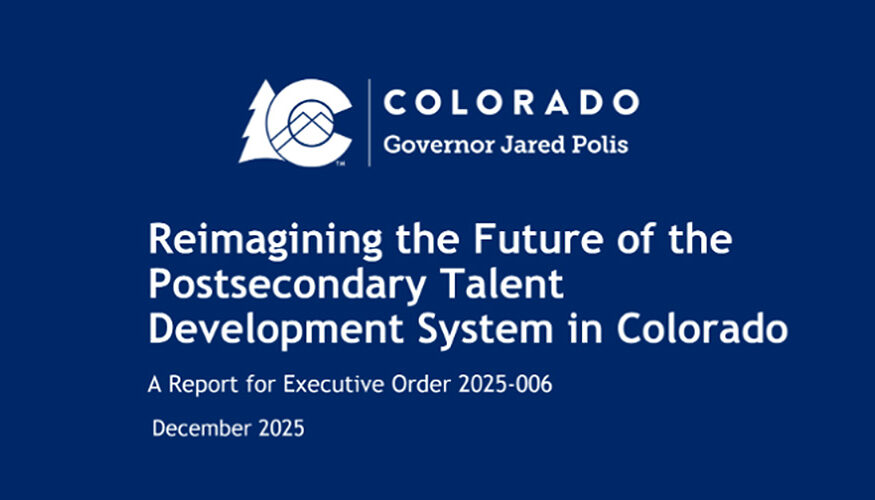
The report stems from Executive Order 2025-006, issued by Polis earlier this year, which directed state agencies to study Colorado’s postsecondary talent development system and recommend improvements. The months-long effort included input from educators, business leaders, community partners and residents across the state.
“To best serve all Coloradans, we are boldly reimagining how our post-secondary education, training and employment systems are serving Colorado learners, jobseekers, workers and employers,” Polis said. “Colorado is a growing hub of innovation, attracting new businesses and emerging sectors. We are taking the necessary steps to grow our economy and ensure every Coloradan has more opportunities.”
The report recommends creating a new state agency that would serve as a central access point for Colorado learners and employers. Under the proposal, the agency would offer streamlined pathways to education and careers, support employers seeking to connect with future workers and strengthen the state’s long-term economic competitiveness.
House Speaker Julie McCluskie, D-Dillon, said Colorado has made significant progress in expanding career pathways but must continue to adapt. “We are making it possible for learners to sharpen their skills and secure a good-paying job after graduation,” McCluskie said. “To meet Colorado’s diverse and ever-changing workforce needs, we need to think outside the box, which is why we are doubling down on our efforts to reimagine and transform workforce development.”
Sen. Jeff Bridges, D-Arapahoe County, said the current system forces students to navigate separate bureaucracies as they move from school into jobs. “This report confirms that we need to bring higher education and workforce programs together under one roof so we can align our investments and strategy with the high-skilled, high-wage, in-demand jobs that drive our economy,” Bridges said.
State officials said integrating higher education and workforce programs would change how residents access training, how jobseekers find employment, how employers address talent shortages and how Colorado measures outcomes.
The report notes that challenges remain. Roughly 936,000 Coloradans earn less than $25 an hour and more than one million adults have only a high school diploma. An estimated 500,000 residents started college but did not finish. By 2031, 73 percent of jobs in Colorado are expected to require some postsecondary training, and businesses continue to report labor shortages tied to a lack of skilled workers.
The Polis administration has pursued several policy changes to improve alignment between education and employment. House Bill 21-1330 advanced data transparency, outcome measurement and equity efforts, while House Bill 22-1215 created a task force to expand work-based learning opportunities and streamline funding for career-connected education.
Officials said the new report builds on those efforts and sets the stage for a unified system designed to deliver better results for learners, workers and businesses.
“This is about creating a talent development system that works for everyone,” Polis said. “Colorado is ready to meet this moment.”
i