Upcoming Event
 Free Newsletter


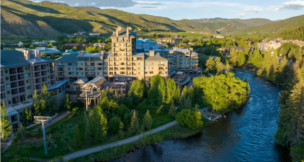
Vero Vistas in Buena Vista, CO. Photo courtesy of VeroTouch.
Vero Vistas in Buena Vista, CO. Photo courtesy of VeroTouch.
3d-printed homes transform Colorado housing market
Eric Peterson //September 24, 2025//



This article appears in the Fall 2025 issue of ColoradoBiz under the headline, 3D-printed homes are reshaping Colorado’s housing market.
Nate and Jess Dannels are the proud owners of one of the first 3D-printed houses in Colorado. The two-bedroom, 1,100-square-foot house in Buena Vista is the Dannels’ getaway spot, rental property and possible retirement home.
In Brief:
- Buena Vista residents among first to buy 3D-printed homes
- Colorado companies like VeroTouch and StructureBot lead growth
- 3D printing cuts labor needs, costs and construction timelines
- New factories and projects expand 3D-printed housing nationwide
An IT professional and lawyer, respectively, living in Colorado Springs, Nate and Jess fell in love with the place at the first showing. The 3D-printed aspect was a definite selling point. “We were just taken away by its uniqueness,” says Jess. “We just loved the exposed look of the walls from the 3D-printing process, so it was absolutely a driver in our wanting to acquire the home.”
While it takes some creativity to mount TVs on the concrete walls, the Dannels are optimistic that the structure will have lower energy bills and maintenance costs. “I think we’re really fortunate,” says Nate. “It’s a high-tech home that was built with a very high standard.”
Salida-based VeroTouch built the Dannels’ home and the 3D-printed house next door, which was under contract at press time. Co-founder and CEO Grant Hamel worked in manufacturing design before starting VeroTouch in 2023. “That really taught me how to create an end-to-end process and ecosystem for different types of products at scale,” he says. “The construction market, which I had never operated in at all before, seems to be missing some of those steps.”
Hamel began to envision “the job site of the future” as he devised a business plan. “It’s not just one component, it’s changing the entire way that we think about how we build,” he says. “There’s no residential design guide on how to finish a 3D-printed home. We had to invent all those things. That’s why we’re a full-scale engineering and design firm as well, because we have the ability to invent those processes and do that R&D.”
The 20-employee VeroTouch printed the first two houses in Buena Vista in late 2023 and early 2024 with a printer from Copenhagen-based COBOD, the largest manufacturer of construction 3D printers on the planet.
The Dannels’ home “was printed in about 13 days with a four-man team,” says Hamel. “We saw significant flashes of great progress in different areas of construction that are traditionally slow or wasteful.”
The sale price was $625,000, a little bit lower than Buena Vista’s mean sales price of $676,000 in 2025. “It was never intended to be cheaper than a cheap, stick-frame home,” says Hamel. “We built two high-quality homes that are super insulated with super high structural integrity.”
However, Hamel sees potential to cut costs as methods are streamlined. “We want to also be making things easier for every other trade along the pipeline,” he adds. “That is about getting those electricians, HVAC guys, plumbers and everybody else on board to change their thinking about things a little bit, and how they can lower their costs and be faster and pass those cost savings on to the consumer.”
That’s the strategy at play for VeroTouch’s next development: 31 3D-printed units in Cleora, just east of Salida, slated for delivery in early 2027.
The 3D-printing process also requires smaller crews. Rural areas are “labor deserts,” notes Hamel. “We are over 100,000 electricians short in the industry today. We are significantly short on both the management and labor sides. Every area of construction is short, and people are leaving the industry, not coming into it.”
“Automation has to fix this industry. Automation isn’t taking jobs away. Automation isn’t driving outsourcing of jobs. Construction automation is keeping jobs here at home and allowing a sector that’s super important to operate and grow.”
Jim Scott, co-founder and CEO of Colorado Springs-based StructureBot, also views 3D printing as a salve for the industry’s labor woes. “With 3D printing crews right now, we’re seeing about three people per crew,” says Scott. “There’s going to be a framing crew of maybe eight or nine people.”
Scott retired to Colorado Springs after a career in aerospace engineering in San Diego, where he volunteered for his church, helping build houses for homeless people in Tijuana. He continued with work on issues around homelessness after retiring to Colorado Springs about a decade ago, leading him to build a small prototype 3D concrete printer.
Scott subsequently teamed with Chief Innovation Officer Cameron McRoberts to launch StructureBot in 2020, and they moved forward with a larger printer McRoberts had built. They are currently using that printer for small projects and investor demos, with a target raise of $500,000 to $1 million in progress. The funding will speed up the development of StructureBot’s next-generation printer, which will be 40 feet wide and run on tracks.
Beyond cutting the construction timeline by a third, a 3D-printed house has other benefits that add to affordability. It doesn’t need an exterior sheath or interior drywall, and channels for wiring and ducting can be part of the original print. “The numbers that we’ve run a few times on a couple of different models, it looks like you might cut costs up to 40 percent overall,” says Scott.
StructureBot’s planned business model includes hardware sales and “3D construction printing as a service,” he adds. “We would partner up with them and take our system onsite and do the 3D printing there. If they want to do a panelized construction model, we could build the wall systems in a facility and then transport them and crane them into position.”
Azure Printed Homes is taking the off-site approach, but with different materials. In lieu of cement, the Gardena, Calif.-based company prints composite polymer panels in a factory and delivers them to the job site.
Printing in a 20,000-square-foot facility, Azure has sold about 100 homes since its 2022 launch, but co-founder Gene Eidelman expects that number to increase after the company opens a new 25,000-square-foot factory in northeast Denver in early 2026. A loan from the Colorado Housing and Finance Authority (CHFA) will cover $3.9 million of the factory’s $5 million budget. The 50-employee California facility will cover California and Denver will cover the rest of the country with a staff of about 20 to start.
The offsite model minimizes risks of bad weather and other construction pitfalls. “It does not make sense to bring 100 guys to a site to build a house,” says Eidelman. “If you were to build cars that way, cars would be $500,000.”
“The U.S. is still way behind the rest of the world in terms of how much housing is manufactured in factories versus on-site. In Japan, it’s 50 percent. In Scandinavian countries, 25 percent. In the U.S., it’s 4 percent. Why? Why can we manufacture everything else?”
Eidelman believes it’s largely due to consumer perception, but he sees an opening to flip the script, largely because 3D printing translates to lower housing prices. A 900-square-foot unit costs about $200,000 in California, not including land, and the foundation and installation add 20 to 30 percent.
While Azure’s technology is a good fit for accessory dwelling units (ADUs) and tiny homes, its modular nature allows the company to build larger houses. “In preparation for rebuilding here in L.A., we developed some other technology that will allow us to build as big as 3,000 to 4,000 square feet,” says Eidelman.
Greeley-based Alquist 3D has printed the largest 3D-printed concrete commercial building in the U.S., an 8,000-square-foot project on a Walmart in Tennessee. To foster the workforce, the company has partnered with Aims Community College in Greeley on a certificate program for 3D concrete printing.
Can 3D-printed construction scale up for even larger projects? “It’s been on our radar for many years,” says Kris Wahl, innovation manager at Turner Construction Company, a New York-based firm with a Denver office. “It always feels like it’s perpetually stuck at this inflection point between being some experimental novelty and actually being a viable construction method, especially for what we do in large-scale, complex projects.”
“We’ve got this deeply ingrained, complicated, established project delivery framework. How do you incorporate something like this into it? It’s also a very risk-averse industry, so that interface between the traditional and this new, entirely different, unproven building method is what really stalled this.”
Wahl says 3D printing remains relegated to “one-off solutions” at Turner. Building codes are a challenge, he adds, but the big opportunity is easing the labor shortage.
“Turner has to make a decision at some point if we want to go that route,” says Wahl, noting that the firm’s new venture program might look at taking an equity stake in a 3D-printing startup if the opportunity arises.
At Centennial-based Haselden Construction, Steven Richter, VDC manager, paints a similar picture. “You’re trying to build something that fits inside of a system where your plumbing suppliers have a spec, and the structural guys have a spec [construction specifications], and your architects have a spec, and none of them are tooled to allow for 3D printing.”
Regardless, Richter says 3D printing fits into an industry-wide move towards off-site construction. “In large-scale construction, the more components that you can fabricate on the front end, the more time and money you’re going to save,” he notes. “It’d be nice if you could offload a printer from a 40-foot truck and put it on a site, and it would print your elevator core for you all the way up. We would take one of those.”
Online:
- VeroTouch: verotouch.com
- StructureBot: structurebot.com
- Azure Printed Homes: azureprintedhomes.com
- Alquist 3D: alquist3d.com
- Turner Construction Company: turnerconstruction.com
- Haselden Construction: haselden.com