Upcoming Event
 Free Newsletter

Rising fuel costs and uncertainty pressure small businesses in the US, report says
ColoradoBiz Staff //April 16, 2026//
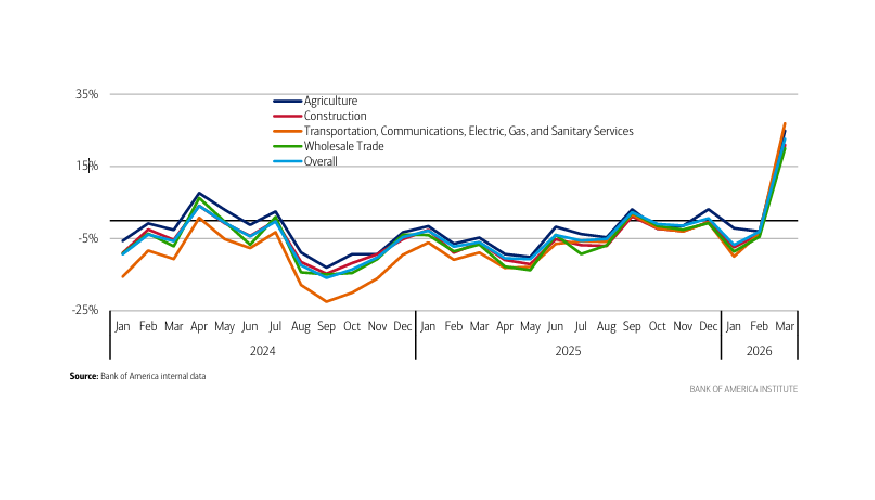
For small firms in agriculture and transportation, gas spending growth jumped more than 25% YoY in March. Small business credit and debit card gasoline spending growth per small business client by industry (YoY%, monthly). Courtesy of Bank of America.
For small firms in agriculture and transportation, gas spending growth jumped more than 25% YoY in March. Small business credit and debit card gasoline spending growth per small business client by industry (YoY%, monthly). Courtesy of Bank of America.
Rising fuel costs and uncertainty pressure small businesses in the US, report says
ColoradoBiz Staff //April 16, 2026//



Small businesses faced higher costs and rising uncertainty in March as fuel prices climbed and global tensions disrupted operations, according to new data from Bank of America and the National Federation of Independent Business.
In Brief:
- Gasoline spending per small business rose 23% year over year
- NFIB Small Business Uncertainty Index increased to 92 in March
- Inventory costs for small wholesalers up 62.6% year over year
- Construction and manufacturing hiring payments nearly 40% above 2023 averages
Gasoline spending per small business client rose 23% year over year in March, the largest increase in several years, after declining in the prior two months. Sectors such as agriculture and transportation saw increases of more than 25% as fuel costs rose.
At the same time, the NFIB Small Business Uncertainty Index rose to 92 in March, up 4 points from February and well above its historical average of 68, reflecting pressure from inflation and geopolitical factors.
Higher fuel prices are also increasing transportation, inventory and input costs. Transportation, agriculture and construction firms devote a larger share of spending to gasoline, making them more exposed to price increases.
Agricultural businesses face additional pressure from global supply disruptions. Freight costs have risen sharply since late February, with trucking costs up nearly 50% and ocean shipping costs up 11% to 17%. Fertilizer supply constraints tied to disruptions in the Strait of Hormuz are expected to further raise costs.
Wholesalers are also seeing rising expenses. Inventory-related costs for small wholesalers increased 62.6% year over year in March, the largest monthly gain since 2020. Tariff payments among some firms were nearly 95% above 2024 averages, though lower tariff rates may provide limited relief.
Labor conditions remain uneven. Payroll payments per small business client declined for a third straight month, while hiring indicators showed some improvement. Construction and manufacturing firms increased hiring, with payments to hiring firms nearly 40% above 2023 averages.
Despite these pressures, profitability growth remained positive, rising 0.3% year over year in the first quarter. However, businesses are pulling back on spending. The share of owners planning capital investments fell to its lowest level since 2009, and more firms are choosing not to seek external financing.
“Fuel is a core operating expense rather than a marginal cost,” the report noted, highlighting the impact of rising energy prices on key industries.
Total small business payments increased 1.0% year over year in March but declined from the prior month, with debit card spending showing the strongest growth.
s