Upcoming Event
 Free Newsletter

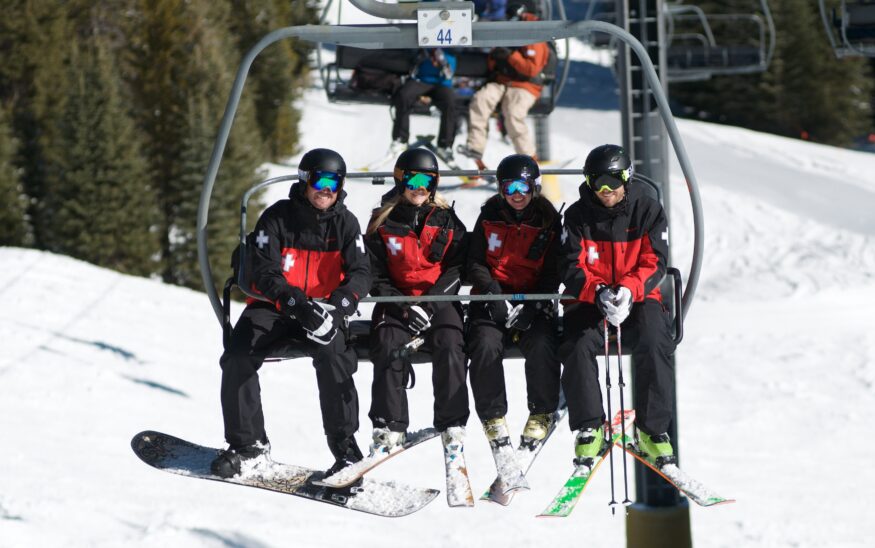
Patrollers on chair lift. Photo courtesy of the National Ski Patrol.
Patrollers on chair lift. Photo courtesy of the National Ski Patrol.
Inside the training behind ski patrol rescues
ColoradoBiz Staff //January 5, 2026//



LAKEWOOD, Colo. — January is National Safety Month for the ski industry, and the National Ski Patrol is spotlighting the medical and rescue training that underpins on-mountain emergency response.
In Brief:
- National Ski Patrol marks National Safety Month with training focus
- More than 30,000 patrollers receive year-round medical and rescue training
- Core programs include Outdoor Emergency Care and transportation
- Advanced training covers avalanches risk management and backcountry rescue
With more than 30,000 members nationwide, the National Ski Patrol provides one of the industry’s most comprehensive training pipelines. The program prepares patrollers to respond to medical emergencies and technical rescues while supporting ski area operations in high-risk environments. Patrollers are trained as mountain safety professionals, combining medical expertise, rescue skills, operational awareness and risk management to protect guests and staff.
“A safe day on the slopes starts long before anyone puts on skis and a helmet,” said Stephanie Cox, chief executive officer of the National Ski Patrol. “Our patrollers put in hundreds of hours of training so they are ready for whatever the mountain brings. When a ski area knows its patrol is NSP-trained, it knows it has a team prepared to handle complex emergencies and help keep the mountain operating safely.”
Patrollers train year-round to maintain readiness for avalanche mitigation, chairlift and gondola evacuations, medical response, search and rescue operations and other scenarios unique to winter environments. Training combines classroom instruction, hands-on drills and scenario-baseInside the training behind ski patrol rescuesd exercises designed to reflect changing mountain conditions.
Core training includes Outdoor Emergency Care, the organization’s required medical program, which focuses on trauma, environmental injuries and medical emergencies in remote winter terrain. Patrollers also complete Outdoor Emergency Transportation training, which emphasizes safe patient transport and toboggan handling across varied terrain. Annual refresher courses are required to maintain proficiency in medical protocols, rescue techniques and operational standards.
Beyond core instruction, the National Ski Patrol offers advanced and specialized training that supports resort operations and guest safety in higher-risk areas. Avalanche education includes forecasting, mitigation and rescue training for in-bounds and backcountry settings. Outdoor Risk Management courses address liability, legislation and operational risk, preparing patrollers to work with resort leadership on safety planning. Mountain Travel and Rescue training focuses on extended or remote responses, including navigation, survival skills and patient care in backcountry environments.
By continually updating its training standards, the National Ski Patrol says it is reinforcing its role as a leader in mountain safety and a key partner to ski areas nationwide.
“National Safety Month is not only about awareness. It is about recognizing the patrollers whose training helps keep our mountains operating safely every day,” Cox said.
t