Upcoming Event
 Free Newsletter

US consumers continue spending despite rising inflation
Rachel Lerman
The Washington Post //June 25, 2026//

Deposit Photos
Deposit Photos
US consumers continue spending despite rising inflation
Rachel Lerman
The Washington Post //June 25, 2026//



In Brief:
- Consumer spending rose $156 billion in May
- Federal Reserve price index up 4.1 percent annually
- Average tax refund $3,276 boosted spending
- Labor market resilience supports consumer confidence
Article updated with changes: content. (article first published Jun 25, 2026 – 12:20 PM).
Consumer spending rose in May by $156 billion, accelerating from April levels, according to data released Thursday by the Bureau of Economic Analysis. The data shows that Americans continue to open their wallets despite high prices. Consumer spending is key to a healthy economy, fueling roughly two-thirds of growth.
The Federal Reserve’s preferred price index showed prices rose at an annual rate of 4.1% in May. Excluding volatile food and energy categories, the personal consumer expenditure index climbed 3.4%.
“Consumers are still begrudgingly spending,” said Liz Thomas, chief market strategist at SoFi. “They don’t feel good about it, but they haven’t stopped.”
Strong consumer spending is expected to continue into the summer as people plan vacations and attend World Cup events, analysts said. And with energy prices easing, and a ceasefire with Iran ongoing, Americans have already started to feel slightly better about the economy.
Consumer sentiment – or how people feel about the economy – showed people were feeling significantly better in June than in May, according to a survey by the University of Michigan. However, consumer sentiment lags significantly compared to a year ago.
Some of the recent consumer spending is out of necessity – gas prices have eased slightly after spiking earlier this year following the strikes on Iran, but they are still much higher than before the war began. People have to buy gas and groceries despite higher prices, leading to more spending. And spending on services, including health care and housing, increased significantly in May.
But it’s not all gas bills. Even apart from the necessary spending on higher prices, consumers are still spending money elsewhere and not sacrificing their purchases.
“If a consumer was stretched, they would have to spend more at the pump and less everywhere else,” said Michelle Meyer, chief economist at the Mastercard Economics Institute. And that’s not what we’re seeing, she said.
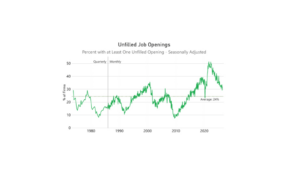
A big part of that is the labor market, which has remained largely resilient amid economic and global uncertainty. Although people are not feeling confident that they can find new jobs and therefore maximize their income, the unemployment rate remains low. If people are still employed, they feel comfortable spending money.
Some of the consumer spending growth is likely due to the “K-shaped” economy, where higher-income people continue to accumulate wealth rapidly while lower-income groups fall behind. Higher-income Americans have seen faster wage growth and strong gains from the stock market.
“Wealthy households are carrying spending gains,” said Diane Swonk, chief economist at KPMG.
But many Americans received higher-than-normal tax refunds this year, especially in middle- and low-income groups, boosting their spending. The average tax refund was $3,276 in early May, more than 11 percent higher than last year.
“I don’t think there’s a clear story that the lower-income consumer is cutting back,” Meyer said.
People across income levels are hunting for deals, however. Dollar General executives recently said they’re seeing more shoppers earning more than $100,000 a year, and fast-food chains are attracting higher-income customers.
Hank Smith, director and head of investment strategy for Haverford Trust, which manages $17 billion in assets, said the labor market and easing energy prices should continue to support consumer spending.
“One of the worst things you can do is underestimate the U.S. consumer,” he said. “The U.S. consumer is genetically programmed to spend money.”