Upcoming Event
 Free Newsletter

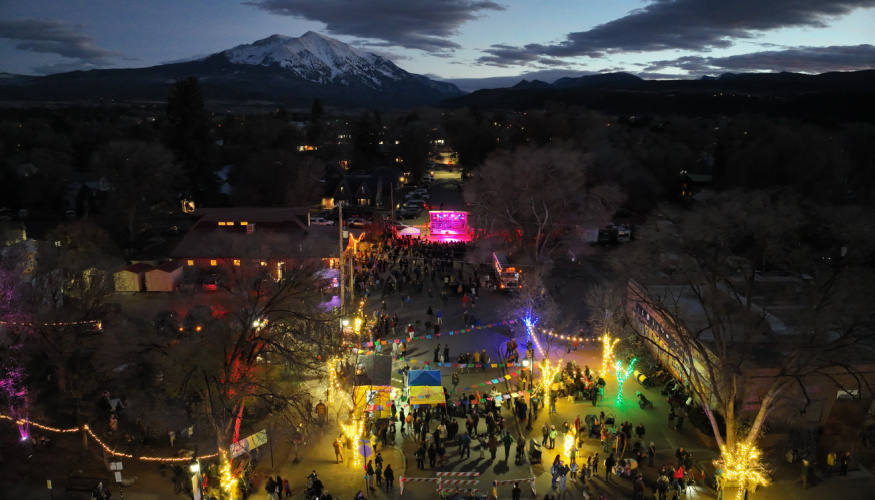
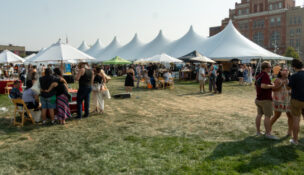
Carbondale. Credit Sarah Overbeck
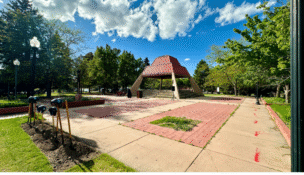
Carbondale. Credit Sarah Overbeck
Colorado Creative Districts drive $19.7 billion economic output
Eric Peterson //August 24, 2026//



In Brief:
- Colorado Creative Industries reports $19.7 billion output
- Creative sector employs 121,000 statewide
- Ridgway FUSE district transformed local infrastructure
- Space to Create funds 71 affordable artist housing units
This article appears in the Summer 2026 issue of ColoradoBiz, titled “Art, Culture and Economic Growth Intersect in Colorado.”
The arts are serious business.
Creative industries contributed about 4% to U.S. GDP in 2025, roughly the same magnitude as the construction sector nationally.
“In Colorado, it’s $19.7 billion in annual economic output, or 3.7% of the state’s economy, and 121,000 jobs,” says Christine Costello, deputy director of Colorado Creative Industries.
That puts the creative sector on par with tourism and almost twice the output of the energy industry, with a growth rate outpacing the broader economy.
“Creative job growth is about twice the rate of job growth statewide,” says Costello.
A division of the Colorado Office of Economic Development and International Trade, Colorado Creative Industries has sought to catalyze the already dynamic sector with the Colorado Creative Districts program. Launched in 2011, the program now spans 37 certified creative districts from Sterling to Mancos.
“Through the program, we really help communities thrive by providing a customizable framework to focus their efforts and energy and resources around arts and culture,” says Costello. “They develop their strategic plan at the community level, so it’s really reflective of their own individual visions and needs in the community.”
Colorado was an early mover with the program. “We’ve been able to help mentor this on a national level,” says Costello. “There are now 20-plus states that have creative district certification programs or cultural district certification programs, and we helped a number of them establish those programs.”
Whereas some industries are easily quantified, creative-driven economic impact is difficult to track. “A big challenge for us related to telling that story is the data,” says Costello. “We don’t really have a way to explain the ripple effect that these districts have on their communities.”
She adds, “It’s something you see and feel. I don’t know if anyone has figured out how to measure that.”
An Economic Catalyst
If you ask Tera Wick for economic indicators that illustrate the impact of the Ridgway FUSE Creative District, certified in 2013, she’ll point you to Google Maps’ Street View of the southwestern Colorado town. There’s a 2012 snapshot with skimpy sidewalks, dirt roads and little in the way of streetscaping. Flip to the photo from 2025 for the “after” image: wide sidewalks, seating, public art and a paved roadway.
“To me, that really says it all,” says Wick, who manages the creative district as community initiatives facilitator for the Town of Ridgway. “Go up and down the street a little bit. You’ll see the amount of public and private investment that’s gone into that.”
“I really can’t overstate the impact that [creative district certification] has had on our community. It’s been transformative for us,” she adds. “It’s been in synthesis with other efforts. It’s not just a standalone thing, but it’s been really the catalyst.”
Making Ridgway “a wonderful place to live” is a key tenet of the district, says Wick. “When that happens, it becomes an attractive place to be and that helps to drive economic vitality as a result.” Remote work has “brought in a lot of human capital,” she adds. “We really value that, but it’s challenging. Our housing prices doubled over the course of two years.”
In Carbondale, a similar dynamic is at play. “When people visit this place, they sense it as a creative community,” says Michael Stout, community engagement director at Carbondale Arts, the nonprofit that manages the Carbondale Creative District. “And then when they move here, they move here because they appreciate that.”
Jamie Abbott, executive director of Carbondale Arts, says that migration has powered a virtuous cycle. “In the last three to five years, there have been more people moving to town who have the capacity to hire artists for projects,” she says.
That kind of collaboration might not be possible without creative district certification. “I feel like it allows us to have a seat at the table in conversations about economic development in Carbondale,” says Abbott. “It’s a formalization of this idea that [the] arts can drive an economic impact in communities. For that to come from the state level, I think there’s just a certain level of validation in that.”
Collaboration and Cross-Pollination
Ringed by organic farms and vineyards, Paonia is an agricultural hub in a valley where coal mining is in steep decline.
“Every community defines creative industries differently,” says Jess Dervin-Ackerman, executive director of the North Fork Valley Creative Coalition, the nonprofit that manages the Paonia Creative District. “For us, creative industries are at the intersection of arts and agriculture.”
In that context, Dervin-Ackerman sees the creative district as a facilitator. Artists and other creatives “don’t necessarily have all of the business skills. They don’t necessarily have a business plan when they start, so part of what we’re trying to do is scale up our business owners here,” she explains. “We’re considering opening a business growth center here to try to have a home for that program.”
Certified in 2025, the Lyons Creative District is taking a similar tack by leveraging its likewise new designation as a Bee City USA affiliate. Ashley Parks, operations and engagement manager for the Lyons Creative District, says that means pollination is the overarching theme for the Boulder County town of about 2,200. For the district, that means her role is to “convene, connect, and spread the word.”
Parks says Lyons has long had a thriving creative community that’s underpinned the local economy, and the district formalizes the concept and provides a runway for growth. “You can have the most beautiful town, but if there’s not the artists and the people who are bringing the culture, there’s something really essential missing.”
Housing Crunch
A vibrant creative district fosters a paradox. When it’s successful, property values rise beyond what most artists can afford.
That’s a problem Space to Create Colorado was crafted to solve. As the country’s first state program for affordable housing for creative sector workers, Space to Create has helped fund two projects in creative districts to date: the 41-unit Trinidad Artspace Lofts and Town Center, with 30 units in Carbondale.
“That’s 71 units of affordable housing, and then we have three additional communities that have projects in the works right now in Grand Junction, Grand Lake, and Salida,” says Costello.
The Trinidad project fits into a broader strategy to make the former railroad and coal-mining hub in southern Colorado an affordable base for artists midway between Denver and Santa Fe. The bottom line: The average home value in Trinidad is $230,000, compared with $540,000 in Denver and $580,000 in Santa Fe.
“There’s a lot of opportunity with affordable housing in our downtown area,” Veronica Maes, director of the city’s creative district, CREATE Trinidad. “I do feel like Trinidad is bringing more and more creatives into the local economy.”
The project hasn’t met everyone’s expectations, says Virginia Jimenez, CREATE Trinidad board member and treasurer. “Because it was a public-private partnership, they can’t just call it artist-based. That’s technically discrimination,” says Jimenez. “We have done our best to make it clear to the community that the Space to Create is for everybody, and that we will sponsor events there.”
Lisa Branner, executive director of the Silverton Creative District, says “the smallest and probably the most geographically remote” creative district is ripe for a Space to Create project. “We have a major housing crisis in this community, and that would be a way for us to provide some live-work space for artists that would be affordable,” says Branner.
She worked in economic development after the 416 Fire, which temporarily shut down the Durango and Silverton Narrow Gauge Railroad in 2018. “It really impacted many of our summer businesses. Several of them had to shut their doors. Others had a very hard time just surviving. The question was: What else can we do in this community to diversify?”
Branner quickly set her sights on creative district certification. Six short years and a pandemic later, CCI certified the Silverton Creative District in 2025. “It’s a vibrant place because of the art,” says Branner. “People will come for outdoor recreation opportunities, but the reason why they will stick around and stay is because there’s a concert going on in the park, or we have a First Friday Art Walk.”
The biggest challenge is “shifting the perception that this is a ‘nice to have’ versus a ‘necessary to have,’” she adds. “We know it’s working. And now I think the trick is going to be quantifying that in more than just an anecdotal way.”
The elusive data makes it a hard sell to policymakers, notes Stout in Carbondale. “When you get in a room of trustees, they love the heartstrings, but they’re compelled by data.”
Costello says that’s part of the reason funding for the creative district program has been scarce over the years. “The statute [establishing the creative district program] didn’t come with any funding or administrative support,” she says. “We were successful in securing some one-time support a couple of years ago in the legislature, but that’s not feasible in the near future.”
“I think that we’ve made a lot of progress toward this, but it’s still always an active exercise to make sure that people understand that creative districts aren’t just cultural amenities, they’re long-term economic resilience strategies. We have to constantly have a campaign around that.”
>