Upcoming Event
 Free Newsletter

Colorado housing market shows steady trends amid affordability challenges
Margaret Jackson //June 15, 2026//
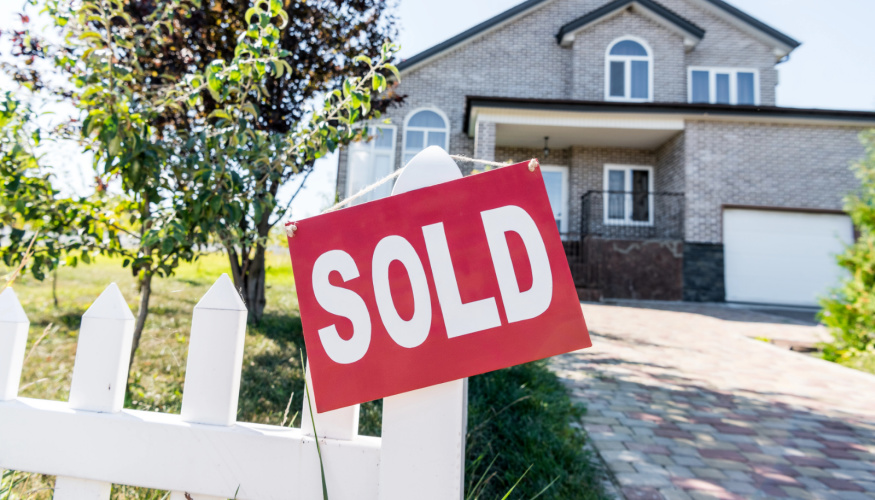
Courtesy of Deposit Photos.
Courtesy of Deposit Photos.
Colorado housing market shows steady trends amid affordability challenges
Margaret Jackson //June 15, 2026//



In Brief:
- Pending contracts rise 2.7% in metro Denver
- Statewide median sales price up 2.7%
- Inventory tight with 3.9 months supply in Denver
- Colorado Springs sales increase 7.3% year-over-year
Colorado’s housing market is steering into summer on a steady course.
The market is headed toward normalization in a balanced and sustainable environment, according to the Colorado Association of Realtors’ latest Market Trends Housing Report.
Despite persistent affordability challenges and mortgage rates above 6%, buyer demand across the state remains resilient, though more deliberate.
Metro Denver: Resilient and selective
In the seven-county Denver metro area, the spring and early summer market has been steady. Through May, new listings dropped 5% year-over-year, and sold listings dipped 1.8%.
However, pending contracts rose 2.7% – a metric real estate experts point to as a truer indicator of sustained buyer engagement.
Inventory remains tight, with active listings down 18.1% from last year and supply contracting from 4.7 to 3.9 months. The inventory squeeze continues to support home values, holding the median sale price steady at $575,000, down just 0.4% from last year.
“The bottom line – Denver is not racing nor crashing, it is proving resilient and steady,” said Cooper Thayer, a Denver-area real estate agent with The Thayer Group.
“For sellers, the opportunity is still there, but pricing discipline and strategic planning are critical. For buyers, the market offers more breathing room than it did a few years ago, but waiting for a major price reset may continue to be a frustrating strategy.”
Statewide trends: A shift to equilibrium
Statewide, the market echoes the push toward equilibrium. While new listings across the state dropped nearly 14% compared to May 2025, pending sales climbed 7%, demonstrating that motivated buyers are hunting for properties.
Statewide median and average sales prices saw modest gains, rising 2.7% and 3.3%, respectively. Homes are staying on the market longer, averaging 56 days, while statewide inventory sits at a healthier 4.3 months of supply to the historic lows of recent years.
Notable May 2026 housing trends by market include:
- Boulder and Broomfield: Measured and slow; buyers have negotiating power while sellers face softer pricing.
- Colorado Springs: Promising growth with sales up 7.3% year-over-year, though 44.2% of active listings saw price cuts.
- Durango/La Plata: High demand; single-family sales surpassed last year by 40% as in-town condo listings surged 93%.
- Evergreen/Foothills: Rebuilding inventory gives buyers the greatest selection in a decade; median prices held near $700,000.
- Mesa County: Facing headwinds with closed sales down 13%; average days on market climbed to 106 days.
- Weld County: Cautious buyer pool; sales fell 22% for the month, and the median price softened slightly to $504,995.
New real estate reality
The overarching theme for Colorado real estate heading into summer is normalization. Buyers are adjusting to the reality of higher interest rates, shaking off the sticker shock of previous years, and taking advantage of increased negotiating power and selection.
For sellers, the era of immediate, effortless bidding wars has largely passed. Success in today’s market requires properties to be competitively priced from the outset, well-maintained and strategically presented to attract selective buyers.
The state’s severe structural housing shortage continues to provide a solid floor for property values, keeping the market balanced, stable and sustainable.
“As the market continues to normalize, realistic pricing and patience is the name of the game,” said Kelly Moye, a real estate agent with Compass Real Estate. “Sellers who align their expectations with current market conditions and present their homes effectively are achieving results, while buyers are finding opportunities that were scarce during the highly competitive markets of previous years.”