Upcoming Event
 Free Newsletter

CU Boulder report analyzes state policies on data center water use
ColoradoBiz Staff //July 14, 2026//
CU Boulder report analyzes state policies on data center water use
ColoradoBiz Staff //July 14, 2026//



In Brief:
- University of Colorado Law School authors new report
- Report covers state legislative activity through June 2026
- Identifies four key policy approaches to water use
- Co-authors Daniel Anderson and Sydney Stellato
BOULDER, Colo. — A new report from the University of Colorado Law School examines how states are responding to the growing water demands of data centers that support artificial intelligence and cloud computing.
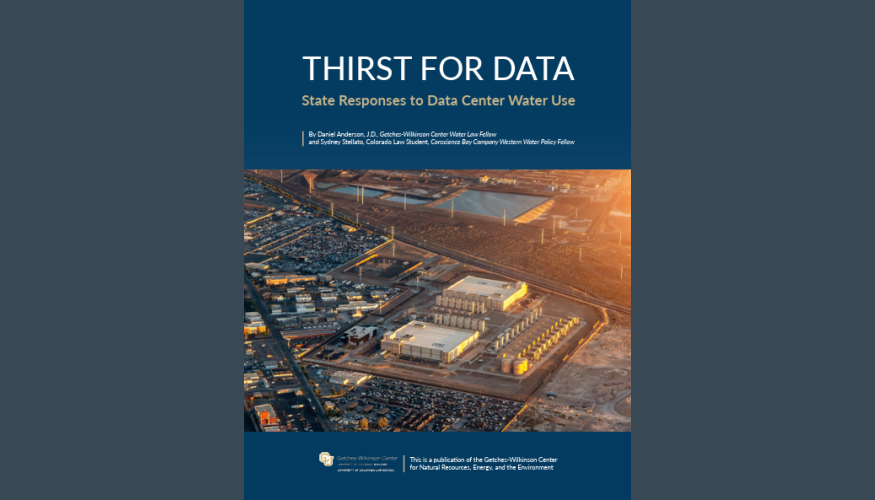
The report, Thirst for Data: State Responses to Data Center Water Use, was developed by the Getches-Wilkinson Center for Natural Resources, Energy, and the Environment. It reviews state legislative activity through June 2026 and outlines approaches lawmakers are using to regulate water consumption by data centers.
According to the report, data centers require large amounts of water for cooling, and much of the industry’s expansion is occurring in the western United States, where water supplies are already limited. In the absence of federal standards, states are adopting a range of policies to address water use.
“AI is accelerating data center growth at a pace that traditional water planning was never designed to handle,” co-author Daniel Anderson, a Getches-Wilkinson Center Water Law Fellow, said. “Understanding these four legislative pathways is vital to navigating our shared water future.”
The report identifies four primary policy approaches emerging across the country:
- Reporting requirements that require operators to track and publicly disclose annual water use.
- Conservation measures that limit potable water use for cooling or establish water efficiency standards.
- Incentives that link tax credits or development grants to low-water or waterless cooling technologies.
- Prior appropriation requirements that ensure data center water use complies with state water rights laws and available supplies.
The report concludes that state policies remain in the early stages of development and are likely to evolve as lawmakers assess new regulations. It also recommends improving water-use data collection and public reporting to support future policy decisions.
The report was co-authored by Anderson and Sydney Stellato, a University of Colorado Law School student and Conscience Bay Company Western Water Policy Fellow.
s