Upcoming Event
 Free Newsletter

NFIB Small Business Employment Index dips in March but stays above average
ColoradoBiz Staff //April 13, 2026//

Qualified job applicants. Courtesy of the NFIB.
Qualified job applicants. Courtesy of the NFIB.
NFIB Small Business Employment Index dips in March but stays above average
ColoradoBiz Staff //April 13, 2026//



WASHINGTON — The small business labor market showed signs of moderation in March as the NFIB Small Business Employment Index fell 1.9 points to 101.6, though it remained above both the 2025 average of 101.2 and the historical average of 100.
The index, based on a survey of 432 small business owners, reflects both current and planned employment and compensation trends. A higher reading indicates a tighter labor market.
In March, 32% of small business owners reported job openings they could not fill, down 1 point from February but still above the historical average of 24%. About 27% reported openings for skilled workers, while 12% cited openings for unskilled labor.
Hiring activity also edged lower, with 52% of owners reporting they were hiring or trying to hire, down 2 points from the prior month. Among those, 45% said they received few or no qualified applicants.
“While small businesses are not hiring extensively, they continue to face difficulties related to labor cost and quality,” said NFIB Chief Economist Bill Dunkelberg. “Despite the current stagnant employment growth, economic conditions could change rapidly.”
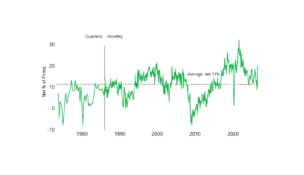
A net 12% of owners said they plan to create new jobs in the next three months, unchanged from February and near the historical average.
Labor quality remained a key concern, cited by 15% of owners as their most important problem, above the historical average of 12%. Meanwhile, 10% identified labor costs as their top issue, up 1 point from February.
Compensation trends softened. A net 33% of owners reported raising wages in March, down 1 point, while a net 18% plan to increase compensation in the next three months, down 4 points and the lowest level since July 2025. Despite the decline, both measures remain above historical averages.
The report suggests hiring demand is cooling, with job openings at their lowest levels since the recovery from the COVID-19 recession and employment growth showing little movement.
t