Upcoming Event
 Free Newsletter

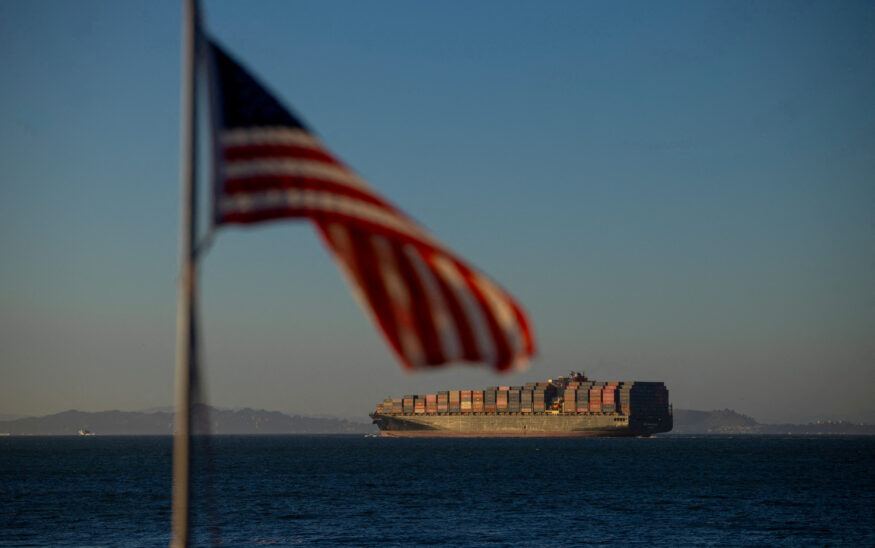
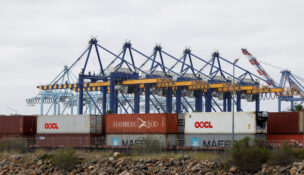
A cargo ship full of shipping containers departs the port of Oakland at the San Francisco Bay, California, U.S., August 4, 2025. REUTERS/Carlos Barria/File Photo
A cargo ship full of shipping containers departs the port of Oakland at the San Francisco Bay, California, U.S., August 4, 2025. REUTERS/Carlos Barria/File Photo
Tariffs may lower inflation, SF Fed research suggests
Ann Saphir
Reuters //January 5, 2026//



Reuters – The sharp increase in tariffs imposed last year by the Trump administration may reduce inflation rather than increase it, according to research published Monday by the San Francisco Federal Reserve Bank, suggesting that interest-rate cuts may be the proper policy response.
In Brief:
- SF Fed research suggests tariffs may reduce inflation
- Average US import tariff rose to 17%, highest since 1935
- Study finds tariffs could raise unemployment pressures
- Findings may influence future interest rate policy debates
U.S. imports were subject to an average 17% levy last year, up from less than 3% at the end of 2024 and the highest rate since 1935, according to Yale Budget Lab.
“Our analysis of historical data highlights a possibility that the large tariff increase of 2025 could put upward pressure on unemployment while putting downward pressure on inflation,” researchers Regis Barnichon and Aayush Singh said in the regional Fed bank’s latest Economic Letter, which builds on their working paper published in November.
The finding draws on 150 years of empirical data from the United States, France and the UK.
The Fed held rates steady for much of last year, concerned that tariffs would add to inflation, as theoretical models and some empirical data suggested.
By September, signs of labor market weakness and a growing conviction that any inflationary boost from tariffs would be short-lived prompted the Fed to begin a string of rate cuts that lowered short-term borrowing costs by a total of 75 basis points in 2025.
The historical findings may not apply perfectly to today’s economy, the San Francisco Fed researchers wrote, noting that U.S. manufacturing today relies more on imported products than it did in the past, meaning that tariffs may now be more likely to trigger higher inflation.
Economic uncertainty and a drop in stock prices, both of which typically coincide with large tariff shocks, may explain why higher import levies reduced inflation in the past, the researchers found.
They did not examine how that historical experience may have mapped to last year, when uncertainty by many measures rose sharply, but major U.S. stock indexes also posted double-digit gains, fueling U.S. household spending and buoying the economy.
(Reporting by Ann Saphir, Editing by William Maclean)
s