Upcoming Event
 Free Newsletter

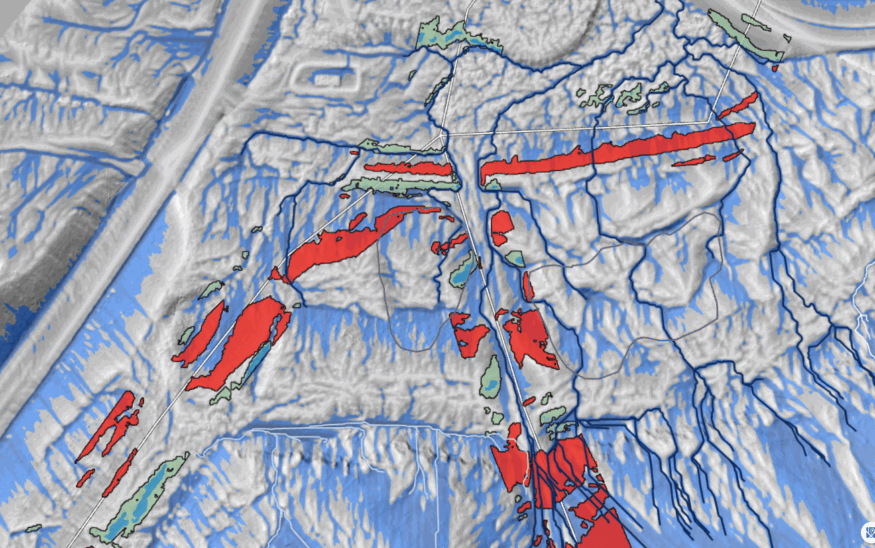
Photo courtesy of Teren.
Photo courtesy of Teren.
Startup of the Month: Teren
Eric Peterson //December 10, 2025//



- Company: Teren, www.teren4d.com, Lakewood
- Founded: 2021
CEO Toby Kraft worked as an environmental consultant focused on the oil and gas industry before launching Teren to fill a “gap in the market” with the Terevue platform.
In Brief:
- Teren’s Terevue platform creates real-time environmental digital twins
- Modules monitor threats like landslides, wildfires and post-fire debris flows
- Terevue Predict alerts operators to weather risks and potential shutdown needs
- Company works with pipeline operators, utilities and emergency managers
Previous methodologies for tracking threats of natural disasters that could impact infrastructure and operations often involved aerial surveillance and a small army of consultants. Terevue uses the cloud and big data to improve efficiency, accuracy and cost.
Now with 12 employees, Teren has continuously improved the platform with several modules focused on specific threats.
In a Nutshell
The company’s flagship Terevue platform “is an environmental digital twin platform,” says Kraft. “We’ve brought together all these different data sets, terrain, vegetation, hydrology, climate, and then we use that to help create a three-dimensional model of the environment around our customers’ assets, and then we can essentially monitor those in real time through weather feeds, satellite imagery and things like that.”
Modules enable customers to use Terevue to monitor specific threats, including landslides and wildfires. “We do leverage the platform quite a bit to help guide prescriptive treatments for wildfire . . . understanding where forest-thinning exercises and things like that should happen on the landscape to help reduce these types of threats overall,” says Kraft.
“Also in the post-wildfire context, we can take these debris flow models and things that we’ve developed to help figure out where we should apply treatments on the landscape to help prevent catastrophic loss after major wildfire events,” he adds. “The bulk of the property and casualty losses typically associated with wildfire come from those post-wildfire catastrophes.”
The company released Terevue Predict in 2025. “It’s a real-time weather alerting system,” says Kraft. “Essentially, what that does is it helps them keep critical personnel out of harm’s way. It lets them know where they need to go out and inspect for damages, things like that, and in some extreme cases, where they should shut down a pipeline or some type of electrical transmission distribution asset.”
Using physics and AI, flood prediction and modeling is another focus, Kraft adds. “We’re on that bleeding edge of where literature ends and innovation starts.”
Sam Acheson is a former Teren employee who now partners with the company as a market consultant for global engineering firm Woolpert. The status quo involved “a lot of consultative hours” for similar services as Terevue.
“They don’t have a huge incentive to think in an innovative fashion,” says Acheson. “Toby had a little bit of freedom to think about how you could scale that out and think more about creating a more efficient process, rather than billing customers for an hour.”
At Woolpert, Acheson relies on Terevue to help his customers manage a wide variety of assets. “You can provide a more value-rich package to your customers for a cheaper and disruptive price range,” he explains. “Terevue has allowed us to start thinking about things more in real time, rather than a yearlong or even two-year cycle of legacy processes.”
The Market
“Right now, we work really closely with a lot of large pipeline operators in helping them understand and monitor these threats,” says Kraft. “That’s in large part just because it’s where we started as a company. However, that’s expanded out. We’re working with utilities. Pacific Gas and Electric is really engaged with us on developing this technology.”
Teren has also engaged property restoration companies, emergency management organizations and state transportation agencies, he adds. “We’re trying to stay focused, because we’re a small company and we’re in those early stages of getting to market with a new product, but we do see a lot behind this core application in critical infrastructure.”
Financing
Kraft says Teren has raised a seed funding round with a few institutional venture capital investors, noting that Keenesburg, Colorado-based Huwa Enterprises is an investor as well as a strategic partner.
l