Upcoming Event
 Free Newsletter


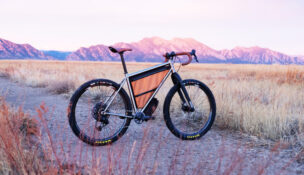
Photo courtesy of BOPA.
Photo courtesy of BOPA.
Winter 2025 Made in Colorado winners spotlight innovation
Eric Peterson //December 29, 2025//



The variety of products manufactured in Colorado is truly mind-boggling.
In Brief:
- ColoradoBiz named its winter 2025 Made in Colorado award winners.
- Honorees span food, aerospace, energy, apparel, medical and tech sectors.
- Manufacturing contributed $29.4 billion to Colorado’s economy in 2024.
- The feature highlights innovation, local production and statewide impact.
Not only is the Centennial State a major aerospace hub, but there’s also the “50-yard line of the natural foods industry” in Boulder, a nation-leading craft brewing and distilling industry, plenty of cutting-edge cleantech manufacturers and a seemingly endless array of craftspeople and artisans in every corner of the state.
Maybe it’s the thin air, the stunning scenery or the openness to new ideas, but there’s clearly some catalyst in Colorado pushing people to create all manner of things. And it’s on the rise: The National Association of Manufacturers reported a $1 billion jump from 2023 to 2024 as manufacturing contributed $29.4 billion to the state’s economy last year. Analysts project that gaudy number will increase by another $1 billion in the next few years, with more and more companies establishing manufacturing operations within our rectangular borderlines.
ColoradoBiz’s annual “Made in Colorado” issue for 2025 covers a lot of ground, from robotic farmhands to single-pot whiskey to electric motors for planes and ferries. There’s rampant innovation alongside a keen eye on market needs amidst this year’s profiles, and, perhaps above all, a single-minded drive to manufacture here in Colorado.
Food & Beverage:
Daddy’s Homemade Syrup (Evergreen)
Living with ankylosing spondylitis and osteoarthritis, Dannie Burr sought to eliminate high-fructose corn syrup from his diet. “We used to buy the giant jars of Aunt Jemima and Mrs. Buttersworth for our pancakes and breakfast foods,” says Amber Burr, Dannie’s wife and Daddy’s co-founder. “We realized how much high-fructose corn syrup and artificial ingredients were in those, so he decided to put it back on the shelf one day and make syrup himself.”
Dannie found his grandma’s cane sugar syrup recipe and honed it for 2 years before launching Daddy’s Homemade Syrup with 2 flavors in 2020. He soon earned the nickname, “the syrup king of Evergreen,” says Amber. “He felt he had to live up to the name of that, so he just kept creating flavors and made over 100 flavors.”
The thick catalog (which then included such esoteric varieties as black licorice syrup) proved unwieldy, so Amber forced him to winnow the selection down to 20 core flavors earlier in 2025 “for the sake of our sanity and finances,” she says. Lavender syrup is the bestseller, followed by dark maple bourbon and cinnamon vanilla.
“When we first started, it was definitely very much a side hustle,” says Amber. “About two and a half years ago, I ended up getting laid off from my full-time job. We had already been building this business, so we decided to jump in with both feet and do this full-time.”
Syrup-making began in the Burr home kitchen, but growth has necessitated a move to a co-manufacturer on the Front Range in order to keep up with demand from consumers as well as restaurant, bar, and coffee shop accounts.
The Burrs’ oldest daughter drew the logo on the first jars by hand. While the logo remains the same, printed labels supplanted hand-drawn ones. “She was just very excited to not have to draw them anymore,” says Amber.
Agriculture
BOPA (La Junta)
In 2017, siblings Jaron and Sarah Hinkley founded BOPA and mapped farmers’ fields using aerial drones. Customers loved the rich data, but they also highlighted a bigger challenge: a dearth of ag labor. “They needed more laborers, and laborers were becoming harder and harder to get,” says Jessie Klein Hinkley, BOPA’s VP of partnerships and Jaron’s wife.
The company pivoted to that problem and developed the first prototype of the ANT (Autonomous Nano Tractor) in 2021 at the Klein Makerspace in La Junta. “We are now on version 17, which is our final version,” says Klein Hinkley. “BOPA was able to build all 17 of the robots out of the makerspace.”
BOPA finishes the units at the Emergent Campus in Florence, Colorado. “Once we’re done building the shell, we take them up to Florence, because that’s where all of our engineers are, and they put the brains in it.”
With a target application of weeding between crops, BOPA sold four ANTs for $25,000 apiece in 2025. Klein Hinkley says it can cut labor costs in half and weed up to 10 acres a day. A precision spraying implement for fertilizers and pesticides is in development. “We are coming out with a spray prototype, so we’ll have a couple of our farmers that have been with us since the beginning testing it in the field,” says Klein Hinkley.
“We are going to do a lease model for the 2026 season, where the farmers lease it for eight to 20 weeks, depending on their farm season,” says Klein Hinkley. “Then they can lease as many as they need and just return it after the season. We make any repairs that need to be done, upgrades, stuff like that, and get it ready for the next season.”
The new model involves building 100 new ANTs by summer 2026, so BOPA is in negotiations with contract manufacturers on the Front Range to boost production. The makerspace in La Junta, which Klein Hinkley founded, will remain the company’s R&D hub. To support the growth, the 10-employee company will hire about five new engineers by spring 2026. It’s also pursuing new investment after raising $3.2 million since its founding.
“BOPA’s most important thing is to help the small to mid-sized farmers,” says Klein Hinkley. “That’s been our mission from day one.”
Home & Lifestyle
Can-D-Lite (Gunnison)
A lifelong artist, Cheri Anderson started turning cans into art about 25 years ago. “I dabbled in painting, drawing, woodwork, ceramics. I thought I was going to be a ceramicist for a long time, and then my neighbor introduced me to metalwork, and I just loved it, because it was everything in one,” she says. “It was drawing with a torch. If you make a mistake, you can’t hide it. You have to smash the can and recycle it.”
By 2012, Anderson launched her business, Can-D-Lite, focusing on lighting products made from upcycled vegetable, soup, and coffee cans. Her supply chain includes local restaurants and schools. “I also have a bin outside of my shop, and everybody drops cans off for me,” she says. “I’m constantly getting cans from people, which I really appreciate.”
“Then I get my torch, and I put my gear on, and I start drawing,” says Anderson. “It’s all freehand.”
She estimates she’s upcycled “tens of thousands” of cans from her garage studio over the years. “I really enjoy my work. I just get into it and play loud music and just go for it.”
Beyond can-based lamps and string lights, Anderson also makes birdhouses, garden art and metal murals from sheets of tin to sell at art shows, as well as by commission. Her work decorates local restaurants, including Bonez in Crested Butte and Garlic Mike’s in Gunnison.
The Gunnison Valley scenery provides a creative spark, says Anderson. “I draw my inspiration from nature, so I always get to go out on my horse and take a breather and just suck it all in, and then when I get back in the shop, it just comes out on the cans. That’s the best way I can explain it.”
The biggest hazard of the job? “My eyebrows get burnt off sometimes,” laughs Anderson.
Apparel & Gear
Link Designs (Steamboat Springs)
Founder Eric Samuelson conceived Link Designs in 2017 for a marketing class at Colorado Mountain College. The assignment quickly morphed into a side hustle making upcycled mittens. “I was already thinking about making mittens out of recycled leather jackets, so I just built it off of that,” says Samuelson. “I had the tagline first, which was ‘the link between old and new.’”
Instead of using leather jackets, Samuelson sources scrap leather from upholstery shops and from locals disposing of furniture. “Upholstery leather is so much thicker than standard leather,” he says. “It takes a little longer to break in, but that makes it last longer and hold more warmth.”
In 2024, Samuelson quit his job at Moots Cycles across town and went full-time with Link. It’s a one-man operation: He sews all the mittens and handles the marketing and other aspects of the business.
Most Link mittens are custom and sold direct-to-consumer, but he has wholesale accounts with Alterra Mountain Company and several Steamboat retailers. Samuelson estimates he’s made more than 1,000 pairs in eight years, including about 300 during the 2024-25 season alone. With increasing demand, he anticipates needing to bring in some outside help soon.
Samuelson tests his prototypes at Steamboat Ski Resort, where he worked in the terrain park when he launched the business. “I can go out my back door and go ski and test what I make, and then come back home and make a bunch,” he laughs.
What’s in the works for Link for the 2025-26 ski season? “Just growing it,” says Samuelson. “I’m trying to just stay pretty true to the mittens, because it’s easy, most people want them that way, and every pair is always different.”
Beer, Wine & Spirits
Talnua Distillery (Arvada)
The husband-and-wife team of Patrick and Meagan Miller were happily working in the energy industry when the 2014 oil bust forced them to consider a new career. The couple decided to pursue their passion for whiskey and launched the country’s first single-pot-still whiskey distillery in 2017. Two years of buildout and barrel-aging later, Talnua Distillery opened in Arvada in 2019.
“We’re the first distillery outside of Ireland that is fully dedicated to making single pot still whiskey,” says Patrick. “Single just means made grain to glass at one distillery, and pot still whiskey is an old style of Irish whiskey-making that uses malted and unmalted barley and then is traditionally triple distilled, and that’s what we do here.”
The couple fell in love with single pot still whiskey on trips to Ireland, starting with their honeymoon in 2011. Their introduction to Redbreast Irish Whiskey proved pivotal. “It’s an exceptional whiskey,” says Patrick. “Meagan and I fell in love with it.”
Talnua’s revival of the style represents a new chapter in its centuries-long history. “Irish whiskey nearly went extinct because of American prohibition, back-to-back World Wars, the separation of Ireland from the British Empire,” explains Patrick. “That loss of British trade and the U.S. market was a devastating blow. And so you went from over 150 distilleries in Ireland at the turn of the 20th century. By the 1960s and 1970s, there were only two distilleries left in Ireland.”
Now, single pot still whiskey is on the comeback trail in Ireland and beyond, he adds. “We are the standard bearers for this revival, and we live out here in the Rockies, where barley is king, and so it’s using our native grain and the provenance of Colorado but honoring these Irish traditions.”
The whiskey world is taking notice. The American Distilling Institute named it “America’s Best Whiskey in 2025, as other awards accumulate. The volume has increased by about 750% since Talnua’s founding, and the Millers are now fundraising to expand their 800-square-foot tasting room that’s now “busting at the seams,” says Patrick.
Patrick’s personal favorite is Talnua’s American White Oak Cask Whiskey Bottled-in-Bond. “I just think it’s this perfect marriage of heritage that’s distilled like an Irish whiskey but aged like an American bourbon.”
Energy & Environment
Lumos Solar (Lafayette)
As a solar installer, Scott Franklin recognized the need for better architectural and design standards for solar installations. His company, Lighthouse Solar, moved into a line of dual-use solar products that also provide shade and shelter, and transitioned into a new company, Lumos Solar, by 2006.
“We saw the need for a more architectural solar solution,” says Ryan Schaub, who helped CEO Franklin launch Lumos as the company’s sales manager. “A lot of people wanted to go solar for environmental reasons, but they didn’t like the look of typical frame solar modules up on the rooftops, or maybe they didn’t have good solar access on their roof.”
The first Lumos products were solar thermal water-heating systems, but the catalog now focuses on SolarZones (solar shade tables), SolarPorts (solar carports), and SolarScapes (modular solar walkways, parking structures, and awnings).
“We stopped offering rooftop solar and really focused on our differentiated products for overhead applications and carports and canopies, awnings,” says Schaub. “We really have optimized our designs over the years to really make these overhead applications more efficient to install.”
The 12-employee Lumos works with a variety of contract manufacturers in Colorado and elsewhere for structural fabrication and sources solar modules from overseas supplies, then builds the final products in its facility in Lafayette.
Both made from domestic steel and aluminum fabricated in Colorado, SolarScapes have found a foothold in the commercial market as SolarPorts have become Lumos’s top residential product with one- and two-car options. “We’re in a unique space in the industry where we have a very differentiated solution that focuses on the aesthetics, durability, waterproofing and things like that,” says Schaub.
The company has successfully ridden “the solar coaster” for 20 years, Schaub adds. “There’s a lot of ups and downs,” he notes. “But we’re a pretty nimble, lean and mean company.”
Aircraft & Aerospace
Albedo Space (Broomfield)
Co-founder and CEO Topher Haddad says a tweet catalyzed Albedo’s launch in 2021. “In 2019, President Trump tweeted a classified satellite image that people speculate was taken from spy satellites that cost over $1 billion each,” he says. “We realized that we could achieve similar results by developing satellite technology to orbit sustainably in very low Earth orbit [VLEO], roughly half the altitude of traditional low orbit satellites, and enabling higher resolution with smaller optics.”
The proximity to Earth means not only sharper images but also stronger communication signals and less space junk, as atmospheric drag clears debris in weeks rather than decades. The challenge? Atmospheric drag and atomic oxygen at VLEO (less than 400 miles above the Earth’s surface) destroy normal satellites in a matter of months.
“We reimagined satellite design from first principles to unlock this new orbital domain with satellites that can last for a sustained lifespan comparable to commercial LEO satellites,” says Haddad. “Our satellites are complex integrated systems combining advanced hardware with sophisticated software, using special materials and unique processes to withstand VLEO’s harsh atomic oxygen environment.”
Staked with about $100 million in venture financing, Albedo successfully launched its first Clarity-1 satellite to VLEO in March 2025, with plans to launch Clarity-2 in 2026. Albedo manufactures its satellites at its 10,000-square-foot facility in Broomfield, with space to build up to four units at a time. “We build a lot of our technology in-house, and we work with many local Colorado suppliers as well,” says Haddad. The company started as a remote-first business but chose Colorado as its manufacturing center for its strong aerospace talent base and supply chain, he adds.
In 2026, the company will be “focused on scaling up manufacturing with near-term emphasis on remote sensing systems, along with developing new products for other mission areas unlocked now that we’ve proven the platform can fly sustainably in VLEO,” says Haddad.
Industrial
H3X (Louisville)
A college competition to build electric racecars sparked Jason Sylvestre and his H3X co-founders’ interest in electric motors at the University of Wisconsin in 2017. “It was at that point we got exposed how broken the U.S. supply chain is for high-performance electric motors,” says Sylvestre, now the company’s CEO. “We ended up building our own motors and power electronics for the car, and just became absolutely obsessed with it.”
After stints at other companies, the team reconvened to launch H3X in 2020. The startup germinated in the Y Combinator accelerator, then established its 17,000-square-foot headquarters in Louisville in 2023 after graduating from smaller spaces in Westminster and Lakewood.
“We’re very vertically integrated. We do all the design, manufacturing and testing out of our facility in Louisville,” says Sylvestre. “A lot of our performance is not only in the engineering, but it’s how we manufacture the electric motors. We’ve completely rethought how motors are made, and we’ve created new processes in-house here from scratch.”
The 50-employee company is now shipping several of its electric motor drives to customers as it continues to develop others. Target markets are aerospace, defense, marine and industrial. “Our biggest market today is aerospace and defense, but any application that is weight- or space-sensitive can benefit from our motor,” says Sylvestre. “What we really specialize in is very high-power density: We pack a lot of power in a very small package.”
“One application is industrial power generation. Another is actually electric frack pumps,” says Sylvestre. “This is a market that we’re just starting to get into, but there seems to be great potential there.”
“For the large, industrial, megawatt-class machines, they come from companies like Siemens and GE. That technology really hasn’t changed all that much in the last 30 years. They’re still using pretty dated technology, and our products are quite the contrast to those types of machines.”
After raising about $30 million from such investors as Lockheed Martin and Cubit Capital, H3X is entering a new chapter, he adds. “We’ve spent a lot of the last couple of years in technology development. Now that we’ve done that, the next phase is really focused on scaling.”
Medical & Bioscience
CaliberMRI (Boulder)
CEO Bill Hollander spun CaliberMRI from his previous company, High Precision Devices (HPD). “We built instruments for government labs and universities and private companies, integrated scientific, very highly technical instruments, and NIST [National Institute of Standards and Technology] was one of our customers,” he says.
In 2008, HPD started collaborating with NIST scientists in Boulder on “phantoms” that mimic tissue for magnetic resonance imaging (MRI) calibration. The goal was to develop quantitative standards for MRIs.
MRI scanners “are calibrated routinely on matters of resolution,” explains Hollander, who sold HPD in 2020 to focus on CaliberMRI. “What those tests don’t include is any measure of tissue properties. What quantitative MRI is about is measuring tissue properties to be able to distinguish between healthy and diseased tissue, using MRI as opposed to biopsy, which is the current default.”
Spherical structures filled with chambers of chemicals that mimic human tissue, phantoms are “the devices that are used to do this higher level of calibration on MRI machines,” he notes. “Researchers around the world have been laying the groundwork using these devices as the ground truth basis for all these measurements.”
Using a largely local supply chain, CaliberMRI builds a wide variety of phantoms in-house, says Hollander. “We fill these little vessels with the solutions and plug them up and mount them inside of this shell and then you have this bowling ball-sized thing that’s full of liquids, and that gets placed into the MRI scanner.”
The end result is a replicable standard for detecting a wide range of medical conditions via MRI, he adds. “I can now send one to this hospital over here, and they can calibrate their scanner with it. I can send another identical one to that hospital over there, and they can calibrate their scanner to it.”
With clinical adoption of quantitative MRI just beginning, the seven-employee CaliberMRI is well-positioned to serve the market as the technology gains traction. “We really have spent the last several years just developing our processes and making them scalable as the market accelerates,” says Hollander.
Electronics & IT
KRI (Fort Collins)
After working for NASA and Colorado State University’s Physics Department, Harold Kaufman teamed with Steve Robinson in 1978 to start KRI, an acronym for Kaufman & Robinson, Inc., as an engineering and consulting firm focused on ion-beam technology.
Think of ion sources as atomic-scale leaf blowers: They generate beams of ions that can travel from roughly 20,000 to over 200,000 miles per hour. “For example, in eyeglass lens coatings, the ion beam may be directed at silicon dioxide and titanium dioxide targets,” explains Richard Serrano, KRI’s current president and CEO. “The ions knock material from the targets, and those atoms travel to the lens surface to form thin layers that provide anti-reflective and scratch-resistant properties.”
KRI expanded from R&D into manufacturing its own products in 2002. “As demand increased, we further scaled our facilities to enhance production capacity and grow our R&D team,” says Serrano. “Today, nearly five decades of accumulated expertise have been combined to deliver innovative technologies across a wide range of applications.”
Most manufacturing is done in-house, he adds. “We have our own internal machine shop that makes a high percentage of our parts, and then we have our own electronics production department that puts all electronics together for our controllers. We also have an ion source production department that builds all the ion sources and does all the testing.”
The company’s markets are all over the map, including microchips, medical and battery manufacturers, with more cutting-edge applications on the horizon. “As you look at the fusion work that’s going on, there are some advances in technology that are being worked on that are going to continue to need ion sources to support the manufacturing side of it,” says KRI Director of Sales Chris Griffith.
The 50-employee company is currently building a new, 48,000-square-foot headquarters in nearby Wellington in anticipation of continued growth. “The new building will provide us with more than double the space, enabling us to scale our operations to meet our customers’ ever-increasing demand,” says Serrano.