Upcoming Event
 Free Newsletter

Trump signs orders to boost beef imports and herd size amid record prices
David Lawder and Tom Polansek
Reuters //May 11, 2026//
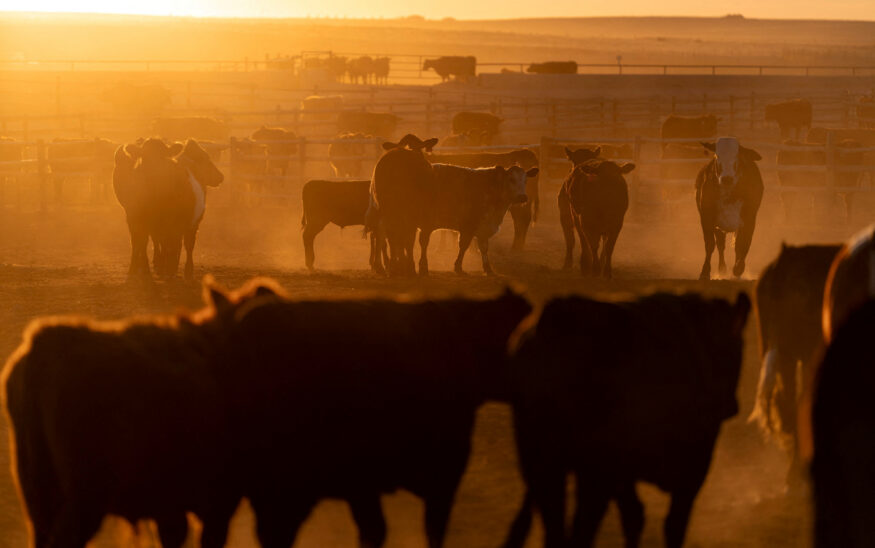
Cattle gather in a feedlot at Callicrate Beef, a vertically integrated ranch-to-market meat produce in Saint Francis, Kansas, U.S., March 20, 2026. REUTERS/Cheney Orr/File Photo
Cattle gather in a feedlot at Callicrate Beef, a vertically integrated ranch-to-market meat produce in Saint Francis, Kansas, U.S., March 20, 2026. REUTERS/Cheney Orr/File Photo
Trump signs orders to boost beef imports and herd size amid record prices
David Lawder and Tom Polansek
Reuters //May 11, 2026//



In Brief:
- Trump to sign executive orders on beef imports
- U.S. cattle herd at 75-year low
- Beef prices up 12.1% year-over-year in April
- USDA projects record 5.8 billion pounds beef imports
CHICAGO (Reuters) – U.S. President Donald Trump is set to sign executive orders on Monday to allow increased beef imports into the U.S. and to support renewal of the U.S. cattle herd in an effort to address high beef prices, a White House official said.
The official did not provide details on the two executive orders, which come at a time when the U.S. cattle herd has shrunk to its lowest level in 75 years, and beef prices continue to climb.
Earlier, the Wall Street Journal reported that Trump would temporarily suspend tariff-rate quotas on beef, allowing more of the meat to enter the U.S. at lower tariff rates. The newspaper said Trump would direct the Small Business Administration to increase lending to ranchers and to reduce protections under the Endangered Species Act for gray and Mexican wolves that prey on herds.
Expectations for increased beef imports from Brazil weighed on U.S. cattle futures after Trump met Brazilian President Inacio Lula da Silva last week. On Monday, Chicago Mercantile Exchange June live cattle futures shook off early losses to end slightly higher, while August feeder cattle dropped 0.5%.
Although prices for eggs, milk, and other grocery staples have fallen since Trump took office in January 2025, beef prices continue to climb, a symbol of persistent inflation for American consumers as the summer backyard grilling season gets underway.
Last October, Trump ordered a quadrupling of beef imports from Argentina, and a month later, removed his 40% punitive tariff on Brazilian beef and coffee.
The moves did little to reverse beef prices, which were up 12.1% year over year in April, according to the Labor Department’s Consumer Price Index. Beef is more than 16% more expensive than when Trump returned to office in January 2025.
Hamburger Helper
The U.S. cattle herd has dwindled to a 75-year low after ranchers slashed their herds due to a persistent drought that burned up grazing land and raised feed costs. High cattle prices have also encouraged ranchers to sell their livestock for slaughter rather than keep them for breeding.
The U.S. Department of Agriculture has projected that the country will import a record 5.8 billion pounds of beef this year, up about 6% from 2025 and 25% from 2024.
Most imports are lean beef trimmings that are mixed with U.S. supplies to make ground beef, said David Anderson, agricultural economist at Texas A&M University. He said more imports could help hamburger restaurants reduce ingredient costs, but he did not expect consumer prices to fall significantly.
“We were already importing a record amount. How much more does this get on top of what we were already importing?” Anderson said. “I’m hard-pressed to see how this is going to be a huge effect on prices. It would be tough to have this be a huge influx of supply.”
Bill Bullard, CEO of cattle producers’ group R-CALF USA, said increased imports also could discourage American ranchers from expanding their herds. Smaller cattle feeders could even exit the industry if prices drop far enough, he said.
Consumers may not see benefits as ranchers come under pressure, Bullard said.
“We’ve had record imports for the past three years, and at the same time, consumers continue to pay record prices for beef,” he added.
(Reporting by David Lawder and Tom Polansek, writing by David Lawder Editing by Mark Porter and David Gregorio)
e