Upcoming Event
 Free Newsletter

Boulder’s Electra wins top entrepreneur award for clean ironmaking innovation
Eric Peterson //August 3, 2026//

Deposit Photos
Deposit Photos
Boulder’s Electra wins top entrepreneur award for clean ironmaking innovation
Eric Peterson //August 3, 2026//



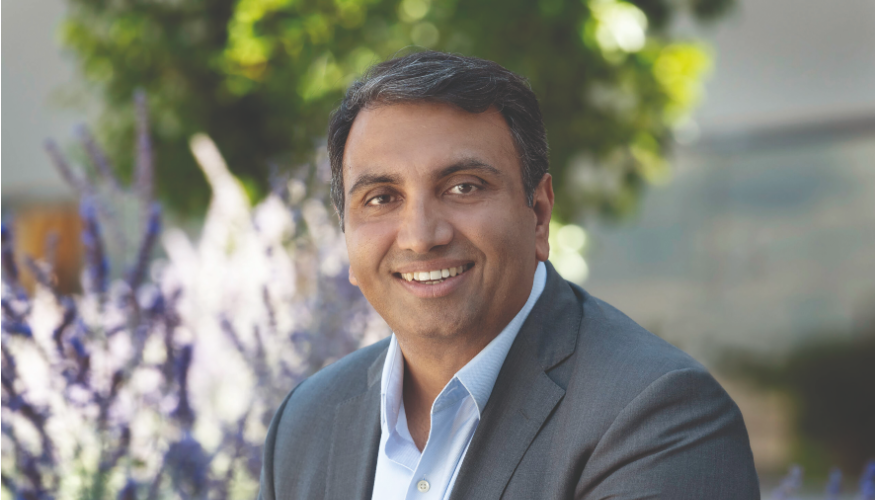
- Sandeep Nijhawan, CEO, Electra, Winner 2026 Entrepreneur
- Melanie Fellay, Co-Founder and CEO, Spekit, Finalist 2026 Top Entrepreneur

- Rob Slaughter, Co-Founder and CEO, Defense Unicorns, Finalist 2026 Top Entrepreneur
-
- Viswa Colluru, Founder and CEO, Enveda, Finalist 2026 Top Entrepreneur
-
- Daniel Haarburger, Founder and Chairman, Woof, Denver, Finalist 2026 Top Entrepreneur
-
In Brief:
- Sandeep Nijhawan co-founder and CEO of Electra
- Electra raised more than $300 million in funding
- Demonstration plant in Jefferson County to open by end of 2026
- Electra employs about 170 people with plans to add 50 more
Winner
Sandeep Nijhawan, co-founder and CEO, Electra, Boulder
Before setting off to revolutionize ironmaking with Electra, Nijhawan launched and led a number of clean energy and advanced manufacturing startups and a stint in venture financing gave him a perspective from the other side of the table.
There’s a common thread stitched across his 25-year career as a serial entrepreneur. “What has motivated me the most is to solve hard problems that have a meaningful impact for our kids and future generations,” says Nijhawan, 56. “That was instrumental in starting Electra from day one.”
That was back in 2020. “The company was started during COVID, quite literally out of a garage,” says Nijhawan. “We bought equipment at an auction using our personal funds to get going in a garage. From the outset, what we set out to do is rethink how iron is produced for steelmaking, using clean energy to have the lowest emissions, as well as the highest environmental sustainability for that process. That was the core conviction for starting up Electra.”
In the six years since, Electra has gone from the benchtop to pilot-scale plants in Boulder to a demonstration plant in Jefferson County that’s currently under construction and slated to open by the end of 2026.
Along the way, the company outgrew almost all of the equipment from the auction. Almost. “One of the things we bought at the auction was the coffee machine that we still have, so it’s been with us since day one,” he laughs. “And it’s very important.”
Also important to Electra’s business model: vast amounts of “underutilized ores” that are gathering dust at iron mines nationwide. The company’s process dissolves the ore in an acidic solution to start purification via a low-temperature, low-carbon electrolysis process.
“By passing clean electricity through the solution, we extract 99% pure iron,” Nijhawan explains. The status quo for coal-fired blast furnaces is about 93%, but modern electric-fired steel plants need virgin iron to add to scrap steel as a sweetener. “Iron is becoming a constrained commodity because of this shift,” says Nijhawan. “There’s no way around iron.”
The 130,000-square-foot demonstration plant will have an annual capacity to make 500 tons of iron. Nijhawan says he sees it as a stepping stone to the “building block” of a plant that could make 200,000 tons of iron a year by 2030. “You take that building block and replicate at different sites and regions and essentially build capacity to millions and millions of tons globally.”
That sort of scale could make a massive impact. With a worldwide annual market of 1.9 billion tons, steel is “20x larger than any commodity humanity produces,” says Nijhawan. “It’s ginormous to say the least.”
Iron alone represents a half-trillion-dollar annual market, and Nijhawan says he also sees potential in silica and alumina as well. As iron and steel account for about 10% of global carbon dioxide emissions, Electra is also selling environmental attribute credits (EACs) to customers seeking to offset emissions.
The company has raised more than $300 million in venture funding and grants to date. With such early customers as Meta, Nucor and Toyota Tsusho America, the company has about 170 employees. Nijhawan expects that number to jump by about 50 when the demo plant opens later in the year.
Nijhawan says that a two-hour phone call with Dan Steingart, a chemical metallurgy professor at Columbia University, helped crystallize the idea into a startup. Steingart and Nijhawan had previously collaborated at a startup, Staq Energy, and were discussing technologies that might be worth pursuing.
The idea for Electra captivated Steingart, and he subsequently took a leave from Columbia to join the fledgling company as chief scientist for a year, starting in late 2021, and he remains an advisor.
Steingart credits Nijhawan for developing a sturdy business model free of “binary risk,” all-or-nothing factors that could kill a company: Electra neatly fits into the existing industrial landscape with its use of low-grade already-mined ore and well-established underlying technology, as well as the growing demand for high-purity iron.
“It’s a clever process that leverages a lot of other technologies that already work,” notes Steingart. “We didn’t want to have to invent entirely new industries in order to get this done.”
It fits into a broader pattern for Nijhawan. “It’s cliché to say, ‘Work smarter, not harder,’ but Sandeep really owns that way of doing things,” says Steingart. “This is the entrepreneurial version of the scientific process.”
“In other startup contexts I’ve worked in, you come up with an idea, and then you try to make the world work around that idea,” he continues. “The whole point of a hypothesis is that you postulate the hypothesis and then work to disprove it. You don’t postulate a hypothesis and then work only on experiments that will support it.”
At Electra, Nijhawan has fostered the opposite dynamic. “What I learned early on is that you weren’t penalized for disproving your ideas. In fact, you were rewarded,” says Steingart.
Nijhawan says “foolish conviction” has been instrumental in his quest to upend industrial dogma. “Entrepreneurship is not a walk in the park on a day-to-day basis,” he says. “You’re moving a mountain. You get up at three in the morning, and you’re trying to solve a hard problem that nobody has solved. There are more bad days than good days on the whole.”
In that context, optimism and perseverance are crucial for the long haul. “You can’t transition out of the way the world has made steel for hundreds of years overnight,” says Nijhawan. “We are six years into this journey and have another four to five years before I can truly say that we have crossed the chasm.”
Online: www.electra.earth
Finalists
Viswa Colluru, founder and CEO, Enveda, Boulder
Colluru, 36, founded Enveda in 2019 around the idea that evolution has already done the heavy lifting for drug discovery, but it’s not simple to connect the dots between nature and patients.
“The problem is that it can take years or even decades to identify these molecules, and most of the industry has moved away from looking at nature for new medicines,” says Colluru. “We’ve built what is effectively a search engine for life’s chemistry, using our AI foundation model, PRISM, to identify molecules, understand their function and map them to biology.”
Trained on data from the world’s largest library of plant-derived molecules, PRISM doesn’t look at a single molecule at a time; it analyzes 10,000 simultaneously. “It has exceeded expectations,” touts Colluru. “We’re not just discovering molecules, we’re turning them into drug candidates 4x faster, 10x cheaper and with higher probability of success than traditional approaches.”
Investors have taken note: Enveda closed a $150 million Series D in September 2025, and the company has raised a total of $517 million since its inception.
Now 350 employees at sites in the U.S., Canada, Europe and India, Enveda has three drugs in clinical trials targeting atopic dermatitis, asthma and chronic weight maintenance. “These are all internally generated programs targeting large markets in immunology and metabolic disease,” notes Colluru. “That kind of pipeline depth and speed is highly unusual for a company at our stage.”
Clinical trials aside, the broader vision for Enveda “is to build the definitive engine for translating nature’s chemistry into medicines at scale,” he adds. “The biggest opportunities often come from areas where the underlying infrastructure hasn’t yet been built. If you can solve a foundational problem like decoding biology or chemistry, you can create compounding value over time.”
Online: www.enveda.com
Melanie Fellay, co-founder and CEO, Spekit, Denver
Fellay’s experience at a high-growth fintech startup in San Francisco spurred her to start up Spekit in 2018. “We went through a lot of the traditional business challenges,” says Fellay, now 33. “How do we onboard and ramp new hires to be successful? How do we roll out new processes and changes to our teams when our products and services are constantly changing? How do we keep our teams up to date on all of our competitors that are rolling out new capabilities?”
Fellay co-founded Spekit with Zari Zahra to create an AI-powered revenue enablement platform that was a better fit for modern sales reps. “We sell the value against the pain points that I felt myself,” says Fellay. “We solve your broader go-to-market enablement challenge by empowering each of your reps with the information they need to be successful.”
Now with about 90 employees, Spekit has raised about $60 million in venture financing and counts Southwest Airlines, Ibotta and iHeartRadio among its clients. Fellay also found time to write a book, Just-In-Time: The Future of Enablement in a World of AI, that was published in 2025.
Her mantra for tough times: “This too shall pass.” Explains Fellay: “Whether it’s a product taking longer to get adoption than we’re expecting, unexpected churn or a tough sales quarter, nothing’s ever permanent.”
Case in point: Spekit skidded into “a rough patch” in 2022-23 with widespread devaluation across the tech sector. “It really pushed us to innovate and to think more critically about the business, and I think we’re in a really good position now,” says Fellay. “With every tough challenge, if you’re willing to really listen, it will guide you in a direction, even if it’s not necessarily the one that you had in mind.”
Online: www.spekit.com
Daniel Haarburger, founder and chairman, Woof, Denver
After working as a consulting product designer for other brands, Haarburger decided to launch his own with Woof in 2019. “I realized that truly innovative products need more than shelf placement to succeed; they need storytelling, education, marketing and continuous iteration,” says Haarburger. “When I adopted my dog, Milo, it became clear to me that the pet industry was overdue for meaningful innovation.”
Haarburger worked alone (with the exception of Milo) and was unpaid for the first three years on a bootstrapped budget. Supply chain struggles stemming from the COVID-19 pandemic were an early stumbling block, but one that put Woof on the path to stellar growth.
The product offering shifted “from leashes to walk kits to everyday accessories before ultimately landing in play and enrichment,” says Haarburger. “The journey was anything but linear.”
Haarburger spent a year repairing a shipment of defective leashes by hand as Woof approached a crossroads. “With limited cash and only a few weeks of runway left, I made one final bet: launching what would become Woof’s hero product, the Pupsicle. It sold out within weeks.”
The Pupsicle “fundamentally changed the trajectory of the business,” says Haarburger. “In late 2022, I took a leap of faith by hiring a small team of passionate pet lovers and bringing on the right partners to help scale the business.”
He stuck the landing: Three years later, Woof landed at #3 on the Inc. 5000 with a mind-blowing three-year growth rate of 25,621%.
The 50-employee company has launched several other products that combine pet health and enrichment and is focused “on continuing that momentum through product innovation, expanded distribution and deeper engagement with pet parents nationwide,” says Haarburger.
Now 34, Haarburger says persistence and “willingness to pivot” have served him well. “Don’t be afraid to abandon a plan that isn’t gaining traction. The market is the ultimate truth-teller; listen to it more than you listen to your own initial vision.”
Online: www.mywoof.com
Rob Slaughter, co-founder and CEO, Defense Unicorns, Colorado Springs
Slaughter, 40, served in the U.S. Air Force for 13 years before moving into the private sector with Defense Unicorns in 2021. His co-founder and CTO, Jeff McCoy, served 18 years.
Slaughter and McCoy’s experience with unwieldy and antiquated military software informed the startup. “We were struggling to scale the software solutions that we were building for the military, and the big idea, the big breakthrough, was you really have to create new technology,” says Slaughter. “You can’t take someone else’s technology and stitch it together for these systems.”
Their deep understanding of that problem that came with their military background gave Defense Unicorns “an unfair advantage,” says Slaughter. “We understood the problem better than anyone else. We thought we had elite engineering talent. Are we better than Google? Are we better than Microsoft? No, but we understand this problem so well. We know exactly what the issues are.”
That concept has been demonstrated over the last five years. After announcing a Series B in early 2026, Defense Unicorns has raised $136 million to date against a $1 billion valuation.
A contract for software on nuclear submarines with the Navy has mushroomed into contracts “across all departments and services,” says Slaughter. “We’re on 79 systems today, which is a ton from a military perspective, and those 79 systems support 419 different mission capabilities. . . . We are easily going to double that number next year.”
The reason why is on full display on the F-22 Raptor. The pre-Defense Unicorns software update involved “several years of development, several years of integration,” says Slaughter. “You’d have to put the plane into depot maintenance, and it would cost you several million dollars per airplane to do an update.”
Post-Defense Unicorns, the pilot handles updates in the field on their own. “The pilot could do several updates a day,” says Slaughter. “Warfighters themselves can actually manage their own software package.”
Now approaching 200 predominantly remote employees, the company maintains an office at Catalyst Campus in Colorado Springs, where the company got its start. “That’s where I learned to be an entrepreneur,” says Slaughter. “I was watching other entrepreneurs at the Catalyst Campus, seeing small teams grow from two and three people to 200 people.”
Online: www.defenseunicorns.com
l