Upcoming Event
 Free Newsletter

Colorado River states stall on long-term water deal
JESSICA HILL
Associated Press //December 22, 2025//
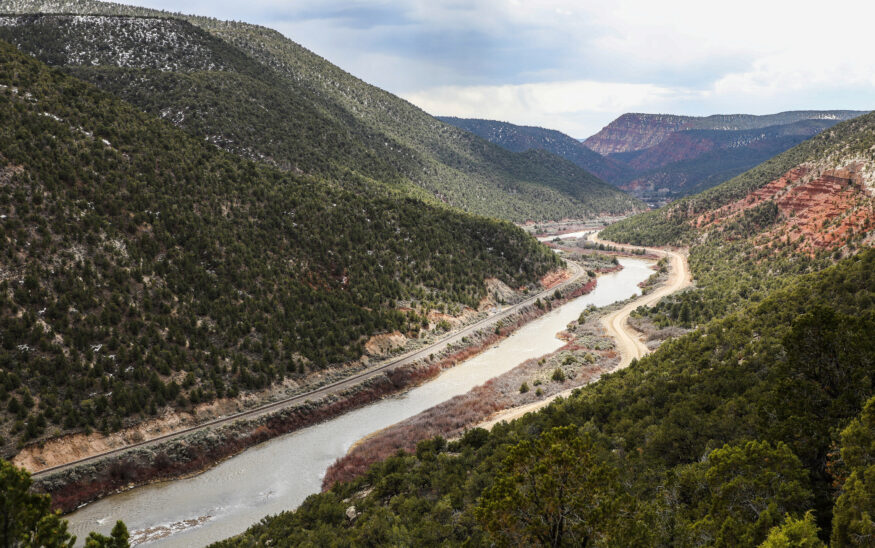
The Colorado River runs through mountains near Burns, Colo., on April 12, 2023. (Chris Dillmann/Vail Daily via AP, File)
The Colorado River runs through mountains near Burns, Colo., on April 12, 2023. (Chris Dillmann/Vail Daily via AP, File)
Colorado River states stall on long-term water deal
JESSICA HILL
Associated Press //December 22, 2025//



LAS VEGAS (AP) — The seven states that rely on the Colorado River to supply farms and cities across the U.S. West appear no closer to reaching a consensus on a long-term plan for sharing the dwindling resource.
In Brief:
- Seven Colorado River states remain divided on a long-term water-sharing plan.
- Current drought and shortage guidelines expire in 2026.
- Federal officials set a new deadline of Feb. 14 for a proposed agreement.
- Failure to reach consensus could trigger federal action or litigation.
The river’s future was the center of discussions last week at the annual Colorado River Water Users Association conference in Las Vegas, where water leaders from California, Nevada, Arizona, Colorado, New Mexico, Utah and Wyoming gathered alongside federal and tribal officials.
It comes after the states blew past a November deadline for a new plan to address drought and water shortages, with current guidelines expiring in 2026. The U.S. Bureau of Reclamation has set a new deadline of Feb. 14.
Nevada’s lead negotiator said it is unlikely the states will reach an agreement that quickly.
“As we sit here mid-December with a looming February deadline, I don’t see any clear path to a long-term deal, but I do see a path to the possibility of a shorter-term deal to keep us out of court,” John Entsminger of the Southern Nevada Water Authority told The Associated Press.
An essential resource
More than 40 million people across seven states, Mexico and Native American tribes depend on the water from the river. Farmers in California and Arizona use it to grow the nation’s winter vegetables such as broccoli, cabbage and carrots. It provides water and electricity to millions of homes and businesses across the basin.
But a longstanding drought, chronic overuse and rising temperatures have forced a reckoning about the river’s future. Existing water conservation agreements that determine who must reduce use during shortages expire in 2026. After two years of negotiating, states still haven’t reached a deal for what comes next.
The federal government continues to refrain from developing its own solution, preferring that the seven basin states reach consensus among themselves. If they don’t, a federally imposed plan could leave the parties unhappy and lead to costly, lengthy litigation.
Not only is this water fight between the upper and lower basins, but individual municipalities, tribal nations and water agencies also have a stake in this battle. California, which has the largest share of Colorado River water, has over 200 water agencies alone, each with its own customers.
“It’s a rabbit hole you can dive down in, and it is incredibly complex,” said Noah Garrison, a water researcher at the University of California, Los Angeles.
No deal emerges
During a Thursday panel of state negotiators, none appeared willing to bend on their demands. Each highlighted what their state has done to conserve water, from turf-removal projects to canal lining to reduce seepage, and they explained why their state can’t take on more. Instead, they said, others should bear the burden.
Entsminger, of Nevada, said he could see a short-term deal lasting five years that sets new rules around water releases and storage at Lakes Powell and Mead, two key reservoirs.
Lower Basin states proposed reducing flows by 1.5 million acre-feet per year to cover a structural deficit that occurs when water evaporates or is absorbed into the ground as it flows downstream. An acre-foot is enough water to supply two to three households a year.
But they want to see a similar contribution from the Upper Basin. The Upper Basin states, however, don’t think they should have to make additional cuts because they already don’t use their full share of the water and are legally obligated to send a certain amount of water downstream.
“Our water users feel that pain,” said Estevan López, New Mexico’s representative for the Upper Colorado River Commission.
Upper Basin states want less water released from Lake Powell to Lake Mead.
But Tom Buschatzke, director of the Arizona Department of Water Resources, said he hasn’t seen anything on the table from the Upper Basin that would compel him to ask Arizona lawmakers to approve those demands.
Within the coming weeks, the Bureau of Reclamation will release a range of possible proposals. Still, it will not identify a specific set of operating guidelines that the federal government would prefer.
Scott Cameron, the bureau’s acting commissioner, implored the states to find a compromise.
“Cooperation is better than litigation,” he said during the conference. “The only certainty around litigation in the Colorado River basin is a bunch of water lawyers are going to be able to put their children and grandchildren through graduate school. There are much better ways to spend several hundred million dollars.”
P