Upcoming Event
 Free Newsletter

Deposit Photos
Deposit Photos
Colorado River crisis deepens as new report warns of risks
ColoradoBiz Staff //December 15, 2025//



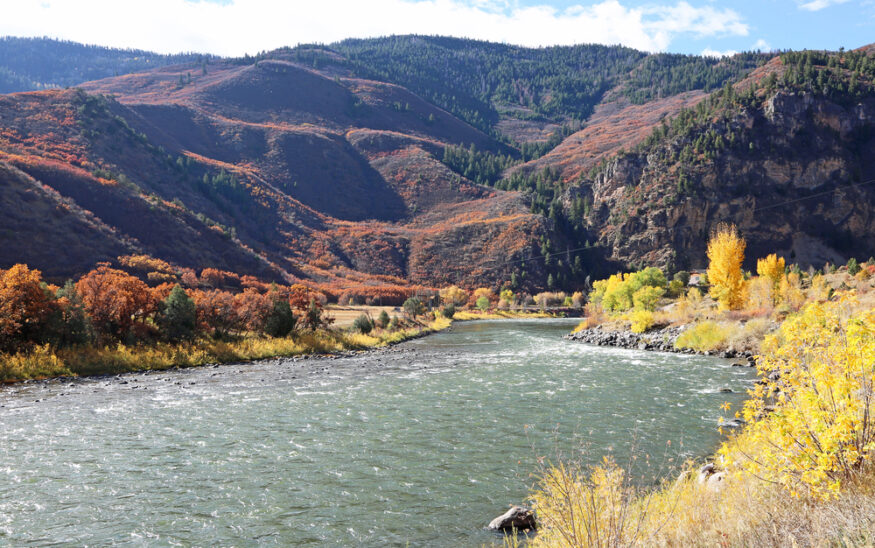
DENVER — The Colorado River basin is nearing a breaking point as shrinking reservoirs, climate pressures and weakening safety nets threaten the region’s water supply, economy and governance systems, according to a new assessment released by the Colorado River Research Group.
In Brief:
- Report warns Colorado River reservoirs are more than two-thirds empty
- Dry winters could push Lake Powell and Lake Mead below critical levels
- Climate change, declining groundwater and weak federal capacity deepen risks
- Researchers call for urgent basin-wide reforms and new governance structure
The report, Colorado River Insights 2025: Dancing with Deadpool, outlines worsening conditions as states, Tribes and federal agencies negotiate new operating guidelines that will take effect after 2026. Researchers warn that the basin no longer has time to delay major reforms.
Reservoirs that once held four years of river flows are now more than two-thirds empty, the report found. A single dry year or two could push Lake Powell and Lake Mead below critical thresholds, jeopardizing hydropower production, water deliveries and even the ability to move water downstream. The authors conclude that current operating rules through 2026 are unlikely to prevent that scenario.
“This report underscores that the basin is out of time, the crisis is no longer theoretical,” said Douglas Kenney, director of the Western Water Policy Program at the University of Colorado Law School and chair of the Colorado River Research Group. “Post-2026 negotiations must produce durable, equitable, climate-realistic solutions and they must do so urgently. The message is stark: the Colorado River system is now dancing with Deadpool.”
The report identifies several significant challenges:
- Severe shortage risk: If the next two winters are dry, combined usable storage in Powell and Mead could drop below 4 million acre-feet, far short of what is needed for water supply and Compact obligations.
- Climate-driven decline: Rising temperatures, shrinking snowpack efficiency and changing ocean-atmosphere patterns are reducing runoff and precipitation, with climate change pressing flows downward through multiple mechanisms.
- Safety nets collapsing: Groundwater reserves are declining, and federal capacity in funding, staffing and science is weakening. Interstate cooperation is deteriorating and legal disputes may follow.
- Equity concerns: Access to clean water and exposure to pollution vary sharply by race and ethnicity, with Hispanic, Black and Native American communities most affected. Any future framework must address these disparities.
- Structural and adaptation needs: Permanent water-use reductions, land-retirement programs and agricultural adaptation strategies are essential. Efforts to shift to percentage-based allocations remain stalled, increasing the risk of conflict.
The authors call for major structural reforms, including the possible creation of a basin-wide governance entity, a model widely used in international river systems but still absent on the Colorado River. They argue that many of the basin’s problems are self-inflicted and can be solved with existing technical, legal and financial tools.
“What is missing is urgency,” Kenney said. “The window for decisive, collaborative action is closing fast.”
The report was published by the Getches-Wilkinson Center for Natural Resources, Energy, and the Environment at the University of Colorado Law School, which is recognized for its work on western water and natural resource policy.
t