Upcoming Event
 Free Newsletter

Department stores bet on experiences as Saks struggles
Alessandro Parodi and Tassilo Hummel
Reuters //January 8, 2026//
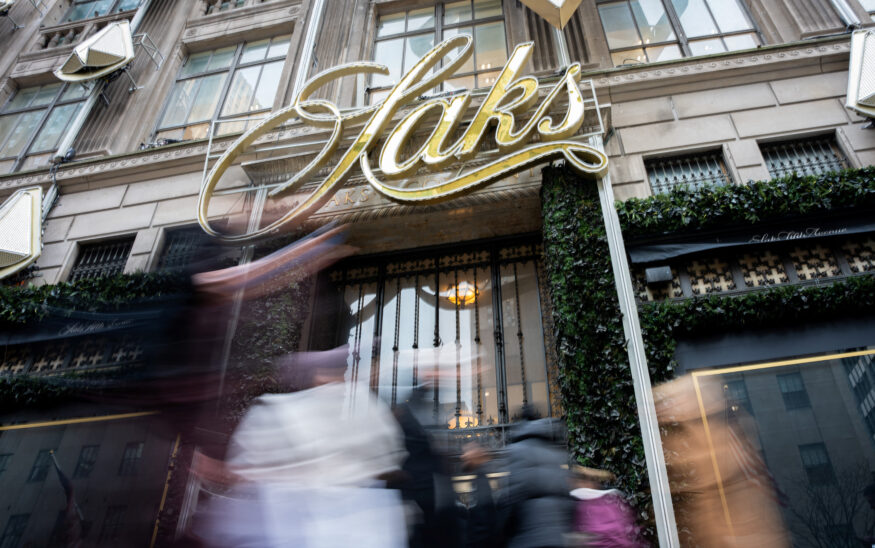
Shoppers walk outside the Saks Fifth Avenue flagship store in Manhattan in New York City, U.S., January 6, 2026. REUTERS/Angelina Katsanis
Shoppers walk outside the Saks Fifth Avenue flagship store in Manhattan in New York City, U.S., January 6, 2026. REUTERS/Angelina Katsanis
Department stores bet on experiences as Saks struggles
Alessandro Parodi and Tassilo Hummel
Reuters //January 8, 2026//



(Reuters) – From Paris to New York, department stores are sharpening their focus on curated shopping experiences – ice-skating shows, wine tasting and architectural tours – to try to win back shoppers.
In Brief:
- Department stores are investing in curated shopping experiences
- Saks Global reports falling revenue and missed bond payments
- Luxury brands and e-commerce continue to erode store traffic
- Analysts warn of limited recovery for department stores
The push has gained urgency as Saks Global’s mounting troubles highlight the sector’s struggle to stay relevant amid competition from luxury brands’ own boutiques and fast-growing e-commerce platforms.
Analysts say the trend is more than cosmetic. It reflects a structural shift in a sector under pressure from changing consumer habits and declining foot traffic.
“In today’s market conditions, selling luxury goods requires an outstanding experience, which works best in outstanding venues,” said Benjamin Sebban, head of retail investment at Knight Frank in Paris.
Immersive Experiences Drive Battle For Relevance
Qatar-owned Printemps’ new Manhattan store features paper replicas of French landmarks, a reminder of its Parisian heritage, and hosts exclusive launches and wine tastings.
“This is more than a place to shop. It’s a space to live, linger, and immerse yourself in a new kind of luxury lifestyle,” Printemps America CEO Thierry Prevost told Reuters, highlighting the store’s fine dining restaurant, champagne bar and talks with designers.
In Paris, Galeries Lafayette spent more than 100 million euros ($117 million) restoring its stained-glass cupola, crediting the revamp with lifting visits above pre-pandemic levels.
The push aligns with research from Bain, which found that experiential sectors such as hospitality and fine dining drove luxury market growth between 2023 and 2025.
Success isn’t guaranteed, however.
LVMH invested around 750 million euros in refurbishing the Art Nouveau building of its La Samaritaine department store on Paris’ Rue de Rivoli. But the store still struggled after its 2021 reopening in comparison with LVMH’s Le Bon Marche Paris store, and the pair were combined in a restructuring last year.
Analysts say department stores are betting that curated events and architectural upgrades can revive their relevance amid tougher trading.
Saks As A Warning Sign
Saks Global, whose bonds are publicly traded, reported a 13% year-on-year drop in second-quarter revenue to $1.6 billion in October and an adjusted core loss of $77 million.
CEO Marc Metrick stepped down after the company missed a bond payment, triggering reports it was preparing for bankruptcy.
While analysts cite inventory missteps and acquisition-related debt as key factors, they say Saks’ plight reflects a deeper structural squeeze: department stores are losing ground to mass-market chains offering value and luxury brands’ own boutiques promising exclusivity.
“What you’re seeing with Saks is a symptom of a much larger problem,” said UBS analyst Jay Sole.
Concession Models And Collaborations
Bernstein analysts say U.S. department stores should move toward concession-heavy models, providing multi-brand sales staff while letting brands manage operations and inventory.
Milan’s Galleria Vittorio Emanuele II offers a template: the city leases prime retail spaces through a bidding process, and says values have quadrupled over the past decade.
“Multi-brand retailers need to reinvent themselves and go back to their scouting and discovery mission,” said Bernstein analyst Luca Solca.
Some stores are experimenting with partnerships.
In November, Parisian retailer BHV hosted the first physical outlet for Chinese budget brand Shein, although the move drew criticism from some competitors and consumers.
“The right answer would be for department stores to build out their own online offering, with their own identity,” Knight Frank’s Sebban said.
Bleak Forecasts
Global department store sales are projected to have declined by 4% to 6% in 2025 and to show little recovery through 2030, according to a forecast by Bain in November, lagging growth estimates for the luxury sector overall.
U.S. retailer Macy’s warned in December that holiday-quarter profits would be weaker than expected due to cutbacks in discretionary spending.
London’s Harrods in October reported a 17% decline in underlying operating profit for 2024.
By contrast, e-commerce players are thriving.
MyTheresa, owned by LuxExperience, more than doubled its quarterly core earnings in November, offering products similar to Saks but with perks such as free shipping on orders over $400.
($1 = 0.8577 euros)
(Reporting by Alessandro Parodi and Tassilo Hummel. Editing by Matt Scuffham and Mark Potter)