Upcoming Event
 Free Newsletter

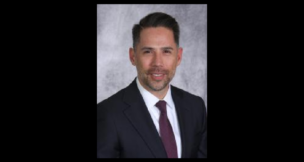
Good Company: Colorado icon Dan Caruso knows what it takes to scale up a successful business
Jamie Siebrase //February 25, 2025//

(Photo courtesy of Dan Caruso)
(Photo courtesy of Dan Caruso)
Good Company: Colorado icon Dan Caruso knows what it takes to scale up a successful business
Jamie Siebrase //February 25, 2025//



DAN CARUSO SNAPSHOT
Age: 61
Hometown: Boulder, Colorado
What he’s currently reading: Luis Elizondo’s 2024 New York Times bestseller “Imminent: Inside the Pentagon’s Hunt for UFOs.”
Dan Caruso is a well-known Colorado business leader with a track record for success in the telecommunications industry.
As founder and CEO of Zayo Group, Caruso led the company to a $14.3 billion exit. His career highlights include co-founding executive roles at Level 3 Communications and leadership positions at Metropolitan Fiber Systems (MFS), both achieving multi-billion-dollar enterprise values. Caruso also spearheaded the 2004 take-private of ICG Communications.
In 2020, he founded Caruso Ventures, an investment firm focusing on quantum technology, space tech and other Colorado scaleups.
Among many accolades, Caruso has received the Chicago Booth Distinguished Alumni Award for Entrepreneurship, Colorado Technology Association’s Bob Newman Lifetime Achievement Award, and the Colorado Governor’s Corporate Citizenship Medal. His debut book, “Bandwidth: The Untold Story of Ambition, Deception, and Innovation that Shaped the Internet Age and Dot-Com Boom,” came out in February and covers the epic journey of the creation of the internet, from the building of early competitive fiber networks in the 1990s to 2020, when Zayo was sold.
We sat down with this local legend to learn more about his new book and latest business venture.
ColoradoBiz: You’re a longtime business leader but first-time author. Why was this the right time to write a book on the evolution of the internet? And would you recommend the title to non-industry readers?
Dan Caruso: It was an ambitious book project. What sparked me to begin my research was the passing of Jim Crowe, who I worked with in Chicago at MFS, which we sold to WorldCom in 1996, and Level 3, which prompted our move to Colorado. WorldCom turned out to be one of the biggest bandwidth disasters. I’d been meaning to write the epic story of the Bandwidth Boom and Bust – the biggest in history – before it was lost to the noise of history. When Jim passed, I knew it was time to get started. There are so many people who contributed to this world we take for granted: the internet. Colorado played a central role in the story. I’m hoping the book becomes an important business nonfiction title. It’s a lot of history, but it reads like a novel, and there’s something for everyone to enjoy, even those who aren’t in the industry.
CB: What new information does “Bandwidth” illuminate for readers?
DC: History repeats itself. The arc of the book is about boom-bust and rebirth cycles, and if you think about the world we live in today there’s AI, which has taken off in the last year-and-a-half, seemingly out of nowhere, moving to the top of every conversation in business. We’re already in our next boom cycle. Will that be followed by a big bust cycle? When? There’s no question that quantum computing and artificial intelligence are going to change the world we live in. For those wondering, “How do I play this next big boom-bust cycle?” the book kind of prepares people who are in business and tech.
CB: What are the biggest takeaways?
DC: As you read through the book, you’re getting all these crazy stories about the companies people created, seeing the valuations go up and then abruptly drop to zero, all within a year or two. A reader who’s paying attention will realize that the biggest takeaway is this: Don’t focus on creating a bunch of hype. If you want to succeed, you really have to build a solid business that can stand the test of time. I talk about this at the end of the book. Cash flow is king, so focus on what cash your business is really able to generate, and don’t worry about all the stories of hype and promise.
CB: Do you give out free business advice on your podcast, too?
DC: Part of my role in life right now is to give back to the community, and one way I’m doing that is helping others who are early in their journey. I’ve been hosting The Bear Roars for several months, averaging more than one episode a week, and we cover a multitude of topics; particularly Colorado innovators, deep tech (including quantum and space), bandwidth and other compelling themes. The purpose is to celebrate innovators, inspire listeners, spark conversation and foster connections within the innovation community — and yes, there are lots of free business takeaways for listeners.
CB: You’ve had quite a few notable guests appear on the show, including Bobby Stuckey, founder and partner of Frasca Hospitality Group; Robin Thurston, CEO of Outside Interactive Inc.; Denver Mayor Mike Johnston; and Stefanie K. Johnson, director of the University of Colorado Boulder’s Center for Leadership. Which episodes really stand out for you? Where should new listeners start?
DC: We’ve been able to feature people who are making a big difference in the community across multiple platforms. Our top-viewed episode is the Robin Thurston show, and one of my favorite episodes is Bobby Stuckey’s. Mayor Mike Johnston’s episode was spectacular, as well. I haven’t been disappointed yet; these are just a few that stood out.
CB: What have you learned from producing a podcast?
DC: One of the side benefits of the podcast, and the book, has been learning about how to be effective in today’s social media and PR landscape – how to get these things to work for you. It’s been fun seeing our team grow and learn.
CB: Tell us a little more about Caruso Ventures.
DC: When I stopped launching and running companies I set up an investment fund focused on Colorado tech scaleups. We invest across multiple sectors with an outsize position in quantum and space tech.
CB: How do you pick companies to invest in? Are there any specific characteristics that really stand out from an investor’s perspective?
DC: Every investor talks about the importance of a CEO, but I’m not sure most investors put enough weight into that. I’m not sure we were putting enough weight into it when we started doing our direct investing. I think leadership in companies matters a lot – and not just the CEO, but the nucleus of the team, too. Do they have inside of them a commitment to do really well for their investors almost no matter what? The idea needs to be a “right idea,” sure, and the space needs to be a good space to invest in. You can’t have a good team and a bad idea. But also, if you have a great idea and only a mediocre team, it’s probably not going to be a good outcome.
CB: How can a CEO be the strongest leader possible? Any insights to share?
DC: The strongest leader – it’s an interesting choice of words because people have different impressions of what a strong leader looks like. When you ask people what makes a great CEO, they’ll say things like “communication skills” and “provides clear leadership for the team.” But when you correlate it to the great leaders of our time, that’s not who Steve Case, Elon Musk and Jeff Bezos are. They aren’t great communicators. They just blast forward. They have in mind what they want to do and they change their minds a lot, whenever they learn more about what the opportunity is. They aren’t always the most likeable people you come across, but all of them are really, really committed to having a great outcome from a valuation standpoint.
CB: Dan, you’re one of those top leaders, too, and a hugely compelling figure in Colorado’s business landscape. Can you put it all together for us right now? Can you give our readers your top tips for running a very successful company?
DC: There are startups and there are scaleups, and I’ve always viewed myself as a scaleup leader. When scaling up a business, the challenges will change. Some of your early team will grow with the business, but many won’t. New sources of capital will need to be accessed. The focus on financial metrics becomes increasingly important. Are you really converting your investment dollars into a sustainable and durable cash-flow stream? You can’t be stubborn in your vision of what you’re going to do; you have to take into account new information and be willing to pivot. Some leaders feel like if they pivot, it’s like admitting to a mistake. You have to do it anyway. You’re going to be a lot smarter about the operation three years in, so take advantage of new information and alter course as needed.
r