Upcoming Event
 Free Newsletter

U.S. retail sales decline in July signals consumer spending slowdown
Lucia Mutikani
Reuters //August 14, 2026//
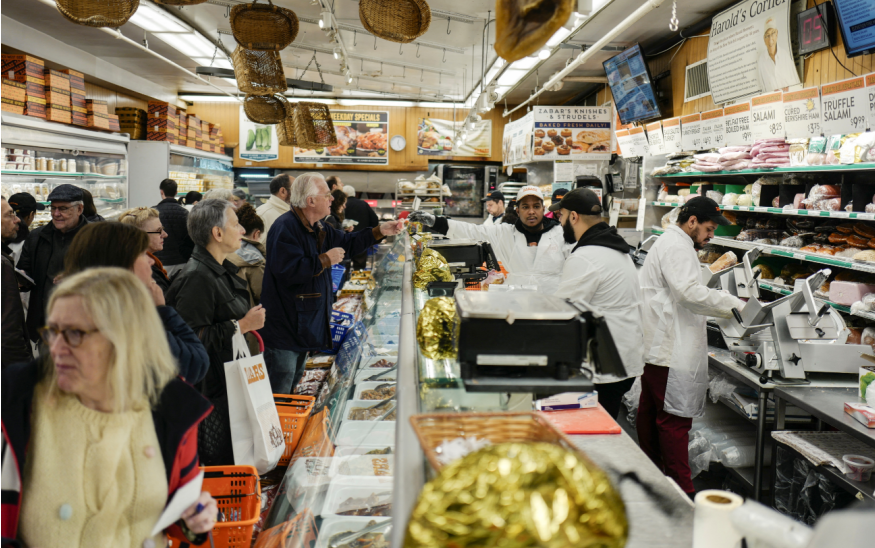
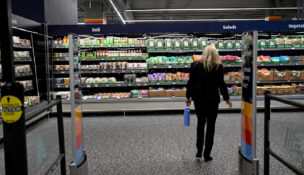
People shop at Zabar's supermarket in New York City, U.S., November 26, 2025. REUTERS/Jeenah Moon.
People shop at Zabar's supermarket in New York City, U.S., November 26, 2025. REUTERS/Jeenah Moon.
U.S. retail sales decline in July signals consumer spending slowdown
Lucia Mutikani
Reuters //August 14, 2026//



In Brief:
- U.S. retail sales dropped 0.6% in July
- Amazon moved Prime Day to June affecting July sales
- Gasoline prices declined, reducing service station receipts
- Consumer sentiment index fell to 51.0 in August
WASHINGTON (Reuters) – U.S. retail sales fell in July for the first time in nine months as the boost from big tax refunds faded, suggesting that consumer spending was slowing down and prompting economists to slash their economic growth estimates for the third quarter.
The Commerce Department’s unexpected decline in retail sales, reported Friday, was also payback after Amazon pulled forward its Prime Day event from July to June, with other retailers offering competing promotions. A retreat in gasoline prices also weighed on service-station receipts.
The report, along with unexpected job losses last month and mild inflation readings, bolstered financial market expectations that the Federal Reserve would not raise interest rates in September, barring upward surprises in August price and employment data.
“This points to a material slowdown in real consumer spending growth in the third quarter,” said Sal Guatieri, a senior economist at BMO Capital Markets. “This, together with a weaker jobs report and subdued core CPI inflation, raises the odds of the FOMC staying patient again in September.”
Retail sales dropped 0.6% last month after an unrevised 0.2% gain in June, the Commerce Department’s Census Bureau said. The decline was the first since last October and was the largest in 14 months. Economists polled by Reuters had forecast retail sales, which are mostly goods and not adjusted for inflation, to edge up 0.1%.
Estimates ranged from a 0.5% drop to a 0.7% increase. Retail sales increased 5.0% year-on-year in July.
With the Consumer Price Index edging up 0.1% in July, economists said last month’s sales decline clearly reflected a drop in volume. Though inflation moderated over the month, it remained significantly higher than last year, increasing consumers’ sensitivity to higher prices.
Sales declined, led by a 2.2% drop in receipts at nonstore retailers. Sales at motor vehicle and parts dealers tumbled 1.8% while receipts at electronics and appliance stores fell 0.5%. Sales at service stations dropped 0.9%, reflecting lower gasoline prices.
Average prices at the pump are hovering just above $4 a gallon, down from about $4.39 early in the U.S.-Israeli war with Iran. Gasoline prices averaged $2.98 a gallon before the conflict started in February. The higher gas prices have created a cost-of-living crisis that is eroding consumer sentiment.
In a separate report, the University of Michigan‘s Surveys of Consumers said its Consumer Sentiment Index dropped to 51.0 this month from 55.2 in July, ending two straight months of improvement. Sentiment deteriorated across the political spectrum, with an especially big month-to-month drop among Republicans, a potential sign of trouble for President Donald Trump’s party as it seeks to retain control of the U.S. Congress in the November midterm elections.
“Depressed sentiment also signals a propensity for lower consumer spending,” said Carl Weinberg, chief economist at High Frequency Economics. “Unhappy consumers buy less than happy consumers. Consumers are quite unhappy by historical standards.”
But retail sales showed pockets of strength last month. Receipts at clothing stores rebounded 1.9%, likely boosted by back-to-school shopping.
Sales at food services and drinking places, the only services component in the report, increased 0.5% after rising 0.4% in June. This category is considered a key measure of household finances. Sales increased at furniture, building material, garden equipment and supplies stores, as well as at miscellaneous retailers and health and personal care outlets. Sales at sporting goods, hobby, musical instrument and book retailers were unchanged.
Stocks on Wall Street were mostly muted. The dollar slipped against a basket of currencies. U.S. Treasury yields fell.
Rate Hike Odds Diminish Further
Financial markets were pricing in a roughly 69.4% chance of the Fed keeping its benchmark overnight interest rate in the 3.50%-3.75% range at its September 15-16 policy meeting, CME’s FedWatch Tool showed. The odds of a rate hike were at 30.6%, down from 33.9% on Thursday and 50.0% a month ago.
Generous tax refunds this year helped to soften the blow from higher gasoline prices stemming from the Middle East conflict, resulting in robust consumer spending in the second quarter. Those refunds have been exhausted, economists said. But with a stock market rally boosting household wealth, they did not anticipate a collapse in consumer spending.
The S&P 500 index has risen 14% so far this year after surging 16.4% in 2025. Economists at PNC Financial said an analysis of bank data showed “increasing evidence of upper-income and older households cashing in on wealth gains to support spending.”
Retail sales excluding automobiles, gasoline, building materials and food services fell 0.4% last month after a slightly downwardly revised 0.4% increase in June.
Economists had forecast these so-called core retail sales, which most closely match the consumer spending component of gross domestic product, to rise 0.3% after a previously reported 0.5% increase in June.
Some said growth in consumer spending, which accounts for more than two-thirds of the economy, could slow to below a 2% annualized rate in the third quarter from a robust 3.2% pace in the April-June quarter.
Economists lowered their third-quarter GDP growth estimates, with Goldman Sachs cutting its forecast by 0.5 percentage point to 2.2%. The economy grew at a 1.5% pace last quarter. But the hit from slower consumer spending to GDP could be offset by businesses replenishing inventories, which have been drawn down for five straight quarters.
A third Census Bureau report showed business inventories were unchanged in June as stocks at retailers fell.
“Businesses have run down their inventories and need to restock,” said Bernard Yaros, lead U.S. economist at Oxford Economics. “It’s very early, but our initial estimate suggests that inventory investment will provide a solid boost to current-quarter GDP. The on-again, off-again conflict in the Middle East remains a key risk to our optimistic outlook for inventories.”
(Reporting by Lucia Mutikani; Editing by Chizu Nomiyama and Andrea Ricci)
t