Upcoming Event
 Free Newsletter

Strong US retail sales signal resilient economy in November
Lucia Mutikani
Reuters //January 14, 2026//
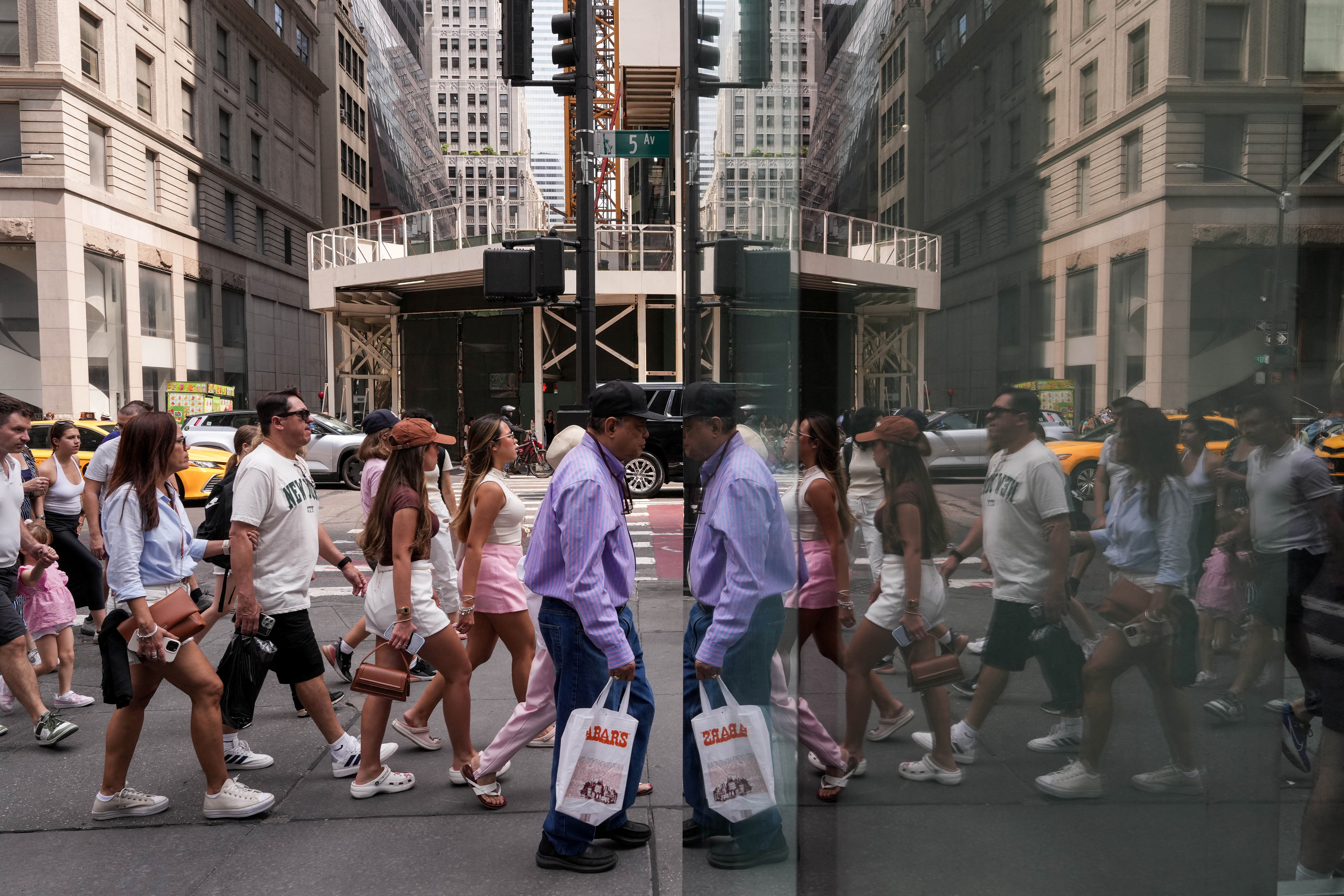
People walk on Fifth Avenue in New York City, U.S., August 7, 2025. REUTERS/Adam Gray
People walk on Fifth Avenue in New York City, U.S., August 7, 2025. REUTERS/Adam Gray
Strong US retail sales signal resilient economy in November
Lucia Mutikani
Reuters //January 14, 2026//



WASHINGTON (Reuters) – U.S. retail sales increased more than expected in November as motor vehicle purchases rebounded and households boosted spending elsewhere, suggesting the economy maintained its strong pace of growth in the fourth quarter.
In Brief:
- U.S. retail sales rose 0.6% in November, topping expectations
- Motor vehicle sales rebounded 1.0% after October decline
- Year-over-year retail sales increased 3.3%
- Economists cite K-shaped spending as lower-income households face pressure
Economists, however, worried that the solid retail sales growth reported by the Commerce Department on Wednesday continued to be driven by wealthy households, with lower-income consumers disproportionately impacted by higher prices for basic commodities like food because of President Donald Trump’s sweeping import tariffs.
The government reported on Tuesday that food prices rose the most in more than three years in December, even as overall inflation remained moderate. Economists described spending as K-shaped, noting that it had become more pronounced last quarter. Lower-wage workers and recent college graduates have been hardest hit by labor market sluggishness. Economists expected the state of affairs to persist this year, even as Trump’s tax cuts take effect.
“Heading into tax refund season, the new tax law will boost refunds the most for higher-income groups, thanks to the more generous state and local tax deduction,” said Michael Pearce, chief U.S. economist at Oxford Economics. “The net impact of tax cuts, spending cuts and tariffs will be negative for the real incomes of the lowest-income households.”
Retail sales rose 0.6% after a downwardly revised 0.1% drop in October, the Commerce Department’s Census Bureau said. Economists polled by Reuters had forecast retail sales, which are mostly goods and are not adjusted for inflation, would advance 0.4% after being unchanged as previously reported. They increased by 3.3% year over year in November.
The Census Bureau is catching up on data releases after delays caused by the 43-day federal government shutdown. The broad-based increase in sales was driven by a 1.0% rebound in receipts at motor vehicle dealerships, which had declined in October following the expiration of electric-vehicle tax credits.
Building material and garden equipment store sales surged 1.3%, while receipts at sporting goods, hobby, musical instruments and book stores vaulted 1.9%. Clothing store sales rose 0.9%. Online retail store sales increased 0.4%. However, furniture and home store sales declined, whereas receipts at electronics and appliance stores were unchanged.
Sales at food services and drinking places, the only services component in the report and a gauge of discretionary spending, rose 0.6% after dipping 0.1% in October.
The K-shaped spending persisted in early January. The Federal Reserve, in its Beige Book report on Wednesday, said several districts noted “spending was stronger among higher-income consumers with increased spending on luxury goods, travel, tourism, and experiential activities.”
The U.S. central bank noted that “low- to moderate-income consumers were seen to be increasingly price sensitive and hesitant to spend on nonessential goods and services.”
Trump, whose aggressive trade policy has been blamed by many economists for higher prices, has made a flurry of proposals to lower the cost of living, including buying $200 billion in mortgage bonds, banning institutional investors from purchasing single-family houses and capping credit card interest rates at 10% for a year to improve affordability.
Banks and financial institutions warned that the proposal would limit access to credit. Economists and policymakers argued that the lack of supply was making housing unaffordable.
A separate report from the National Association of Realtors indicated that the inventory of previously owned homes was well below pre-COVID-19 pandemic levels in December, with some potential sellers discouraged by a slowdown in house price inflation.
Stocks on Wall Street were trading lower. The dollar slipped against a basket of currencies. U.S. Treasury yields fell.
Softening Labor Market Likely To Hamper Spending
Retail sales excluding automobiles, gasoline, building materials and food services increased 0.4% in November after a downwardly revised 0.6% gain in October. These so-called core retail sales correspond most closely to the consumer spending component of gross domestic product. They were previously reported to have shot up 0.8% in October.
Spending, however, appears to have slowed in December because of a slackening labor market.
“The non-existent hiring environment has many households concerned about steady income prospects, while growing affordability challenges pressure discretionary purchases,” said Shannon Grein, an economist at Wells Fargo.
Consumer spending increased at a brisk pace in the third quarter, driving much of the economy’s 4.3% annualized growth pace during that period. The Atlanta Fed is forecasting GDP to increase at a 5.3% rate in the fourth quarter, with some of the boost coming from a shrinking trade deficit.
The economy’s resilience bolstered economists’ expectations that the Fed would keep its benchmark overnight interest rate in the 3.50%-3.75% range at its January 27-28 meeting, even as businesses are absorbing most of the tariffs, preventing inflation from spiking.
A separate report from the Labor Department’s Bureau of Labor Statistics showed its Producer Price Index for final demand rose 0.2% in November after edging up 0.1% in October. In the 12 months through November, the PPI advanced 3.0%, up from 2.8% in October.
Although the recent government shutdown prevented the collection of data to produce the Consumer Price Index for October, the government collected information for the PPI for that month, but with a delay.
Producer goods prices rebounded 0.9%, the largest increase since February 2024, with energy prices accounting for more than 80% of the increase. Wholesale food prices were unchanged.
Excluding food and energy, producer-goods prices increased 0.2% after rising 0.4% in October. Wholesale services prices were unchanged after advancing 0.3% in October. Margins for trade services dropped 0.8%.
Economists forecast that the core Personal Consumption Expenditures Price Index increased by 0.2% in November, following an estimated 0.1% gain in October. The government will publish the delayed PCE inflation data for October and November next week. The Fed tracks the PCE price measures for its 2% inflation target.
“Like CPI, PCE inflation data will be biased lower on an annual basis through April due to issues with housing inflation,” said Veronica Clark, an economist at Citigroup.
“We suspect most other measurement issues resulting from the government shutdown will have been resolved in monthly prices by the first quarter.”
(Reporting by Lucia Mutikani; Editing by Chizu Nomiyama, Paul Simao and Andrea Ricci )
S