Upcoming Event
 Free Newsletter

CU Boulder receives 2.46 million in federal grants for six research projects
ColoradoBiz Staff //July 23, 2026//
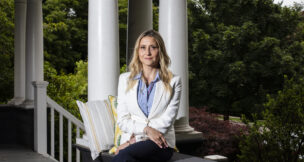
Image courtesy of CU Boulder.
Image courtesy of CU Boulder.
CU Boulder receives 2.46 million in federal grants for six research projects
ColoradoBiz Staff //July 23, 2026//



In Brief:
- CU Boulder awarded $2.46 million from U.S. Department of Energy
- David Bortz receives $750,000 for applied mathematics research
- Yuan Shi awarded $729,800 for physics project
- Keith Ulmer granted $659,157 for physics research
BOULDER, Colo. — Six University of Colorado Boulder research projects will receive about $2.46 million through the U.S. Department of Energy’s Genesis Mission.
CU Boulder will lead three projects focused on using artificial intelligence in fusion energy, quantum computing and particle physics. The university will collaborate on three additional projects involving water and flood prediction, nuclear physics and quark-gluon plasma research.
The CU Boulder-led awards include:
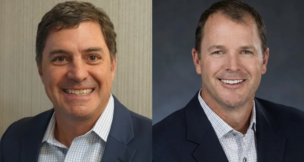
- $750,000 for David Bortz, professor of applied mathematics
- $729,800 for Yuan Shi, assistant professor of physics
- $659,157 for Keith Ulmer, associate professor of physics
CU Boulder researchers will receive an additional $320,740 through projects led by the University of Maryland, Baruch College and Lawrence Livermore National Laboratory.
The six projects will explore AI-based control of plasma in fusion energy systems, quantum computing methods for simulating plasma and AI systems capable of processing large volumes of particle physics data. Other research will examine localized water and flood forecasting, high-energy nuclear collisions and experimental nuclear physics.
“By applying advances in artificial intelligence to world-class research, our teams will help accelerate discovery in ways that will address complex challenges and benefit society,” said Massimo Ruzzene, senior vice chancellor for research and innovation.
The Energy Department announced the first phase of Genesis Mission grants during a July 22 summit in Washington. The initiative supports research combining AI, supercomputing, quantum systems and scientific instruments.
s