Upcoming Event
 Free Newsletter

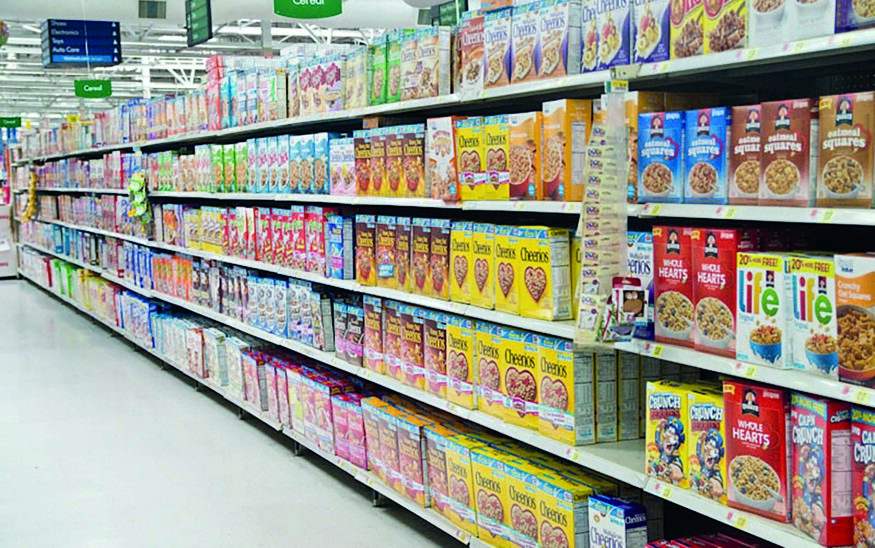
Record high, drought-driven corn prices threaten increases in cereal prices.
Record high, drought-driven corn prices threaten increases in cereal prices.
Rundles Roundup: Inflation-Shrinkflation: The double whammy
Jeff Rundles //September 25, 2025//



So I’m brushing my teeth one morning recently, thinking about how much I like the new flavor of toothpaste I bought, but also wondering why I was going through the new tube so quickly. Then it dawned on me, and I checked: the new tube is 6.0 oz, while the one it replaced was 8 oz. Also interesting to note, the box was the same size, so in the store it looked and felt nearly identical. And it cost a dollar more.
In Brief:
- Shrinkflation and skimpflation are increasing in 2025.
- Manufacturers reduce size or quality without lowering prices.
- Tariffs and inflation drive new rounds of product downsizing.
- Consumer protection measures lag behind in the U.S.
Welcome to the world of Shrinkflation.
Shrinkflation is an economic phenomenon where manufacturers take an ounce or two, sometimes a great deal more, out of a popular product with little or no announcement, and keep the price the same, obviously to squeeze out more profit in a covert way. There’s also a related economic phenomenon called Skimpflation, where these same manufacturers also “skimp” on ingredients, like less butter or chocolate in the mix, or they replace butter with margarine, or sugar with high-fructose corn syrup, all because it costs them less and consumers will, most likely, not notice.
This is not news really, as the term Shrinkflation was coined by a British economist in 2009, and leading examples, a “pound” of coffee shrinking to 12 oz., a “half-gallon” of ice cream becoming a quart and a half, etc, go back to the late 1980s.
But the practice took off during the Covid pandemic and accelerated through the Biden administration as inflation generally took hold, and then mostly through shrinking products with prices holding steady. Yet here in 2025, Shrinkflation has sped up once again, many say owing to Trump administration tariffs or the threat of them, but this time the twist is that while the products are diminishing, the prices are rising. A double whammy.
Last year, France instituted a rule that retailers handling downsized products with no corresponding price reduction must post this information in their stores for a period of a couple of months, so consumers can be aware. French officials called the practice a scam. Here in the U.S., the Senate introduced the Shrinkflation Prevention Act of 2024 that would require the same sort of retail notification. However, the Democrat-led provision failed to reach a floor vote. And there are some consumer protections, modest at best, already in place, such as unit pricing shelf labels that display, for instance, the price per ounce; savvy consumers need to do some homework, but the data is out there.
There’s no question that Shrinkflation and Skimpflation are deceitful practices, but it’s not like it hasn’t been going on forever. The psychology of consumer packaging and marketing has been a key component in pricing for decades, which is why we see gasoline prices at $3.49-9 instead of $3.50, or most things going for 99 cents or $1.99/$2.99 instead of a dollar, two dollars or three dollars. There’s even a sort of experimental psychology relating to Shrinkflation emerging called a “just-noticeable difference” or JND, which purports to measure the breaking point of how much change in a product grabs consumer attention. I would assume that manufacturers will consider pushing to the JND limit, wait some time, and then incrementally push it again to move the needle in their favor.
As consumers, we’re stuck in a sort of Catch-22: we can just take Shrinkflation/Skimpflation and pay more for less or an inferior product, or the manufacturers simply keep the same product and raise their prices. Either way, consumers pay more.
But it seems to me that raising prices because ingredients cost more is at least the honest way to go. Practicing Shrinkflation is, basically, a scam in that we are lulled into thinking we are getting the same old deal when we’re not.
The only way to fight back, I suppose, is to not buy the products. Switch brands or buy more store brands (which also practice Shrinkflation, by the way). The truth is, however, Shrinkflation is here to stay, and it will increase as time goes on. It’s a sneaky way that inflation rears its ugly head that is harder to detect than straight-up price increases.
I recently went to the doctor for my annual check-up and discovered that as I age, I’m not 5’8”, which I’ve always been, but rather now I’m 5’6 ½.” I can only surmise that God himself practices Shrinkflation, so perhaps product manufacturers are onto something.
i