Upcoming Event
 Free Newsletter

CEO of the Year: Elia Wallen
Engine founder and nine finalists honored
By Eric Peterson //December 23, 2024//

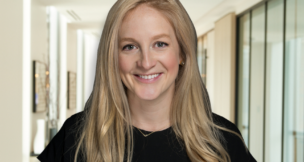
ColoradoBiz 2024 CEO of the Year Elia Wallen with daughter Ellie. Photo courtesy of Engine
ColoradoBiz 2024 CEO of the Year Elia Wallen with daughter Ellie. Photo courtesy of Engine
CEO of the Year: Elia Wallen
Engine founder and nine finalists honored
By Eric Peterson //December 23, 2024//



Elia Wallen, 41, dropped out of college after a semester and went into real estate in Florida in the early 2000s. He saw an opportunity in corporate housing and launched a company, Travelers Haven, in 2008.
Wallen moved the business to Denver and ultimately grew it into the third-largest corporate housing company in the country before its acquisition in 2023. He launched Engine (then branded Hotel Engine) in 2015 as “an internal booking tool” for Travelers Haven customers.
“Clients said, ‘You’re booking our corporate apartments; book hotels for us,” says Wallen, the 2024 ColoradoBiz CEO of the Year. “And for a while, I said, ‘Go to Hotels.com.’”
The clients persisted, and Wallen re-evaluated after recognizing a big gap between consumer and corporate travel portals. He spun Engine off as a separate company in 2018. After closing on a Series A funding round of $16 million a year later, Wallen moved to Engine full-time in early 2020 when it was about 60 employees, just in time for the onset of the COVID-19 pandemic.
“Getting into this travel company full-time and leaving the moneymaker was pretty nerve-wracking,” he says. “We won a very big contract with the city of New York to support COVID relief. We housed over 100,000 patients who were no longer severely ill from COVID, and they wanted to empty up the beds in the hospital.”
Jon Hughes, Engine’s principal product designer, says Wallen’s persistence in the face of challenges like that has driven the company’s success. “Going through COVID, being in our business, you’d think we’re the first to go,” Hughes says. “But even through that, we found opportunities to get us through that initial hit when that first outbreak occurred. His ability to just persist and find opportunity and get us on the right track is what defines him.”
The feat helped catalyze a growth spurt for the company, attracting investor interest in the process. In 2021, the company closed on a Series B round of $65 million for a $1.3 billion valuation, followed by a $140 million Series C in 2024 that upped the valuation to $2.1 billion.
“A lot of people who raised money in the height of 2021 are doing flat or down rounds, so for us to be able to have such an increase, even from the crazy highs, shows the resilience and the growth of the business,” Wallen says. “We’re profitable and we’re cash-flow positive, so this money is really opportunistic. It’s balance-sheet strengthening.”
Engine now employs 700 people, 300 of them based at the company’s Denver headquarters, and Wallen expects both numbers to continue to grow. “There’s a very big need for what we call unmanaged business travel,” he says. A lot of small and medium-sized companies want a booking site that’s “approachable … but without a lot of that heavy burden of a large travel management company.”
The impetus to rebrand from Hotel Engine to Engine in 2024 was a diversification into flights, rental cars and group travel. “All of these spaces are very big and they’re very complicated,” Wallen says. “It doesn’t seem like booking a hotel is much, but we go rooftop to rooftop. We’re literally negotiating with rooftops throughout the country.”
That’s a big differentiator, he says, because consumer booking sites rely on aggregators. “On the lodging side, we spent five years building our own proprietary network,” Wallen says. “We do the hard part: We literally are contacting hotels and negotiating with each hotel, versus just buying from some aggregator and having generic inventory.”
Wallen says self-doubt can be a big hurdle for entrepreneurs. “I think the biggest mistake a lot of people make is throwing out their intuition. You know the business better than anyone else.”
Don’t just delegate as you grow and hire, he adds; rather, collaborate. “Go get someone and partner with them,” Wallen advises. “Don’t get somebody and go the other way: ‘You’re the CEO now, you don’t do those things.’ It’s just so damaging.”
Another bit of friendly advice: “Don’t raise money that you don’t have to raise. So many people raise money for ego or pride,” Wallen says. “Wait until you have a product that actually works, or you’re going to give up so much of your business.”
Jordan Epstein, Engine’s VP of revenue, was employee No. 12 at Travelers Haven when he joined in 2012. Wallen “has never gotten fat and happy,” Epstein says. “He’s still as deep in the business as he’s ever been. He is not someone who sits up on the throne and looks at dashboards and calls shots. He is where the rubber meets the road.
“I think that that’s what makes him an incredible leader: He doesn’t lead from the top, he is in the trenches with his team to understand what is happening.”
Beyond the boardroom, Wallen loves a good party, Epstein adds. “He loves to entertain. He loves to bring people over. He loves to just make sure people are having a good time. He’s the type of guy where you’re walking around his house, if you don’t have a drink in your hands, he’s going to find you and say, ‘What do you need?’”
Wallen is now splitting time between Denver and San Francisco, where the company has an office with about 50 key employees. “We’re going to be building a large sales hub in Denver that doesn’t currently exist, so headcount will grow quite a bit, and it will always be the headquarters,” he says.
Outside of work, family is first for Wallen, followed by a few other life forms. “I’ve got a 1-year-old, a 3-year-old, and a 14-year-old so we’ve got our hands full with that,” he says. “We’re pretty outdoorsy. I’ve got bonsais and bees and dogs.”
Online: www.engine.com
Finalists:
Phil Washington, CEO, Denver International Airport, Denver
After 24 years in the U.S. Army, Washington moved into transportation in 2000, serving as CEO for the transit entities in Denver and Los Angeles before taking the reins at DIA in 2021.
“I’m a public servant, and I saw that my service was needed here,” he says. “I considered Denver my home, and I was asked to step in and do what I could to improve Denver International Airport.”

The agenda includes numerous projects to accommodate growth to 120 million passengers by 2045, up more than 50 percent from 2023’s record-setting total of 78 million. DIA is now the third-busiest airport in the U.S., and the sixth-busiest worldwide.
“The airport was designed for 50 million annual passengers when it opened in 1995,” says Washington, who says he’s now “over 60” years old. “This year, we’re going to end at 82 million, and we’re projecting about 85 million next year.”
An ongoing $1.3 billion on the Great Hall has been on time and under budget, and the new Center of Equity and Excellence in Aviation is slated for completion in 2025. “The big feature there is to build career pathways, starting with kids in grade school and teaching them about the infrastructure space, namely aviation, and getting them ready to build the country’s infrastructure,” Washington says.
Along with a seventh runway, more gates on Concourse C are in the works. “We have opened 39 new gates, the last of which opened in late 2022,” he says. “If you think about opening 39 new gates, that’s like another airport. That’s like Kansas City International Airport.”
Washington is quick to note that DIA’s successes are the result of a group effort. “Doing all of this while still experiencing growth and still being open is a tremendous testament to our team, the 40,000-plus employees that work at the airport,” he says.
Over the years, a few lessons on leadership have stuck with Washington. “Leadership is the art of disappointing people at a rate that they can absorb,” he says. “It’s also about surviving long enough to do the good things that you know need to be done with all of the challenges, especially in the public sector, especially with all of the folks that might disagree with you, or not understand exactly what you’re trying to accomplish, especially in a place like a large airport.”
Washington says his Army experience continues to guide his management style. “Something I learned many, many years ago during my military career is those core values of selfless service, honesty and integrity,” he says. “Those old values are very, very important for any leader to have, and I try to live up to those.”
Online: www.flydenver.com
Walter Isenberg, CEO, Sage Hospitality, Denver
Founded by Isenberg and Chairman of the Board Zack Neumeyer in 1984, Sage celebrated its 40th birthday in March. Adapting to changing circumstances has been a recurring theme in the company’s four decades, beginning when the initial vision didn’t materialize.
“We were mostly naïve,” says Isenberg, 66, of Sage’s start. “We thought we were going to be developers and owners, but we didn’t have any money.”

The savings and loan crisis opened a door with a management contract from a bank with a troubled hotel in 1984. “We became known as turnaround specialists,” Isenberg says. “Within four years, we had 80 hotels under management. Every one of them was for a bank.”
There was one big problem: Those banks wanted to exit the hotel business as soon as possible. Isenberg and Neumeyer shifted gears and bought the Oxford Hotel in Lower Downtown Denver in 1990.
“We started to do acquisitions,” Isenberg says. “We joined forces with Dana Crawford to bring it out of bankruptcy, and that really set us on the road.” A subsequent $110 million deal to buy 30 Fairfield Inns from Marriott with the Carlyle Group “put us on the map,” he adds.
In the wake of the 2008 financial crisis, Sage again pivoted to focus on “urban and resort experiential lifestyle assets,” Isenberg says. “We said, ‘A, we’re good at it, and B, we love it.’”
The company subsequently sold off branded suburban lodgings and other generic properties, he says. “Every one of our assets is in the upscale, luxury space. They’re all urban. We have very few select-service assets left, and the ones we do have left are all urban.”
Sage now manages 65 properties, and about a third of them are in Colorado. “As part of that process, we really shored up our balance sheet. We made sure that the debt we had at our properties was manageable and conservative. We don’t own anything 100 percent on the real estate side but have great partners.”
COVID-19 was the latest hurdle. “I sat in our boardroom on March 15, 2020, and cried,” Isenberg says. “We furloughed 5,700 out of 6,200 associates. It was the saddest day of my career.”
Even in the face of a pandemic, however, Sage’s new model proved resilient. The company has 6,400 employees today.
Isenberg says the company’s recovery reinforced a big lesson from the last industry downturn. “Don’t be tempted to go off strategy,” he says. “When we woke up after the ’08-09 mess, we realized we were trying to be all things to all hotel owners, and that we could be a lot better if we narrowed our focus and became much more strategic.”
After hiring Daniel del Olmo as president in 2020, Isenberg resumed golfing after letting his clubs gather dust for decades. “He [del Olmo] has now been here almost five years, and he’s taken on more responsibility, which has allowed me to spend a little bit less time at work,” Isenberg says. “When I say a little bit less time, I’m still probably here 50 hours a week, but that’s more free time to be able to go play a round at golf.”
Online: www.sagehospitalitygroup.com
Dan Holt, co-founder and CEO, BillGO, Fort Collins
Following his exit from HEIT Consulting, Holt launched BillGO in 2015. “I realized people were frustrated with what was going on with bill pay, so we created this bill pay app that you could manage and pay all your bills,” says Holt, 53.
The business model morphed 18 months after the app’s launch. “The uniqueness of the app was our network, because we could pay the bills in real time,” Holt explains. “And then that part of the company just took off, and we ended up killing the app to focus on the network and allow other people to use our unique network.”

“There are 33 million small businesses in the U.S., and the vast majority of them are receiving physical checks. We add these billers to our network, and they have an easy way to accept payment and get their money faster.”
The network now includes 300,000 billers, as BillGO has grown to 150 employees. Holt sees plenty of runway for more growth. “We have a clear path to double the size of the network pretty quickly, which is great, but the challenge for us is, how do we 10X it? You’ve got 33 million businesses. We’re barely touching it.”
And he says that the B2B market is more than 20 times larger than BillGO’s B2C traditional target. About $500 billion of $5 trillion in annual consumer payments are still done by check, versus $12 trillion of $29 trillion in B2B payments. “Of that $12 trillion, just about $6 trillion is small business,” Holt says.
Holt paraphrases a quote from leadership guru John Maxwell: “As a CEO, there are no two consecutive good days.” He elaborates, “The market, people, clients, funding, all of that’s going to change. And so as you go through that change, it’s important to understand and stay focused on that long term-vision, and don’t allow your emotions to get the best of you.”
“Don’t get stuck in the hype,” he continues. “It can get to you, and it’s super important just to stick to the facts, and drive the business forward as much as you possibly can.”
There’s also a balancing act that comes with dynamic growth. “Companies grow in an exponential manner at times, and humans grow in a more linear fashion,” Holt says. “First and foremost, I have to look at myself and make sure that I’m continuously growing, so the company can continuously grow, and I’m bringing in the right people to help and enhancing the people that I have.”
Online: www.billgo.com
Shawn Thomson, CEO, RMC, Basalt
Thomson, 67, acquired RMC in 1989 after selling a Houston-based company that she had been running from afar in Colorado.
“I was looking for a company to purchase, and this one was a year old and had one or two employees at the time,” she says. “I started in Aspen and got into the destination management and events business, and then went to Vail, because I thought, ‘Well, if I could do this in Aspen, I can do this in Vail,’ then to Colorado Springs, then to Denver.”

RMC now manages events in more than 30 destinations across the country with about 900 employees, 120 of whom are full-time. The company has seen numerous downturns that put big dents in corporate travel and events, including the 2008 financial crisis and the COVID-19 pandemic, only to emerge intact and thriving.
Thomson says RMC furloughed 95 percent of its employees at the beginning of the pandemic, but creative strategies paved the way for a rapid recovery: More than 80 percent returned to the company as restrictions were lifted, and sales doubled by 2022.
“You have to be nimble, and you need to learn how to adapt to the situations as they unfold,” Thomson says. “And I think RMC has been so nimble in seeing what’s going on around us, and being able to make the changes that are necessary has helped us be a better company.”
Thomson credits the RMC team for the company’s successes, noting that she has employees who have been with her for more than 20 years. “Believe in your people and trust them and nurture them, because that’s where your success is going to come from, especially in the hospitality business,” she says. “If it’s always about the money, I don’t think you’ll always win. But if it’s about the people and the experiences in life, I think you will.”
Moving forward, RMC is building on its creative legacy as it strives to leverage technology in the events business. The company is looking at new brick-and-mortar offices in Telluride and Steamboat Springs as it expands into four or five additional destinations across the country in 2025.
That’s perfect for Thomson, who describes herself as a “beach girl” who loves exploring the nooks and crannies of the Rockies. “We’re lucky to live here,” she says of Colorado. “I think it’s really still somewhat of a secret. People just don’t understand how great the weather is, even in the winter.”
Online: www.rmcdmc.com
Cory Kwarta, CEO, Swisslog Healthcare Translogic Division, Broomfield
Kwarta, 45, served as president of Swisslog Healthcare’s North American division before his appointment as CEO of the global pharmacy automation provider in 2022.
He studied engineering at the U.S. Military Academy at West Point and served in the Army for five years, then had a brief and “non-rewarding” career in construction before joining Swisslog Healthcare in 2008.

A sense of working for the “greater good” was part of the lure. “There’s a societal benefit to enhancing patient care, either directly or indirectly, but at the same time, it was an exposure to a company that was for profit,” Kwarta says. “I’ve been with the company and the mission ever since.”
Kwarta’s start as CEO coincided with the end of an ambitious eight-year growth plan that didn’t succeed. “We’ve had to essentially adjust the entire strategy,” he says. “We had to skinny our portfolio and make some really difficult decisions on technology that we were going to stop selling. We had to exit some market verticals in which we were unsuccessful or not showing any scalable growth potential and clean up our balance sheet while, at the same time, planting seeds for growth.”
Now that the 1,200-employee company’s trajectory is back on track, there’s been an internal push for innovation and new channels.
“Rather than via acquisition, we’re now growing through some internal incremental development on our core technology, which is some pharmacy automation robotics, as well as channel development through partnerships in different geographies and with different players in a way that’s going to give us better access to markets to tell our story in a way that we’ve been unable to tell as a smaller player in pharmacy automation.
“We’re kind of playing all sides, but really avoiding, in a sense, this constant push for M&A, which we had in the past,” he adds. “We’re aspiring to grow in the high double digits in 2025.”
Kwarta says his military career has informed his role as CEO. “I’m very comfortable in what would otherwise be considered uncomfortable situations,” he explains. “Pressure doesn’t get to me a whole heck of a lot.”
Authenticity is critical to leadership, Kwarta says. “Be yourself,” he advises. “You need to be authentic, because when you’re making decisions and you have to have tough conversations, people need to know that it’s grounded in your values and what’s best for the entire stakeholder ecosystem.
“I’ve had 13 different bosses in 17 years with the company, and I’ve never had a problem with any one of them,” he adds. “I’ve managed hundreds of different individuals, and I can count on one hand the number of personal conflicts I’ve ever had.”
Outside the office, Kwarta says he is a “perpetual assistant coach” for his two sons’ sports teams and an avid blood donor, and commends his wife, Elizabeth. “A high-level executive job requires many demands of your time,” Kwarta says. “My wife has been an absolute rock to take care of things at home, and we’ve split those roles accordingly. She’s the CEO for everything but Swisslog Healthcare, and I’m the CEO for Swisslog Healthcare.”
Online: www.swisslog-healthcare.com
Dr. Amanda Kelly, CEO, Firefly Autism, Lakewood
Kelly, 39, relocated from Ireland to Colorado to work for Firefly Autism in 2013. “The United States is the home of applied behavior analysis, and I decided that it might be a good idea to move to America for a year,” Kelly says.
She started as a behavioral analyst, then was promoted to director of home-based services. One year quickly turned into eight, and Kelly assumed the role of CEO of the autism services nonprofit in late 2021.

Kelly quickly reduced annual operating costs by close to $1 million by improving the organization’s efficiencies. “I’m a clinician, or I guess I would call myself a retired clinician now, and I didn’t realize how much I would love looking at the daily operations and thinking, ‘How can we make this more efficient and maximize our processes and procedures?’”
A new community and sensory garden at Firefly’s building in Lakewood is one of Kelly’s favorite recent accomplishments. “It used to be a parking lot,” she says. “This summer, we’ve had our first full season of produce, snap peas and kale and all these vegetables and fruits that our learners at Firefly have been able to plant and grow and water and see that through.”
Now 100 employees, Firefly Autism works with about 250 families a year, offering center-based and home-based programs and other services. For 2025, the plan is to grow service offerings by expanding infrastructure and staff and reduce the waitlist.
“There’s no competition in this because there’s so much need,” says Kelly. “We’ve been able to forge about 15 different community partnerships over the last couple of years, which has been really valuable for our programs and has really helped with our own programming.”
Kelly says her experience as an identical twin has had a big impact on her career. “I’ve been with someone since conception, so I love people, and I think by nature, it also means I’m very hard on myself for failure or making mistakes,” she says. “I feel that very deeply. I know that’s not unique, but I think over the last few years as CEO, I do really believe the saying that failure is the tuition that you pay for success. I take full responsibility for my failures and my mistakes, as hard as it is, and my successes.
“This is just such passionate work, and it can be very emotional,” she adds. “You just look at the kids and the teens and the adults, and you put yourself in their shoes, and it’s really hard not to feel a huge range of emotions. I do think there’s some stigma about showing emotion in a position like mine, but I’ve learned to just accept that’s who I am. Sometimes I cry when it’s really moving, and I’m going to try and stop apologizing for that.”
Online: www.fireflyautism.org
Mark Frank, co-founder and CEO, SonderMind, Denver
When Frank, 46, started SonderMind in 2014 with therapist Sean Boyd, he’d previously served in the U.S. Army, worked in investment banking, and founded Anova Cancer Care in Lone Tree, but it was his own mental health journey that ultimately paved the way for SonderMind.
“In my own search for a therapist, I found it fairly discouraging the fact that it was nearly impossible to find somebody who took my insurance, who I knew was high-quality, and who used technology in a way that actually enabled them to deliver better care,” Frank says of the company’s genesis.

He also had family members working as mental health practitioners. “I saw their journey in struggling in how to operate in a private practice setting as an outpatient, self-employed mental health provider. It was really, really challenging.”
That set the stage to launch SonderMind as a means to connect patients, providers and payers across the country. A decade later, the company has 250 employees and a network of 10,000 mental health providers. “We’ve delivered more than 3.5 million sessions of in-network, high-quality mental health,” Frank says.
COVID-19 catalyzed the company’s move into teletherapy and telepsychiatry. The pandemic “accelerated the adoption of video and of telehealth for delivery of this care, and that allows people to get access across many markets that wouldn’t have had access to care otherwise, because of a real lack of mental health providers,” Frank says. It also created “headwinds” because of a flood of investment in the space that enabled some “bad actors,” he adds.
After peaking at more than 300 employees, SonderMind has restructured and made a pair of AI-focused acquisitions as it doubled the number of providers in its network and expanded its geographic footprint to 45 states and Washington, D.C.
“We’ve made major strides in the last 12 months in getting ourselves better positioned, so that when the time comes for us to think about going public, we’re able to meet the needs from an investor standpoint,” Frank says.
In 2021, SonderMind closed on a Series C funding round of $150 million and had an influx of new staffers join after working for much larger organizations. “One of the things I learned was to not rush too quickly, to act like a 10,000- or 20,000- or 100,000-employee company, when you’re a few-100-person company,” Frank says. “From a leadership standpoint, I think what that means is really embracing the fact that often perfect is the enemy of good. And when you’re at our stage, and when growth is imperative, it’s really important to focus on the results and the outcomes as opposed to the process.”
What’s next for the company? “It’s very clear to me that we are, bar none, the most comprehensive, highest-quality mental health care organization in the country,” Frank says. “We deliver absolutely the best care, and we have clinical research and peer-reviewed academic journal articles and patents that prove that point. One of the initiatives for 2025 is proselytizing that message.”
Online: www.sondermind.com
Bob Chastain, president and CEO, Cheyenne Mountain Zoo, Colorado Springs
“I’m knocking on the door of 30 years at the Cheyenne Mountain Zoo,” says Chastain, 58.
He started as a horticulturist in 1995 and ascended into his current role in 2006. “When I took over, the zoo had virtually no savings in the bank,” Chastain says. “We had about a $4 million a year operating budget and about a $4 million a year expense budget, so we barely scraped by every year. One of the first things we did was stabilize that and start finding some additional ways to bring in revenue. I had a goal of wanting to break even on our operating budget that 100 percent of our donor dollars would go to helping us build new projects, and I was able to do that relatively quickly in my tenure.”

Annual revenue has jumped from $4 million to more than $25 million a year as attendance more than doubled to about 800,000 visitors a year, making the Cheyenne Mountain Zoo the top paid attraction in the Pikes Peak region. It’s routinely ranked as one of the top five zoos in the country and is one of only a handful that operates without tax support.
With financial stability, the zoo built a number of innovative new habitats and “got neck-deep in conservation,” says Chastain.
Neck-deep has more meaning than you might think, as giraffe conservation has been at the top of the zoo’s list. “There is only one giraffe for every four elephants in the wild,” notes Chastain. “What we noticed is there was a lack of knowledge around health and care for them. Cheyenne Mountain zoo has always had one of the largest giraffe herds in human care, and so therefore we get lots of opportunities to learn about their health care and taking care of them.”
The zoo plans to open a new building for the International Center for the Care and Conservation of Giraffe to mark its 100-year anniversary in 2026. A fundraising campaign aims to raise $48 million for the center and other capital projects “to get the zoo ready for the next 100 years,” says Chastain. “The Cheyenne Mountain Zoo will be the largest contributor to that campaign.”
Chastain has also announced his pending retirement, likewise in 2026. “I thought it was a good time to give the zoo a chance to find fresh ideas that would lead the zoo into the next 100 years,” he says. “I’ve spent every day of the last 20 years thinking about the future of the zoo, often five to 10 years ahead. I don’t do a very good job planning my own life. Right now, I’m just trying to focus on getting these projects done, and then 2026 will come, and I’ll figure it out from there.”
Online: www.cmzoo.org
Marco Antonio Abarca, CEO, Ready Foods, Denver
Abarca, 61, came back to the family business in 1992 after working as a legal aid attorney in California. His father, Luis Abarca, founded Ready Foods in 1972, but needed help as he battled cancer.
“My mother [Martha Abarca] said, ‘Hey, we’re going to sell the business if you don’t come back,” Abarca says. “I thought I’d come back and do it for a short period of time, but I found out that I liked it, and I was better at that than being a lawyer. … I was too hyperactive to be a good lawyer.”

In the early 1990s, Ready Foods had about 35 employees. Now it’s got about 300.
One of the drivers was his parents’ realization that “one day Mexican food would become American food, and that it would become part of just the general culture,” says Abarca, who has taken that a step further. “You don’t have to be German to make German food or Chinese to make Chinese food. All you need to know how to do is cook and follow a recipe. With that, we made the transition from being a Mexican food company to being a soup and sauce company, and right now, if it can be made in a kettle, we’ll make it. We fundamentally changed our perspective. We got out of our ethnic box and embraced our Americanness. We’ll try anything.”
That led to diversification into products like alfredo sauce and corn chowder. Then Abarca had another epiphany. “I realized that we were a manufacturing company, and we had more in common with Toyota than we did with restaurants,” he says. “We started embracing Lean manufacturing strategies. And then as time went on and we got a deeper understanding, we understood that we needed to embrace the Fourth Industrial Revolution, and we needed to embrace a strategy of digital transformation.”
The culmination of that is Ready Foods’ new, 135,000-square-foot facility in north Denver. It opened in mid-2024 and makes beans and salsas 24/7. “If it’s not the best soup and sauce plant in the world, it’s right up there,” touts Abarca. “Every advanced technology we could find, we purchased. The things that we don’t have haven’t been invented yet.
“We built this for one customer, and they’re growing very quickly,” he adds. “They needed to have supplier partners who could grow with them. And so that’s why we built it. We can make twice the amount of product that we could before we opened it with half the number of people.”
Abarca credits his late parents for their hard work starting the company more than 50 years ago and sees them as part of a grand economic tradition. “This is a company founded by a Mexican immigrant,” he says. “I’m a first-generation American, and I’m part of a great American immigrant story that’s not only about Mexican Americans, but it’s about all immigrants in this country and the contributions that they can make.”
Online: www.readyfoods.biz