Upcoming Event
 Free Newsletter


The UR20 Rover. Photo courtesy of Vectis Automation.
The UR20 Rover. Photo courtesy of Vectis Automation.
Cobots and custom systems reshape American manufacturing
Eric Peterson //September 24, 2025//



This article appears in the Fall 2025 issue of ColoradoBiz under the headline, From cobots to custom systems: reinventing American manufacturing.
Reviving domestic manufacturing has been a political clarion call for decades, but there’s a bit of a disconnect between the data and the talking points. The value of U.S. manufacturing output has actually gradually grown over the last 50 years, while its share of GDP has declined.
In Brief:
- Colorado manufacturers embrace cobots and modular automation
- Metalcraft, Allied, Vectis and others tackle labor shortages
- Automation boosts productivity while keeping costs flexible
- Tariff uncertainty and high interest rates slow investments
The biggest issue is a withering workforce: There were about 400,000 open manufacturing jobs as of mid-2025. The dearth of labor means robotic automation is a must-have for many manufacturers.
Larry Caschette, president of Westminster-based Metalcraft Industries, says the contract metal manufacturer has been dealing with the manufacturing labor shortage for more than a decade. “About 15 years ago, we recognized at that time the skills gap forming and were trying to determine a few methods to mitigate the challenges it would pose,” explains Caschette. “We determined at that time, any new equipment purchased would require an automation package. It’s not about replacing people and saving cost, it’s about the ability to get product out, when the skill sets are retiring.”
Metalcraft is something of a microcosm of the broader manufacturing industry in Colorado and beyond, and Caschette thinks investment in automation needs to continue and even accelerate to maintain a competitive edge. “I think adding significant automation is the only way we’ll be able to maintain any manufacturing in the U.S.,” he says. “There will likely always be a low-cost center for work to move to, but the higher-value work, we should be able to retain with enough automation to keep the work flowing.”
There’s a catch, however: “For so many small companies, the resources to learn, experiment and implement real automation, whether that be capex or back-office functions, is a barrier to entry.”
That roadblock has led several Colorado companies to develop alternatives to traditional automation. Think of the status quo as the mainframe that was once only available to large companies, and the new offerings as the PCs that trickled into essentially every business.
Broomfield-based Allied Technology‘s PicPac Automation line is representative of this trend. President Mike Halley founded Allied to pursue contract work in the food and personal care industries in 1997 after working in custom automation design.
A first mover in collaborative robots (cobots), Allied was one of the first U.S. automation providers to partner with Denmark-based Universal Robots as an integrator circa 2013. The company developed a turnkey cobot system for palletizing, but as customers’ volumes increased, cobots had trouble keeping up with production.
“[Mike] realized that there was a definite need for smaller, modular automation, says Matt Halley, vice president of business development and Mike’s son. “He called it ‘islands of automation.’ . . . Instead of having one large machine, you could have 10 smaller machines.”
A decade of development led to the PicPac line of modular automation for palletizing, case-packing and conveying systems. “This is a way that they can buy these plug-and-play solutions to implement, and then use our services of engineering support, or have us finish off a build, or give them consulting work or offer preventative maintenance,” says Matt.
While the 16-employee company boomed during the pandemic, Allied’s sales have slowed in the last two years. That stands in stark contrast to the realities of the manufacturing workforce. “There’s a much bigger problem than a machine taking someone’s job,” says Matt. “That’s not really happening. We actually don’t have enough people to do the work.”
In Loveland, Vectis Automation has built a business around similar modular principles with its cobot-based welding system. Josh Pawley, the company’s VP of business development, and his partners founded Vectis in 2019, initially bootstrapping the company from a garage.
The 35-employee company has since sold more than 700 robotic welding systems, including about 20 in Colorado. Customers include heavy equipment makers, structural steel fabricators, and a wide range of other manufacturers.
For Vectis’ customers, “the middle of the bell curve for productivity is around a 3X productivity boost,” says Pawley. “Our cobot systems are a tool in the fabricator’s belt that they could use to increase their productivity on certain parts.”
A lack of technical talent to operate and maintain automated solutions is the limiting factor for many manufacturers. “You’re changing your welder shortage for a programmer shortage with traditional automation,” says Pawley. “Our whole goal at Vectis and with cobots is, ‘How do you make automation more approachable, more affordable and more accessible for fabricators and welders to use as a tool?’”
Pawley says Vectis’ main sales drivers have been customers’ labor, quality and productivity issues. “It is really a mixed bag,” says Pawley. “Some folks literally can’t find people. Some folks have the people, but they want them doing more challenging work. It shows how automation can help solve multiple challenges.”
Some customers have decided against multi-million-dollar systems and gone with several smaller systems. “The problem with a big, beautiful, traditional automation system is if one single thing is wrong, the whole system is not producing,” says Pawley. “If one Vectis system goes down and I’ve got five of them, I’m still making 80 percent of my production for that day. It’s not zero or 100.”
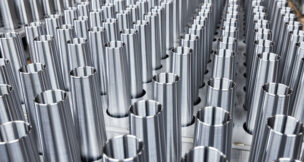
Founded in 1990, Windsor-based Snaptron has grown into a leading manufacturer of tactile dome switches that end up on everything from consumer electronics to military gear.
“While we’ve had a focus on automating to some degree, we haven’t striven for highly automated, dedicated production lines,” says Kevin Albertsen, the company’s director of engineering. “I’ve been designing test and automation equipment for 30 years, and when you push for fully automated, hands-off production lines, your tooling costs and your engineering costs start to become very expensive.”
Albertsen says Snaptron’s automation strategy aims for a happy medium between fully manual and fully automated. “The problem is a fully automated production line is very, very difficult to design in a very flexible way so that it can handle any dome, any array, any combination of materials and sizes,” he explains.
Snaptron has largely built its own automation in-house. “Making domes and making parts with domes on them, nobody else in the U.S. is doing that, so we can’t just go out and buy off-the-shelf equipment,” explains Albertsen. “We’re making millions and millions of domes but at the same time, we’re able to very, very quickly, like within a matter of a couple of weeks, make any custom dome somebody might want, and for very low tooling cost.”
“None of our customers’ products are going to last as long as we want our company to last,” adds Albertsen. “If we were still building BlackBerry keyboard arrays, we made millions and millions of those back in the day, if we had built a dedicated production line and said, ‘We’re going to make these cheaper than anybody in the world, and we’re going to compete on price, and we’re going to keep this product,’ what would we have now? We would have an obsolete production line.”
At Right Stuff Equipment in Denver, founder and CEO Kevin Weber has devised a number of products to automate packaging for customers in a number of industries.
“The flexibility of employing robotics for multiple types of purposes is making robotics continue to be accepted in a wider array of manufacturing environments,” says Weber. “If you’ve got three or four people performing a function, and the fully loaded cost on that person is $40,000 to $50,000 and you’re looking at a two-year payback, that justifies a $300,000, $400,000, or $500,000 automation project. The higher labor rate has made that threshold easier to obtain.”
Higher wages have driven adoption of automation, says Weber, but higher interest rates and general economic jitters have dampened demand. The 16-employee company was on a continuous growth trajectory until last year, but sales are “off a bit” in 2025. “We’re waiting for the cork to come out of the bottle so that pent-up demand can be released,” he says.
Ongoing uncertainty around tariffs has caused manufacturers to put the brakes on investments in automation, Weber notes. “Today it’s 10 percent, tomorrow it’s 30 percent, the next day it’s back to 10 percent. The unpredictability of what the tariffs are going to be on a stabilized basis is causing a lot of people to wait until this thing shakes out.”
He adds, “You can’t plan, and with a lack of planning horizon, a lot of people are just saying, ‘We’ll just wait.’”
Online:
- Allied Technology: allied-technology.com
- Vectis Automation: vectisautomation.com
- Right Stuff Equipment: rightstuffequipment.com
- Metalcraft Industries: metalcraftind.com
- Snaptron: snaptron.com
r