Upcoming Event
 Free Newsletter


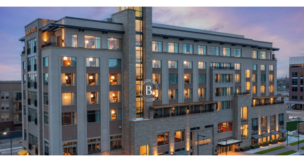
The Denver Dry Goods Building. Photo courtesy of Jonathan Rose Companies.
The Denver Dry Goods Building. Photo courtesy of Jonathan Rose Companies.
Denver Dry Goods building to add 55 affordable units
Margaret Jackson //August 11, 2025//



The historic Denver Dry Goods Building is set for a major transformation with a new redevelopment project by Jonathan Rose Companies and its affiliate Perry Rose LLC.
In Brief:
- $67M project to add 55 affordable units, rehabilitate 51 existing units
- Historic building to receive modern upgrades and electric heating
- Basement to be converted into fitness center, offices, and community space
- Project supported by public, private, and nonprofit partners
The $67 million project will rehabilitate 51 existing affordable units and convert vacant commercial space into 55 new affordable units while modernizing the property’s infrastructure.
Known as the Denver Dry Adaptive Reuse, the 106-unit affordable housing project will serve residents earning between 30% and 80% of area median income.
Originally built in 1888, the Denver Dry Goods Building was once the region’s largest department store. It closed in 1987 as department stores nationwide consolidated and focused on growth in the suburbs.
Jonathan Rose led a pioneering redevelopment of the building in 1994, providing a landmark example of using historic tax credits and other financing methods to create affordable housing.
Denver Dry Goods’ first redevelopment spurred the revitalization of downtown Denver and inspired the adaptive reuse of many other historic buildings in the following decade, including Clocktower Lofts, Chamber Lofts and Mercantile Square Lofts.
“It’s exciting for Jonathan Rose Companies,” Haley Jordahl, director of development for Perry Rose, told ColoradoBiz. “(Denver Dry) was one of the founding affordable housing projects in its portfolio and is part of its mission of creating mixed-use, mixed-income communities.”
Improvements will include updated kitchens and appliances in existing units, restoration of historic windows and repairs to the building’s brick façade.
The project will also convert 18,500 square feet of basement space into resident-focused amenities such as a fitness center, mailroom, leasing offices and flexible space for on-site services.
The redevelopment will transition the 106 affordable units from the steam heating loop they currently rely on to electric heating and cooling using split-system heat pumps, which will reduce the building’s energy use.
“We hope this project demonstrates how existing buildings can be converted from their existing heating systems to a more sustainable all-electric system going forward,” Jordahl said.
The redevelopment is supported by a coalition of public, private and nonprofit partners. The Community Opportunity Fund is a partial owner of the project, contributing $8.6 million in soft financing.
The Denver Urban Renewal Authority (DURA), which was instrumental in the building’s first redevelopment, is also a key public partner.
“The Denver Dry redevelopment was perhaps the best example of urban renewal that DURA has ever completed,” DURA Executive Director Tracy Huggins said in a statement. “It epitomized everything that urban renewal stands for, revitalizing a struggling area through historic preservation, creation of affordable and market-rate housing and creation of retail to support the housing and downtown workers.”
The project is expected to break ground later this summer and be completed in early 2027.
e