Upcoming Event
 Free Newsletter

US existing home sales fall as prices hit record high amid tight inventory
Lucia Mutikani
Reuters //July 9, 2026//
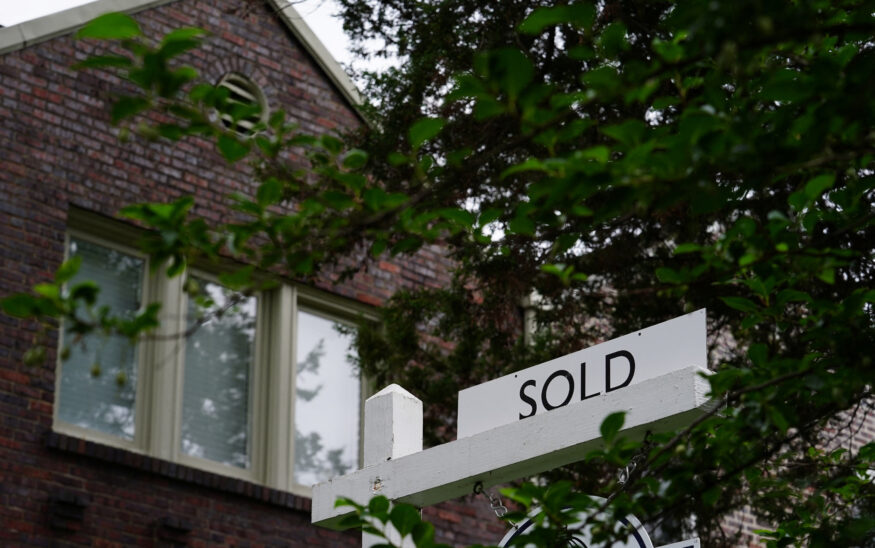
A "sold" sign is seen outside of a recently purchased home in Washington, U.S., July 7, 2022. REUTERS/Sarah Silbiger
A "sold" sign is seen outside of a recently purchased home in Washington, U.S., July 7, 2022. REUTERS/Sarah Silbiger
US existing home sales fall as prices hit record high amid tight inventory
Lucia Mutikani
Reuters //July 9, 2026//



In Brief:
- US existing home sales dropped 2.4% in June
- Median existing home price reached record $440,600
- National housing shortage estimated at 1.2 million homes
- Mortgage rates remain elevated after middle east conflict
WASHINGTON (Reuters) – U.S. existing home sales unexpectedly fell in June as tight inventory boosted house prices to a record high and the Middle East conflict kept mortgage rates elevated, pushing potential buyers to the sidelines.
The National Association of Realtors’ report on Thursday underscored the growing affordability hurdle many young people face in pursuing the so-called American dream of homeownership. Still, economists expected the housing market to make a small contribution to economic growth in the second quarter for the first time in more than a year.
The U.S. Congress recently passed a bipartisan housing affordability bill that includes measures to restrict single-family homeownership by investment firms and to waive or expedite environmental reviews for construction projects. President Donald Trump has declined to sign the bill until a separate voting bill is passed.
“Affordability challenges are most acute for lower-income households and first-time buyers,” said Nancy Vanden Houten, lead U.S. economist at Oxford Economics. “Homebuying is much more affordable for upper-income households, who are likely to be homeowners, than for younger, renter households.”
Home sales dropped 2.4% last month to a seasonally adjusted annual rate of 4.09 million units. Economists polled by Reuters had forecast home resales would climb to a rate of 4.20 million units. Home sales have been bouncing around a 4 million-unit pace for years now, with NAR chief economist Lawrence Yun noting a similar trend during the 2008 Great Recession.
There is a national housing shortage, especially for entry-level homes, with the National Association of Home Builders estimating the shortfall at about 1.2 million. The inventory of previously owned homes on the market fell 0.6% to 1.56 million units in June, remaining below the 1.8 million-1.9 million units before the pandemic. Supply increased by 1.3% year over year.
The median existing home price increased 1.8% from a year ago to a record high of $440,600. The bulk of the houses sold in June were in the $250,000-$500,000 price band. Existing home sales are counted at the time a contract is closed. Last month’s sales likely reflected contracts signed in April and May.
Though mortgage rates have retreated after surging in response to the U.S.-Israeli war with Iran, the average rate on the popular 30-year fixed-rate mortgage remains about 50 basis points above its pre-conflict level, according to data from mortgage financing firm Freddie Mac.
Home sales increased 2.8% on a year-over-year basis in June. Single-family homes priced at $500,000 or higher experienced double-digit year-over-year sales growth, while those priced below $100,000 fell 1.7%.
Higher mortgage rates are discouraging potential sellers from listing their homes, adding to the supply constraint. Many homeowners have mortgages with fixed rates below 5%. At June’s sales pace, it would take 4.6 months to exhaust the current inventory of existing homes, unchanged from a year ago.
Residential investment, which includes homebuilding and sales, has contracted for five straight quarters. The Atlanta Federal Reserve‘s model currently forecasts that GDP will increase at a 1.3% annualized rate in the second quarter. The economy grew at a 2.1% pace in the January-March quarter.
Iran’s armed forces launched attacks on U.S. military infrastructure in neighboring Gulf states on Thursday following U.S. strikes on Iran’s southern coastal and eastern provinces, putting further strain on a three-week-old ceasefire agreement.
The conflict has fanned inflation and raised the probability of the Federal Reserve raising interest rates this year.
Minutes of the U.S. central bank’s June 16-17 meeting published on Wednesday showed policymakers’ concerns about inflation mounted last month. The Fed left its benchmark interest rate unchanged in the 3.50%-3.75% range at the June meeting, though new projections showed growing sentiment for a likely rate hike this year.
Stocks on Wall Street were trading higher. The dollar was steady against a basket of currencies. U.S. Treasury yields fell after surging earlier in the week.
A ‘Slow Hire, Slow Fire’ Labor Market
A separate Labor Department report suggested the labor market remained in a “slow-hire, slow-fire” mode, despite a sharp slowdown in job growth in June.
Initial claims for state unemployment benefits slipped 2,000 to a seasonally adjusted 215,000 for the week ended July 4, broadly in line with economists’ expectations.
Unadjusted claims increased by 9,967 to 224,583 last week, with applications surging by 8,467 in California. Filings shot up by 4,401 in Michigan and increased by 5,872 in Missouri, likely as some automakers idled assembly lines for maintenance and retooling. General Motors and Ford Motor Company, however, have canceled summer shutdowns at many of their plants.
Overall adjusted claims have dropped after rising at the end of May and the beginning of June, with economists mostly dismissing the increase as being related to difficulties adjusting the data at the end of the school year.
Some states allow non-teaching staff to apply for unemployment benefits during the long school holidays, which can throw off the government’s model for stripping out seasonal fluctuations from the data.
“Claims remain low and stable, with the rise over the last couple of months probably reflecting residual seasonality, rather than an increase in labor market slack,” said Samuel Tombs, chief U.S. economist at Pantheon Macroeconomics. “Looking ahead, layoffs likely will remain low.”
But downside risks to the labor market remain. The Fed meeting minutes showed policymakers “generally expected labor market conditions to remain stable in the near term, with the unemployment rate staying close to current levels.”
The minutes also noted “several participants cited, however, the possibility that uncertainty related to geopolitical developments or the broader economic outlook could lead firms to reduce hiring or begin implementing layoffs.”
The number of people receiving unemployment benefits after an initial week of aid, a proxy for hiring, increased by 8,000 to a seasonally adjusted 1.814 million during the week ended June 27, the claims report showed.
The elevation in the so-called continuing claims partly reflects seasonal adjustment issues related to the school holidays. Still, sluggish hiring is also keeping many people on benefits. A Conference Board survey last week showed the percentage of consumers saying jobs were “hard to get” increased in June to the highest level since January 2021.
(Reporting by Lucia Mutikani; Editing by Chizu Nomiyama, Paul Simao and Andrea Ricci )
r