Upcoming Event
 Free Newsletter

US wholesale inventories in May revised lower amid slower restocking
Lucia Mutikani
Reuters //July 8, 2026//
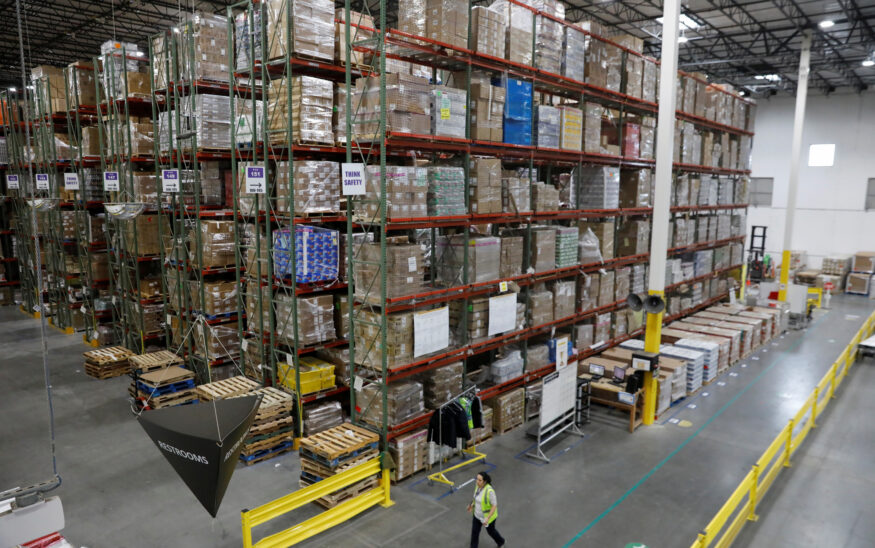
Inventory is seen inside the Amazon fulfillment center in Robbinsville, New Jersey, U.S., November 26, 2018. REUTERS/Shannon Stapleton
Inventory is seen inside the Amazon fulfillment center in Robbinsville, New Jersey, U.S., November 26, 2018. REUTERS/Shannon Stapleton
US wholesale inventories in May revised lower amid slower restocking
Lucia Mutikani
Reuters //July 8, 2026//



In Brief:
- U.S. wholesale inventories rose 0.1% in May
- May inventory increase revised down from 0.3%
- Inventories advanced 4.0% year-over-year in May
- Wholesale sales increased 3.4% in May
WASHINGTON (Reuters) – U.S. wholesale inventories rose far less than initially thought in May, which could temper expectations that restocking would provide a significant lift to economic growth in the second quarter.
Stocks at wholesalers edged up 0.1%, revised down from the 0.3% increase estimated last month, the Commerce Department‘s Census Bureau said on Wednesday. Inventories, a key part of gross domestic product, rose 0.7% in April. They advanced 4.0% year over year in May.
Business inventories have been drawn down for four straight quarters. Economists expect inventory rebuilding will blunt some of the anticipated drag on GDP from the trade deficit. The Atlanta Federal Reserve‘s model currently forecasts that gross domestic product will increase at a 1.4% annualized rate in the second quarter. The economy grew at a 2.1% pace in the January-March quarter.
The government reported on Tuesday that imports surged to a 14-month high in May, widening the trade deficit. Economists partly attributed the rise in imports to businesses’ front-loading to avoid higher prices and shortages stemming from the war in the Middle East.
Some of the imports ended up as inventory. Wholesale stocks of professional equipment increased 1.2% while computer equipment inventories surged 4.0%, a jump likely related to an artificial intelligence investment boom. Furniture inventories rose 0.5%, while those of hardware increased 0.6%. But metal inventories dropped 2.8%. Petroleum stocks dropped 5.7%.
Sales at wholesalers increased 3.4% in May after advancing 2.2% in April. At May’s sales pace, it would take 1.15 months to clear shelves, the shortest period since April 2012 and down from 1.19 months in April. The inventories/sales ratio was at 1.31 months in May 2025.
(Reporting by Lucia Mutikani; Editing by Paul Simao)
t