Upcoming Event
 Free Newsletter

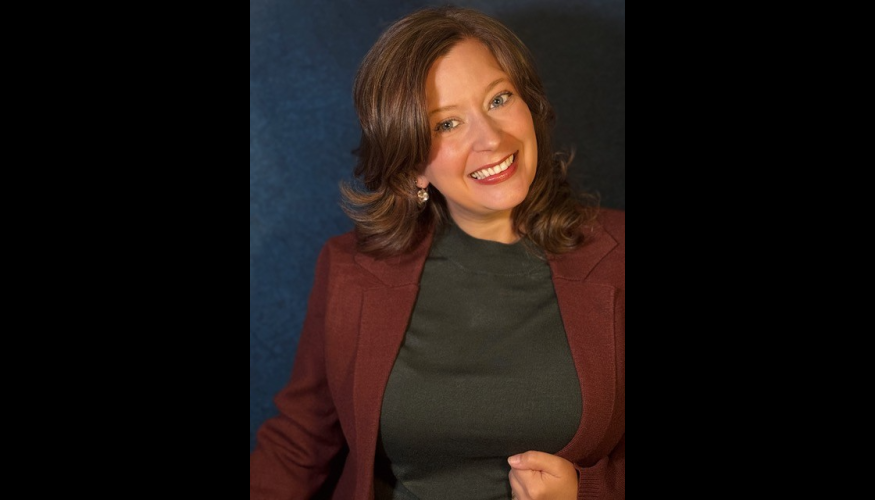
Kari Burroughs Kraakevik
Kari Burroughs Kraakevik
The missing middle of business ownership
Kari Burroughs Kraakevik //June 8, 2026//



Floating In Between
In Brief:
- Colorado arts organization paid over $1.1 million in rent
- Lenders require up to 30 percent down payment on properties
- Financing challenges for mid-sized businesses with seasonal revenue
- Arts education revenue viewed as seasonal despite 15 years operation
Our lease is up in August. The landlord sent 35 pages detailing our current lease, our history as tenants and the new rates if we choose to re-sign.
They assume we’ll re-sign.
For the past five years, I have paid more than $1.1 million in rent.
Triple net.
To them.
Every month is a terrifying experience. We watch money come in almost as quickly as it goes out, silently hoping people wait until the middle of the month to cash their checks
We’ve never been late on rent, however.
Not once.
All $1.1 million worth.
“Wow. A million dollars,” I said under my breath.
I stared at the spreadsheet.
That’s almost a quarter of the cost of the building.
The number seemed to leap off the page like something from a cartoon, surrounded by flashing lights and exploding exclamation points.
A million dollars.
I had never added it up before.
“You know,” I said to a half-empty latte mug, foam drying around the rim, “that’s more than a down payment on our own building.”
My husband looked up.
“Own a building?”
It sounded absurd when he said it out loud.
We started exploring the option as a pipe dream.
Just for fun.
To our surprise, we found four properties that could reasonably accommodate our needs as an arts organization. For the first time, owning a building felt less like a fantasy and more like a possibility.
I’ve operated arts businesses for fifteen years, surviving recessions, pandemics, staffing shortages and the ordinary chaos of entrepreneurship. We employ people, serve hundreds of families each week and have paid our commercial rent without missing a payment.
Yet when I began exploring how to buy a permanent home for the organization, I discovered something unexpected: the financing system is surprisingly ill-suited for businesses like mine.
Not startups.
Not corporations.
The businesses in between.
Too established for programs designed to help new ventures get off the ground.
Too small to access the financing options available to larger companies with substantial assets and deep reserves.
In theory, small-business ownership is celebrated in America. In practice, many businesses spend years generating revenue, creating jobs and paying rent while struggling to accumulate the kind of capital that transforms a tenant into an owner.
I had spent fifteen years building a business.
I had never realized how difficult it would be to build ownership.
For entrepreneurs, ownership is often discussed as if it naturally follows success. Work hard. Grow steadily. Pay your bills. Eventually, you’ll own something.
But many community-serving businesses discover that success and ownership are not the same thing. A company can survive for years, serve its community well, and still find itself locked out of the very assets that create long-term stability and wealth.
I assumed the next step would be simple.
Find a building.
Call a lender.
See what we qualified for.
Instead, I entered a world of acronyms, down-payment requirements, debt-service ratios, collateral calculations and financing products I had never heard of.
One lender wanted 30% down.
On a multi-million-dollar property, that number is not a rounding error.
On a $2.5 million building, that meant finding $750,000 before renovations, moving costs or equipment.
Another was concerned about the seasonal nature of arts education revenue.
Others were willing to lend, but only at interest rates and terms that transformed an exciting opportunity into a monthly payment that felt impossible to sustain.
The irony was difficult to ignore.
For years, we had demonstrated our ability to reliably make large monthly payments.
Yet proving that we could continue paying someone else’s mortgage did not necessarily prove that we could pay our own.
The conversation shifted from whether our business worked to whether it fit the formulas.
And formulas are not always designed to recognize community institutions.
In our case, lenders viewed arts education as seasonal revenue despite fifteen years of successful operations and consistent rent payments.
Music schools. Dance studios. Childcare centers. Family-owned businesses. Neighborhood nonprofits.
Organizations that may be financially stable but lack the explosive growth curves investors love or the asset portfolios banks prefer.
We weren’t failing.
We simply didn’t fit neatly into the boxes.
What does it mean for communities when the organizations that teach their children, care for their families and serve their neighborhoods can operate for decades but still struggle to own the spaces they inhabit?
When local institutions cannot build ownership, communities lose more than individual businesses. They lose stability. They lose organizations with roots deep enough to weather economic downturns, leadership transitions and changing markets. Every rent payment that leaves a community is money that cannot be reinvested in the institutions that helped create it in the first place.
For most of my career, I thought success meant surviving another year.
Making payroll.
Paying rent.
Keeping the doors open.
Looking at that spreadsheet, I realized I wanted something different.
I wanted the next fifteen years to build something that would still be standing after the rent checks stopped.
America is remarkably good at celebrating entrepreneurship. We tell people to take risks, start businesses, pursue their ideas and create something of their own. For those just getting started, there are workshops, mentorship programs, grants, incubators and endless advice.
But somewhere between startup and corporation, many of those supports disappear.
The expectation becomes simple: figure it out.
Sink or swim.
I’ve managed to stay afloat.
I’ve built programs. Created jobs. Served families. Paid more than a million dollars in rent.
And maybe that’s why that number on the spreadsheet hit me so hard.
Not because of what I had lost.
Because of what I still hope to build.
Today, I’m not sinking.
But I’m not quite standing on solid ground either.
I’m floating.
Kari Burroughs Kraakevik is a Boulder-based arts entrepreneur, writer and composer. She has spent fifteen years building and operating arts education and performance organizations, managing staff, programs and creative businesses that serve hundreds of families each week. Her essays and creative nonfiction have appeared or are forthcoming in The Thinking Person’s Guide to Autism, Divergents Magazine, Chicago Story Press, Open Secrets Magazine, Larina’s Lit Lounge, Infocalypse Arts & Literary Magazine and Backsliders Magazine.