Upcoming Event
 Free Newsletter

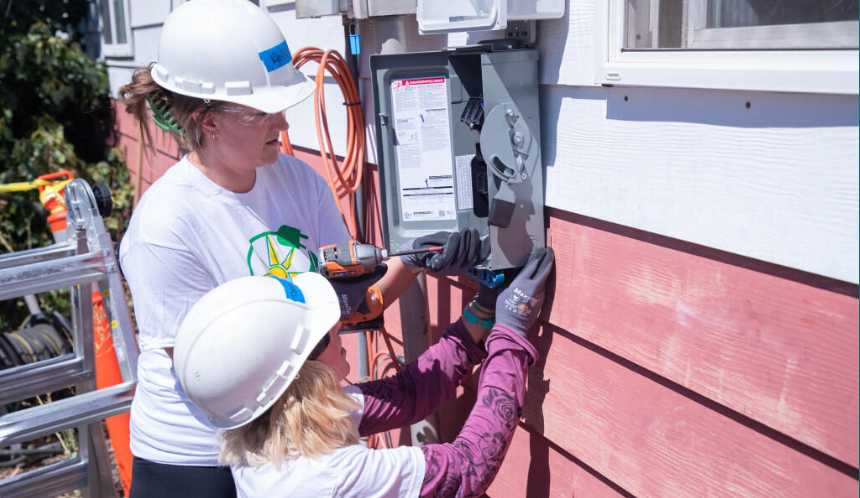
Photo by Joe DelNero / NREL.
Photo by Joe DelNero / NREL.
Colorado releases climate workforce plan for net-zero goals
ColoradoBiz Staff //November 18, 2025//



DENVER — Colorado officials on Tuesday released the state’s first Climate Workforce Analysis and Plan, outlining the jobs and training needed to meet Colorado’s goal of reaching net-zero emissions by 2050.
In Brief:
- Colorado releases its first Climate Workforce Analysis and Plan
- State identifies 20 climate-critical occupations with major gaps
- Report recommends expanding training and apprenticeships statewide
- Plan supports Colorado’s goal of reaching net-zero emissions by 2050
The report, prepared by the Colorado Energy Office with support from the Colorado Department of Transportation and in coordination with the Colorado Workforce Development Council, identifies the careers most essential to the state’s clean energy transition. Funded by a federal Climate Pollution Reduction Grant and state dollars, the analysis evaluates workforce gaps, training pathways, and strategies to build an equitable climate workforce.
Governor Jared Polis said clean energy continues to drive economic growth and job creation in Colorado. “These innovative technologies are protecting air quality and the environment while creating new opportunities for our state’s workforce,” he said. “We are proud to support the strong workforce needed to drive innovation and achieve our climate goals.”
The report highlights the need for skilled workers, including electricians, plumbers, HVAC technicians, construction laborers and technicians who service renewable energy and electric vehicle systems. Colorado Energy Office Executive Director Will Toor said the state’s clean energy transition depends on workers who build efficient homes, install solar and geothermal systems and maintain zero-emission vehicles and charging stations.
The analysis identifies 20 “climate critical occupations” with the largest gaps between projected job growth and workforce demand. Occupations facing the most significant shortages include electricians, construction laborers and managers, wind turbine service technicians, solar installers, power-line workers, electric vehicle technicians and HVAC technicians trained in heat pump technology.
Training challenges vary across occupations and include limited opportunities in rural areas, shortages of qualified instructors, and gaps in specific technical skills. Barriers for new workers include financial constraints, lack of transportation or childcare and limited access to training in their preferred language.
To address these issues, the report recommends expanding early exposure to climate careers in K-12 schools, increasing training options across the state, strengthening Registered Apprenticeship programs, improving coordination among state agencies and training organizations and prioritizing access for rural and resort communities.
“Achieving Colorado’s ambitious climate goals depends on our ability to rapidly train a skilled and diverse pipeline of talent across the state,” said CWDC Managing Director Lee Wheeler-Berliner. “We must move to action collaboratively.”
The report aligns with broader state efforts to build a climate-ready workforce, including a Registered Apprenticeship through the Weatherization Assistance Program, new training dollars through the Training for Residential Energy Contractors grant, and a Zero Emissions Vehicle Workforce Development group.
-