Upcoming Event
 Free Newsletter

Deposit Photos
Deposit Photos
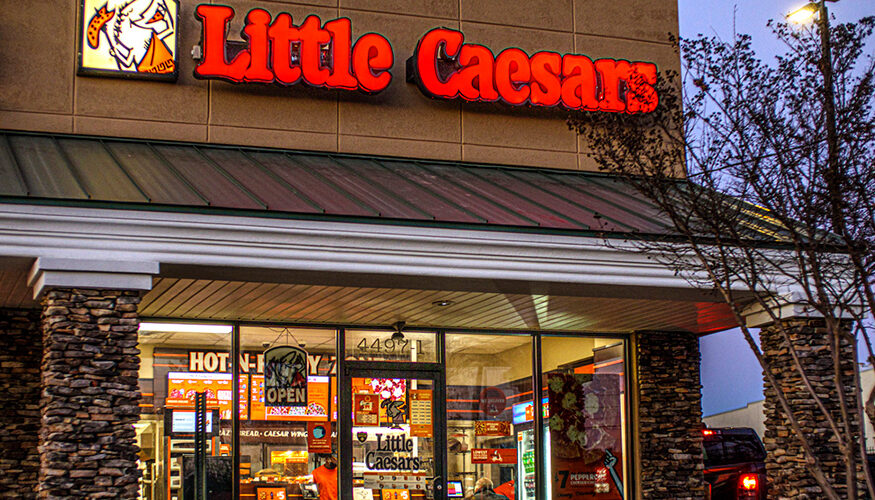
Little Caesars plans 25 new Colorado locations
Margaret Jackson //February 6, 2026//



With a foundation of about 80 restaurants already operating across the state, the third-largest pizza brand plans to add up to 25 new locations.
In Brief:
- Little Caesars plans to add up to 25 new restaurants across Colorado
- Company currently operates about 80 locations statewide
- Brand recruiting new franchisees with $200,000 liquidity requirement
- Expansion includes tech features, modular builds and nontraditional locations
“We’ve always been building and recruiting, but Colorado is a major target market for us this year,” said Bryan Ketelhut, Little Caesars’ vice president of franchising and business development. “Denver is a dynamic mix of dense neighborhoods where value and convenience really resonate. We love the large families; kids drive the business.”
While Little Caesars gives existing franchisees first crack at new territories, the brand is recruiting new blood for its Colorado expansion.
The company is looking for savvy business owners — from mom-and-pop startups to multi-unit operators of other franchises, such as Jersey Mike’s, who want to diversify their portfolios.
Those looking to trade their corporate badge for a pizza paddle must have $200,000 in liquidity and a net worth of $400,000. The initial investment to build out a 1,400- to 1,600-square-foot store in a strip mall is between $550,000 and $650,000.
If you haven’t stepped into a Little Caesars lately, it might not be the shop you remember from 20 years ago. The brand has evolved into a tech-forward operation, leaning on innovations like the Pizza Portal, a heated, self-service pickup station, and flexible store formats.
Beyond the standard strip mall units, Little Caesars is eyeing non-traditional spots like stadiums, casinos and airports. It’s even pioneered modular POD builds, which allow for faster construction and a smaller footprint, making it easier to squeeze into high-demand trade areas.
“The company is constantly innovating — what’s going to service the customer, what’s going to help the franchisee with labor and processes,” Ketelhut said. “I always feel like they are just a few steps ahead, and it’s just going to keep evolving.”
Since Mike and Marian Ilitch founded Little Caesars in 1959 with a single store in the Garden City, Michigan, suburb of Detroit, the business has grown into a global powerhouse with thousands of locations in 30 countries.
Although the brand has become a giant in the $145 billion global pizza industry, the privately held company still has the culture of a family-owned business, said Ketelhut, who has been with the company for 18 years after operating a franchise.
Ketelhut said many of his colleagues have been with the company for 20 to 40 years because it’s a great place to work.
“We have an open-door policy to our leadership team,” he said. “You’re joining a family, not a publicly traded company. It’s a fun business, and we’re a fun team.”
n