Upcoming Event
 Free Newsletter

US consumers more worried about job market, New York Fed says
Michael S. Derby
Reuters //January 8, 2026//
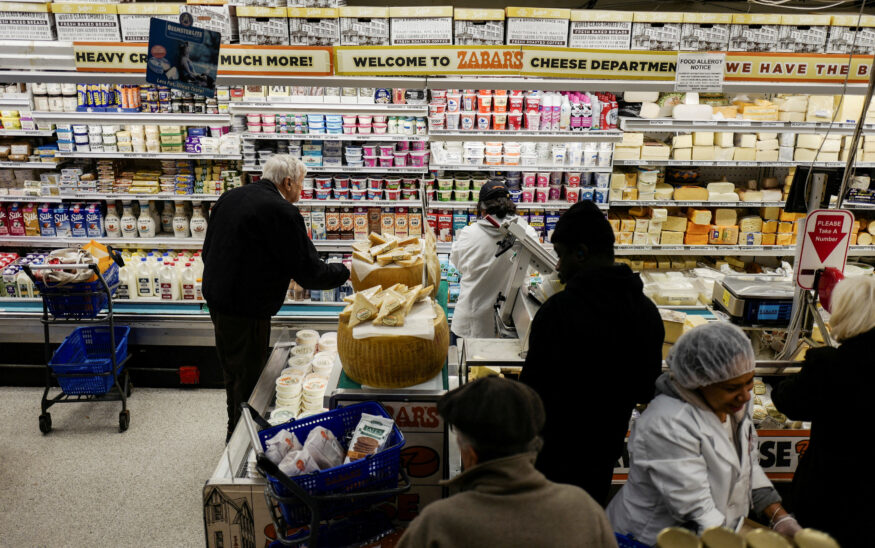
People shop at a supermarket in New York City, U.S., November 26, 2025. REUTERS/Jeenah Moon/File Photo
People shop at a supermarket in New York City, U.S., November 26, 2025. REUTERS/Jeenah Moon/File Photo
US consumers more worried about job market, New York Fed says
Michael S. Derby
Reuters //January 8, 2026//



(Reuters) – Americans grew more worried about the job market in December even as anxieties over personal finances faded, while near-term inflation expectations increased, a report from the New York Federal Reserve showed on Wednesday.
In Brief:
- Job market worries hit highest level since survey began in 2013
- Concerns strongest among households earning under $100,000
- Year-ahead inflation expectations rose to 3.4% in December
- Fed cut rates to balance job risks and elevated inflation
Respondents in the regional Fed bank’s latest Survey of Consumer Expectations said the prospect of finding a job if unemployed was the worst since the report began in 2013. Concerns about securing a new job were driven by households earning under $100,000 per year.
Job market anxieties were uneven in the final month of 2025, the New York Fed said, as expectations that the unemployment rate would rise eased in December compared with the prior month, while the probability of losing a job rose relative to November. The survey also found a lower likelihood of voluntarily leaving a job in December than in the prior month.
Amid job market concerns, households raised their near-term inflation expectations, with the year-ahead projection rising to 3.4% from 3.2% in November. Three- and five-year-ahead expected inflation were both steady at 3% in December.
Because short-term inflation expectations can be volatile, U.S. central bank officials tend to place greater weight on longer-term projections to gauge where inflation stands now. The year-ahead expected inflation increase, however, coincides with rising price pressures from the Trump administration’s tariff increases.
Many Fed officials expect those tariff impacts to abate this year, but they are closely watching inflation expectations data for evidence that the public shares that confidence.
Speaking in late December, New York Fed President John Williams said projections of future inflation “remain well-anchored,” adding “this is something I watch closely, because well-anchored expectations are critical to ensuring low and stable inflation.”
The Fed cut its benchmark interest rate last month by a quarter of a percentage point to the 3.50%-3.75% range, in an effort to balance rising job market risks against inflation that is still well above the U.S. central bank’s 2% target.
Fed officials this year expect the unemployment rate to decline modestly from the 4.6% rate in November, amid evidence of a low-hire, low-fire job market. They also see moderating inflation pressures, but prices will still remain above the central bank’s target.
The U.S. Labor Department is scheduled on Friday to release its monthly employment report for December.
Households More Upbeat About Their Financial Situation
It’s unclear whether the Fed will be comfortable enough to cut rates again in 2026, although Philadelphia Fed President Anna Paulson said recently that if the economy meets her expectations, “then some modest further adjustments to the (federal) funds rate would likely be appropriate later in the year.”
The New York Fed survey found households were more upbeat about their current and expected financial situations in December, although they also reported that credit is growing harder to access. Expectations of missing a debt payment also rose last month to the highest level since April 2020, during the initial stages of the COVID-19 pandemic.
Survey respondents expected slightly higher income growth, but lower expected spending and earnings growth.
(Reporting by Michael S. Derby; Editing by Paul Simao)
l