Upcoming Event
 Free Newsletter

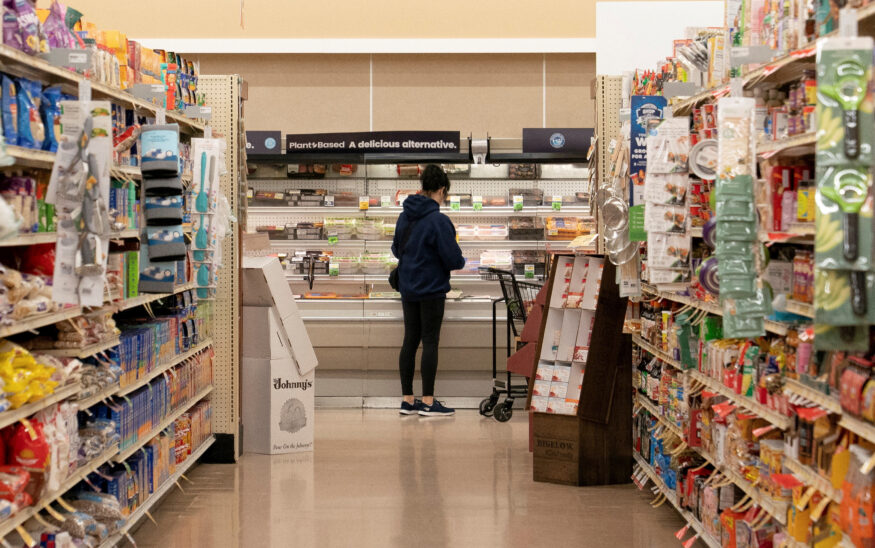
A food shopper browses for groceries ahead of the Thanksgiving Day holiday at an Albertsons supermarket in Redmond, Washington, U.S., November 24, 2025. (REUTERS/David Ryder/File Photo)
A food shopper browses for groceries ahead of the Thanksgiving Day holiday at an Albertsons supermarket in Redmond, Washington, U.S., November 24, 2025. (REUTERS/David Ryder/File Photo)
US inflation slows in November amid missing CPI data
Lucia Mutikani
Reuters //December 18, 2025//



WASHINGTON (Reuters) – U.S. consumer prices rose less than expected in the year to November, but households still faced affordability challenges as the costs of basic goods and services like beef and electricity soared, posing a political problem for President Donald Trump.
In Brief:
- The CPI rose 2.7% year over year in November, below economists’ forecasts.
- A federal government shutdown disrupted data collection, distorting CPI results.
- Economists cautioned the report shows a downward bias due to missing October data.
- Prices for essentials like beef and electricity continued to rise sharply.
The moderation in the Consumer Price Index, reported by the Labor Department’s Bureau of Labor Statistics on Thursday, was likely due in part to the 43-day federal government shutdown, which delayed data collection until the second half of November, when retailers were offering holiday season discounts.
CPI data are typically collected throughout the month. Economists cautioned against reading too much into what some dubbed a “Swiss-cheese” report.
But White House officials quickly heralded what Trump’s top economic adviser called “an astonishingly good” report, hours after the president delivered a televised address to the nation focused on affordability. The higher cost of living will remain a political issue in 2026 as Trump and his fellow Republicans battle to retain control of the U.S. Congress.
The shutdown prevented the BLS from publishing month-to-month changes for November’s CPI because most of the price data for October were not collected, creating large gaps that economists said made the report less reliable than usual.
The October CPI release was canceled because the data could not be collected retroactively. It was the first time the BLS did not publish monthly CPI rates.
Federal Reserve Chair Jerome Powell told reporters last week that policymakers would review the delayed economic data “carefully and with a somewhat skeptical eye, given the disruptions to collection during the shutdown.”
Economists expect a pickup in December as businesses are still passing on higher costs from import tariffs to consumers, and the rapid growth of artificial intelligence and cloud computing data centers is boosting electricity demand.
“The report wasn’t just noisy and full of gaps; it provided a downwardly biased perspective of inflation,” said Gregory Daco, chief economist at EY-Parthenon. “The downward bias stemmed from the carry-forward methodology that assumed an unchanged price index in October for all surveyed data, imparting a downward bias to inflation dynamics.”
The CPI increased 2.7% year over year in November, after advancing 3.0% over the 12 months through September. Economists polled by Reuters had forecast the CPI would rise 3.1%. The CPI gained 0.2% over the two months ending in November. The BLS said it “cannot provide specific guidance to data users for navigating the missing October observations.”
Retailers typically offer holiday-season discounts in late November for goods such as apparel and appliances, which likely introduced a downside bias into the data.
Trump’s sweeping import duties have raised prices for many goods. However, tariff pass-through has been gradual, as businesses worked through inventory accumulated prior to the tightening of trade policy and absorbed some of the taxes.
Samuel Tombs, chief U.S. economist at Pantheon Macroeconomics, calculated that retailers had passed on about 40% of tariffs by September, adding, “We expect that proportion to climb gradually to 70% by March and then stabilize.”
Beef prices increased 15.8% on a year-over-year basis in November, the largest increase since June 2020, with the cost of ground beef soaring 14.9%, also the biggest gain in nearly 5-1/2 years. Coffee prices surged 18.8%. Trump has rolled back duties on some goods, including beef, bananas and coffee. Economists said it could take some time for consumers to see lower prices.
Electricity prices rose 6.9%, the largest year-on-year increase since April 2023. But egg prices dropped 13.2%, and gasoline prices rose 0.9%. Annual new motor vehicle prices increased 0.6% as automakers absorbed tariff-related costs.
Consumers aggrieved by inflation
“Consumers will likely still feel saltier about inflation than the upbeat headline would suggest, since the prices of many essentials outside of shelter continue to rise rapidly,” said Bill Adams, chief economist at Comerica Bank.
Stocks on Wall Street were trading higher. Treasury yields fell while the dollar slipped against a basket of currencies.
Trump, who won the 2024 presidential election on promises to tame inflation, has, in recent weeks, alternated between dismissing affordability problems as a hoax, blaming former President Joe Biden and promising that Americans will benefit from his economic policies next year.
The Fed last week cut its benchmark overnight interest rate by another 25 basis points to the 3.50%-3.75% range. Still, it signaled borrowing costs were unlikely to fall further in the near term as the U.S. central bank awaits clarity on the direction of the labor market and inflation.
Excluding the volatile food and energy components, the CPI increased 2.6% on a year-over-year basis in November, the smallest advance since March 2021. The so-called core CPI rose 3.0% in September. Core CPI inflation increased 0.2% from September to November.
The Fed tracks the Personal Consumption Expenditures Price Index for its 2% inflation target.
Shelter, which includes rents, hotel and motel rooms, climbed 0.2% from September to November, which some economists said was unrealistic. They noted that shelter, which accounts for more than 40% of the core CPI, increased on average by 0.3% month over month during the first nine months of 2025.
“This is such a sharp slowdown that likely reflects the adjustments the BLS had to make around the void left behind by the missing October data,” said Bernard Yaros, lead U.S. economist at Oxford Economics.
Still, economists said they expected inflation to slow next year, with many convinced the tariff-related price boost had peaked. An easing labor market is also curbing wage growth, which would contribute to easing services inflation.
In a separate report, the Labor Department said initial claims for state unemployment benefits dropped 13,000 to a seasonally adjusted 224,000 for the week ended December 13, suggesting labor market conditions remained stable in December.
Claims have see-sawed in recent weeks, reflecting challenges adjusting the data around the Thanksgiving holiday. The tone of the labor market has not changed much: employers remain reluctant to hire more workers but are not engaging in mass layoffs.
Tepid hiring is causing long bouts of unemployment for some workers who have lost their jobs. The number of people receiving unemployment benefits after an initial week of aid, a proxy for hiring, increased 67,000 to a seasonally adjusted 1.897 million during the week ended December 6, the claims report showed.
“Inflation is slowing on trend, even if today’s print overstates the slowdown,” said Michael Pugliese, a senior economist at Wells Fargo. “When paired with the softening in the labor market, we remain comfortable with rate cuts in March and June of next year.”
(Reporting by Lucia Mutikani; Editing by Andrea Ricci, Chizu Nomiyama and Paul Simao)
t